
A borough in England’s West Midlands ranks among the very worst places in the country to grow old in good health — and the data, drawn from analysis by the Institute for Public Policy Research (IPPR), makes the structural causes of that fact impossible to ignore. The central thesis is straightforward, if damning: Sandwell’s catastrophic health outcomes are not the product of individual lifestyle choices, but of systemic deprivation that the state has failed, over decades, to dismantle.
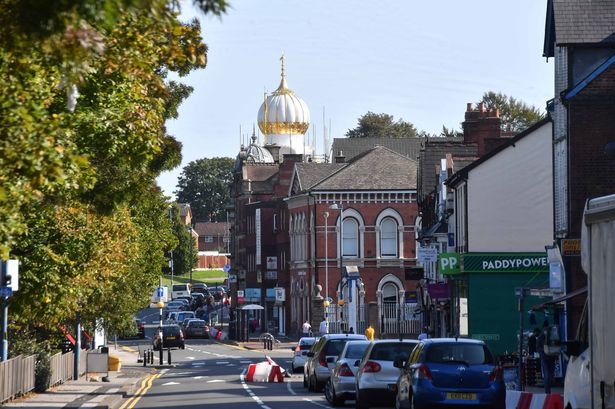
Sandwell — a Black Country borough encompassing West Bromwich, Smethwick and Tipton — holds the second-worst healthy life expectancy for women in England, and the third-worst for men. Women there can expect to live in good health only until the age of 51.3; for men, that figure is 52.7. These are not ages of natural decline. They are middle age. The implication is that for a substantial portion of Sandwell’s population, chronic illness becomes a defining feature of life precisely when, in more affluent parts of the country, people would still expect decades of healthy years ahead of them.
A Geography of Harm
The IPPR’s analysis reveals a pattern that is geographically consistent and therefore politically legible. The five lowest healthy life expectancies in England are all concentrated in the north or the Midlands; the five highest are clustered in and around London. This is not coincidence. It reflects the long-term consequences of deindustrialisation, chronic underinvestment in public services, and the concentration of poverty in specific communities — communities that have been told, repeatedly, that economic recovery is on its way. The gap, as Dr Jamie O’Halloran, senior research fellow at the IPPR, stated plainly, is not closing.
O’Halloran’s framing deserves close attention. “Most of what shapes our physical and mental health lies outside the health system,” he said, adding that without “tackling those root causes, we won’t see the gains we need.” This is a precise and important observation. Reforming NHS delivery — bringing care closer to communities, as the IPPR recommends — may ease some pressure on individuals already caught in cycles of poor health, but it cannot substitute for the upstream interventions that poverty demands: stable housing, adequate income, clean environments, and meaningful employment. Sandwell’s residents are not failing to make healthy choices in a vacuum; they are making choices under material conditions that systematically foreclose healthier options.
What the data ultimately describes is a form of structural violence — not dramatic or sudden, but slow, cumulative, and entirely measurable. People in Sandwell die sooner and suffer longer not because of where they were born in any fatalistic sense, but because of decisions made far above them, in policy chambers and Treasury offices, about where resources flow and where they do not. The moral weight of that fact should not be softened by the language of “deprivation indices” and “health inequalities.” England has, in effect, created places where life is shorter, and it has known this for a long time. The IPPR’s figures add precision to what was already, for anyone paying attention, a well-documented scandal.