
What happened, and how was it proven?
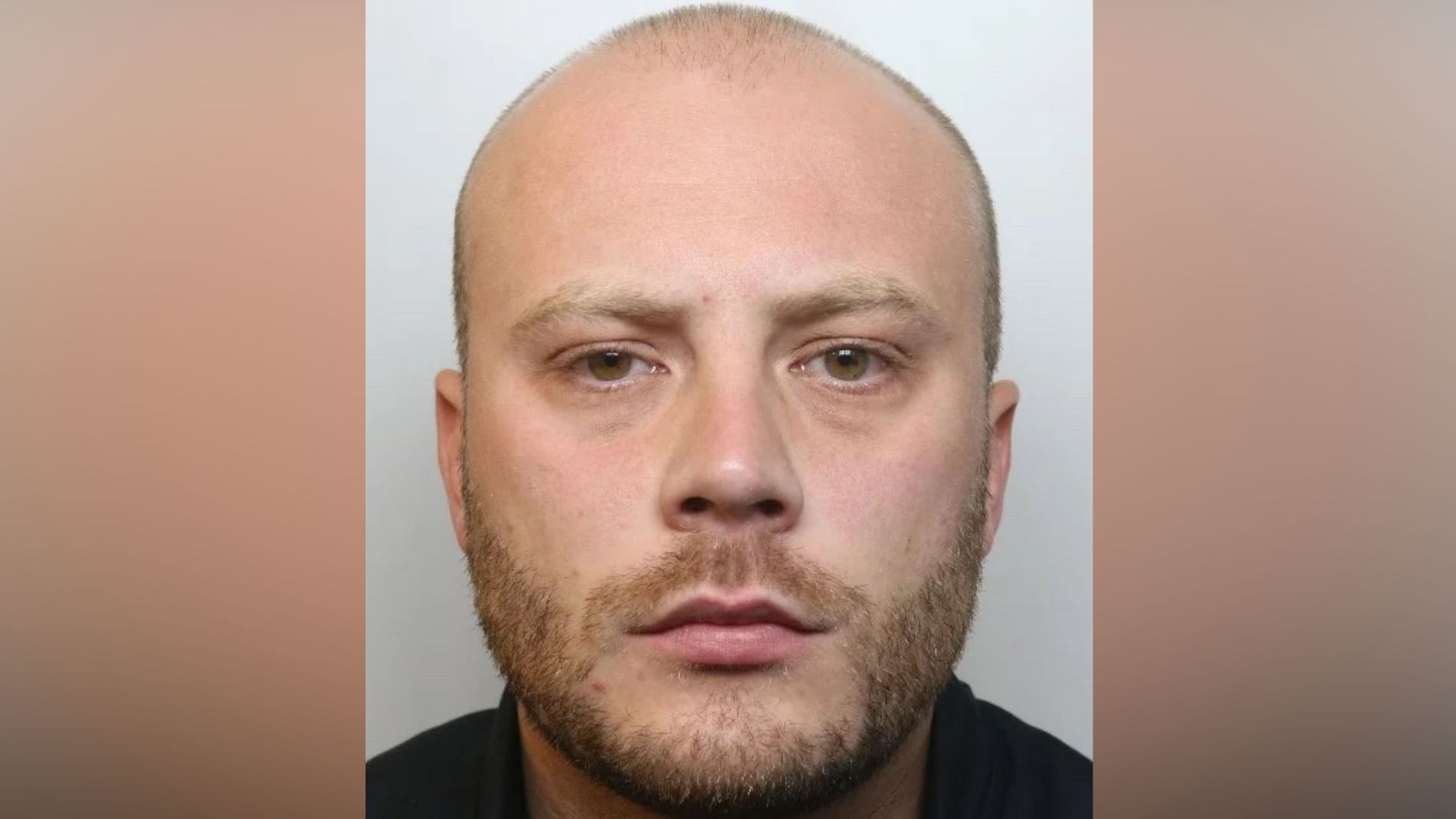
In 2023, Ryan Theaker — then a serving constable with Merseyside Police — raped a woman in a Liverpool hotel room following a night out. The assault lasted 82 minutes. During that time, the victim said “get off me” approximately 300 times. She was pushed onto the bed, forcibly undressed, made to wear sexual restraints, and assaulted with sex toys Theaker had brought to the hotel. When she believed the attack had ended, he seized her by the hair and raped her.
What gave prosecutors their most decisive evidence was not a witness or a forensic trace. It was a recording the victim made herself, covertly, during the attack. That decision — taken under conditions of extreme distress — would later prove central to Theaker’s conviction for rape and sexual assault at Liverpool Crown Court.
On Thursday, Judge Brian Cummings sentenced Theaker, 30, to 11 years in prison with an extended five-year licence period. The judge described the assault as “harrowing.”
Who was Ryan Theaker, and how was he regarded by his institution?
Theaker was, by the account of his own defence, an “excellent” police constable. That was the characterisation offered by defending barrister Jenny Tallentire during sentencing — a descriptor that sits with particular weight against the detail of what the court had heard. The gap between institutional reputation and individual conduct is not incidental here; it is the core of the accountability failure the case exposes.
The victim’s personal statement, released by Merseyside Police, addressed this directly: “I still struggle to understand how he was able to go into work, arrest someone for a crime that was less or the same as what he had done to me, and still be proud to wear that uniform.”
That question — how an officer committing serious sexual violence continues to function within a police force, making arrests, exercising state authority — is one that no institutional statement has yet answered.
Why did it take so long for the crime to be reported?
The assault occurred in 2023. The victim did not report it to police until August 2024, more than a year later — and only after she had attempted suicide. She had first disclosed the attack to family and friends following that attempt. The sequence matters: it illustrates the conditions under which survivors of sexual violence, particularly those victimised by law enforcement officers, navigate the decision to report.
The asymmetry of power between a rape victim and her attacker is severe in any case. When the attacker is a uniformed officer with arrest powers, that asymmetry compounds. The victim’s statement acknowledges the support she received from investigating officers and supervisors, but the structural reality — that she was expected to report to the same institution that employed her abuser — is not one that institutional expressions of support dissolve.
What happened to Theaker’s employment?
Following the August 2024 report, Theaker was suspended and faced misconduct proceedings. The day before his sentencing hearing in August 2025, he resigned from the force, having accepted, according to reports, that dismissal would have followed had he remained. He had, in other words, worn the uniform for nearly two years after committing the rape.
His resignation pre-empted a formal misconduct finding — a procedural exit that, while legally unremarkable, forecloses the public accountability that a full disciplinary hearing would have provided.
What does the victim’s statement tell us?
The victim read her statement in court, telling Theaker directly: “The monster never wins.” The full statement, released by Merseyside Police, is precise about both the damage and the limits of that damage. “It is true his actions will always impact my life,” she wrote. “I’ll always be physically and emotionally damaged. He wasn’t successful in fully breaking me. Of course, I have to rebuild pieces that he did manage to break, but those pieces are so much stronger than before. I am not afraid.”
She also articulated a purpose beyond her own case: “I hope by reporting and bringing this criminal to justice that I have protected a woman from enduring what I have by the hands of him, as people like him have no place in society.”
That framing — individual survival recast as collective protection — reflects a clarity that the institutions surrounding this case have not yet matched with equivalent structural honesty about how Theaker was able to operate, undetected, for as long as he did.