
What is actually happening in Yemen right now?
Yemen is once again at war. Fighting between internationally recognised government forces, backed by Saudi Arabia, and the Houthi movement — formally known as Ansar Allah and closely aligned with Iran — has escalated sharply in recent weeks, shattering a fragile calm that had held since a UN-brokered ceasefire in 2022. The scale and pace of the violence have prompted the UN Special Envoy to Yemen, Hans Grundberg, to declare before the Security Council on Friday that the country has effectively slid back into “full-scale war”.
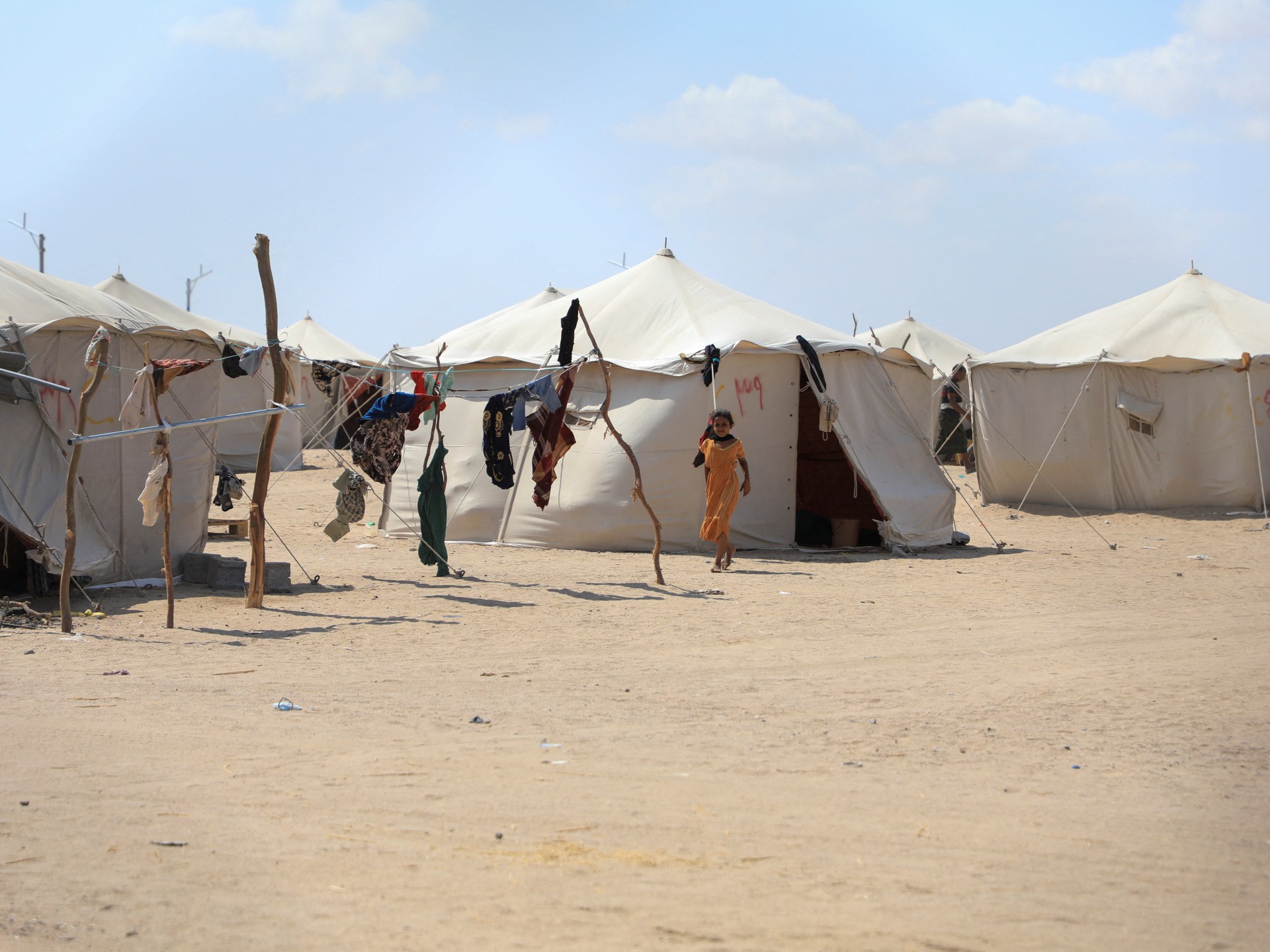
Since August, the United Nations has documented the deaths of at least 46 civilians, the majority of them women and children. More than 200,000 people have been displaced since fighting intensified in September, according to the International Organization for Migration.
On Sunday, the Yemeni government formally announced the launch of Operation Dawn of Yemen, an offensive aimed at retaking all remaining Houthi-held territory — including the capital, Sanaa. The previous day, military spokesman Colonel Majid al-Nuzaili stated that coalition forces had conducted more than 2,750 precision strikes within a single 24-hour period, claiming the “neutralisation” of over 1,400 Houthi fighters and the breach of multiple defensive lines.
Why does Bab al-Mandeb matter so much?
The immediate military objective driving the government offensive is control of the Bab al-Mandeb strait — the narrow waterway at the southern entrance to the Red Sea, through which an estimated 10 percent of global trade passes. Its strategic weight has grown considerably since the US-Iran conflict effectively closed the Strait of Hormuz to shipping, forcing Saudi Arabia and other exporters to rely almost entirely on this alternative route for oil exports.
In July, the Houthis declared a naval blockade targeting vessels linked to Saudi Arabia passing through the strait. While the group framed this as retaliation for longstanding Saudi blockades on Yemen, analysts interpreted the move as a calculated pressure tactic designed to strengthen Iran’s negotiating position in its on-and-off talks with Washington.
By September, Houthi forces had seized territory along Yemen’s western coast, including the strategically located Mayyun Island within the strait itself, and pushed coalition forces back from the port city of Mocha. Fierce battles are now raging around Mocha and the nearby town of Dubhab. Both sides currently claim control of the shipping lanes, a contradiction that reflects the volatility and opacity of the ground situation.
How did Yemen reach this point?
The origins of the civil war
The conflict’s roots trace to 2014, when the Houthis seized Sanaa and established parallel governance structures, capitalising on deep popular dissatisfaction with the recognised government and the instability that followed the 2011 revolution. A Saudi-led coalition intervened militarily in 2015 to restore the internationally recognised government, initially to Aden. The war that followed was catastrophic: between 150,000 and 227,000 people died, millions were displaced, and famine conditions took hold by 2016.
A UN-mediated truce reached in April 2022 halted the worst of the fighting and allowed humanitarian access to resume. It did not resolve the underlying political contest; it suspended it.
The regional escalation that broke the truce
From late 2023 onwards, the Houthis — operating as part of Iran’s self-described “Axis of Resistance” — began disrupting Red Sea shipping in declared solidarity with Gaza. In March of this year, the group fired missiles at Israel, formally entering the broader US-Israel-Iran confrontation that had begun in February. The July blockade declaration against Saudi-linked shipping followed, and with it came the ground offensive that shattered the 2022 calm.
On 4 October, Rashad al-Alimi, head of the Yemeni government’s Presidential Leadership Council, announced a counter-offensive to “restore state authority,” setting the current phase of the conflict in motion.
Who is bearing the human cost?
Civilians on all sides of the front lines are absorbing the violence. Al Jazeera’s correspondent in Sanaa, Yousef Mawry, reported that the bombardment of the capital is beginning to resemble the relentless air campaign of 2015, with strikes hitting Sanaa International Airport, industrial facilities including a food-processing factory and a manufacturing plant, and at least four telecommunications infrastructure sites. Mount Attan in the capital was struck by ten separate air raids.
Saudi coalition officials claim strikes have destroyed 136 military targets in Houthi-held areas, including launch pads and radar installations. The Houthis counter that the campaign is deliberately targeting civilian infrastructure and warn that it risks reproducing the humanitarian catastrophe of the 2015–2022 period.
The Houthis have also struck back beyond Yemen’s borders. On Friday, Saudi Arabia confirmed that three of its citizens — including a pilot — were killed and several others wounded in Houthi missile strikes on Riyadh’s international airport, the first fatalities inside the kingdom since fighting resumed. Several airlines suspended flights in response.
What does international law say about the conduct of this war?
International humanitarian law obliges all parties to a conflict to distinguish at all times between military objectives and civilian objects, and to refrain from attacks that cause disproportionate civilian harm. The targeting of airports serving civilian traffic, telecommunications infrastructure, and industrial facilities raises serious questions under these standards — questions that apply with equal force to the Saudi-led coalition and to the Houthis.
Rights organisations have already called for scrutiny of both sides’ conduct. The UN Special Envoy’s warning that civilians, including women and children, are bearing the “brunt of escalating violence” signals that the protection framework is under severe strain, even as accountability mechanisms remain weak and politically contested.
Will the United States intervene?
Washington’s position is, at minimum, one of declared concern. Speaking at the Security Council on Friday, Jeff Bartos, the US ambassador to the UN for Management and Reform, said the United States was “gravely concerned” by Houthi attacks on civilian infrastructure and airports. He called on the Houthis to cease attacks against the Yemeni government and Saudi Arabia, and demanded that Iran end all support for the group.
“The pattern remains unmistakable,” Bartos said. “The Houthis act as instruments of Tehran to threaten freedom of navigation, undermine regional stability, and terrorise innocent civilians.” The statement stopped well short of announcing any direct military involvement, consistent with prior US signals that it prefers to remain outside the Yemen theatre.
Whether that posture holds as the conflict deepens — particularly given the Bab al-Mandeb’s centrality to global trade and the broader US-Iran confrontation — remains an open and consequential question.
Is a political resolution possible?
The UN Special Envoy’s appeal for renewed mediation faces a structural obstacle: recent battlefield gains by government forces may have reduced Sanaa’s incentive to negotiate. Military momentum, when it exists, rarely coexists with political flexibility. Grundberg acknowledged this tension directly, warning that “unless war is to become Yemen’s permanent reality, the time to consider political strategies is now.”
The 2022 ceasefire demonstrated that pauses are achievable, but also that they do not substitute for a political settlement. Yemen’s underlying disputes — over governance, territorial control, revenue sharing, and the Houthis’ relationship with Iran — remain entirely unresolved. Without a framework that addresses these, any pause risks becoming merely the interval between one phase of violence and the next.