
A Breach of Public Trust Inside HMP Wandsworth
A nurse employed at HMP Wandsworth has admitted to conducting an “inappropriate personal relationship” with a convicted killer held at the same institution, entering a guilty plea at Kingston Crown Court on Tuesday in a case that raises pointed questions about oversight, custodial security, and the professional obligations of healthcare staff working within the prison estate. Stephanie Adair, 29, of Southwark in south London, pleaded guilty to a single count of misconduct in a public office — an offence that, by its very nature, requires the court to find that a person holding a public duty wilfully abandoned that duty to a degree that constitutes a criminal wrong, not merely a disciplinary lapse.
The indictment sets out that Adair “wilfully misconducted” herself by sustaining a personal relationship with inmate Jakhi Crosdale over a period spanning September 2023 to November 2024 — more than fourteen months during which, according to the prosecution, contact was maintained through Crosdale’s illicit mobile phone. The possession and use of unauthorised mobile devices within the prison estate is itself a criminal offence under United Kingdom law, and the extended duration of the alleged contact suggests a sustained failure of detection on multiple fronts, from communications monitoring to the physical security protocols that govern the movement of contraband into custodial facilities.
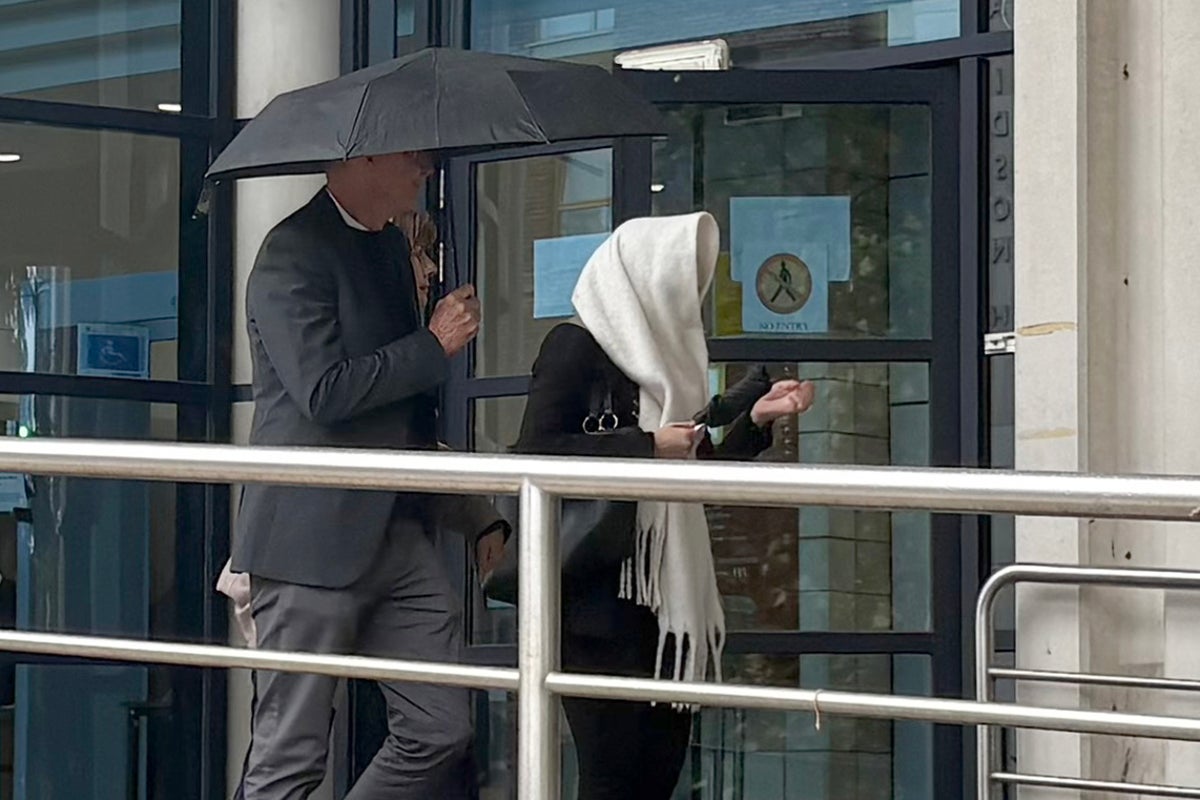
Adair appeared in the dock dressed in a black blazer and spoke only to confirm her name and to enter her guilty plea. The economy of her courtroom presence offered no public account of motive or circumstance, and the full factual basis of the offence will presumably be explored at the sentencing hearing scheduled for 9 February.
Crosdale’s Parallel Conviction and Custodial History
Jakhi Crosdale, 28, appeared at the same hearing via a CVP video link from HMP Manchester, where he is currently held. Prosecutor Oliver Mosley informed the court that Crosdale had been previously convicted of manslaughter — a conviction that contextualises both his presence in the custodial system and the particular gravity of the relationship Adair admitted to sustaining. Crosdale is on recall until 2029, meaning his continued detention operates under the terms of a licence revocation rather than an original custodial sentence still being served, a distinction that carries its own set of procedural and oversight implications.
Crosdale himself pleaded guilty to a single count of unauthorised transmission of image or sound by electronic communication from within a prison, covering activity at both HMP Wandsworth and HMP Lowdham Grange between February 2024 and October 2024. The geographic spread of the charge — encompassing two distinct establishments — indicates that the communications did not cease when Crosdale was transferred between institutions, and that the relationship, or at minimum the electronic contact underpinning it, persisted across that movement. Both defendants were granted unconditional bail ahead of the February sentencing date, a decision that will itself invite scrutiny given the nature of the offences involved.
Structural Vulnerabilities and the Question of Institutional Accountability
Cases of this kind rarely exist in isolation. The systematic use of illicit mobile phones within the English and Welsh prison estate has been documented extensively by inspectors, campaigners, and parliamentary committees over many years, and successive governments have pledged technological and procedural countermeasures — signal-blocking, enhanced searching regimes, dedicated intelligence units — without eliminating the problem. That a nurse could maintain contact with a prisoner via an unauthorised device for over a year, across at least two institutions, without triggering a security response, points to a gap between stated policy and operational reality that deserves more than case-by-case adjudication.
The specific vulnerability presented by healthcare staff within custodial settings is a recognised dimension of prison security risk. Nurses, doctors, and allied health professionals occupy a structurally ambiguous position: they are bound by professional codes of conduct administered by external regulators such as the Nursing and Midwifery Council, while simultaneously operating within the security framework of an institution whose primary purpose is detention. That dual accountability can, in practice, generate blind spots — both in terms of supervision and in terms of the professional culture within which individual conduct is assessed. Whether the NMC will open parallel fitness-to-practise proceedings against Adair remains, at this stage, unconfirmed.
The case also surfaces, without resolving, a broader question about the adequacy of vetting and ongoing monitoring for prison healthcare workers. HMP Wandsworth — one of the largest prisons in Western Europe by population — has faced repeated criticism from His Majesty’s Inspectorate of Prisons in recent years, with inspection reports documenting concerns about safety, staffing, and the quality of healthcare provision. Whether the institutional conditions at Wandsworth created any particular permissive environment for the conduct described in Tuesday’s indictment is a matter that the sentencing judge may or may not choose to address, but it is a question that the public interest demands be asked.
Legal Framework and What Sentencing May Reveal
Misconduct in a public office is a common law offence carrying an unlimited maximum sentence, though in practice custodial sentences for this charge vary enormously depending on the degree of wilfulness involved, the duration of the misconduct, and any harm — direct or indirect — that can be attributed to it. The charge against Adair does not, on the face of the indictment as reported, allege that she facilitated any escape, conveyed prohibited items beyond the illicit phone contact, or caused identifiable harm to a third party; the sentencing judge will nonetheless be required to weigh the corrosive effect that such conduct has on the integrity of public institutions as a whole, a consideration that courts have treated as a serious aggravating factor in comparable cases.
For Crosdale, the unauthorised transmission charge carries a maximum sentence of two years’ imprisonment under the Prisons (Interference with Wireless Telegraphy) Act 2012 and subsequent amendments. Given that he is already on recall until 2029, the practical sentencing arithmetic may be less dramatic than the statutory maximum implies, though the court retains discretion to impose a consecutive term. The February hearing will be the first occasion on which a fuller account of the relationship — its nature, its origins, and its consequences within the institution — enters the public record, and it is that account, rather than Tuesday’s brief exchange of pleas, that will determine how this case is ultimately understood.