
What did Andy Burnham actually claim?
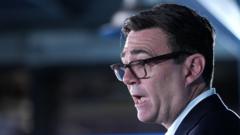
Speaking on The Rest is Politics podcast, UK Prime Minister Andy Burnham stated that Russia did interfere with the 2016 Brexit referendum. He described asking intelligence officials upon entering Downing Street whether such interference had occurred, and receiving what he called a “clear answer” that it had. It marks the first time a sitting UK prime minister has made this assertion explicitly on the record.
Burnham did not disclose the nature, scale, or specific mechanisms of the alleged interference. His remarks were broad in framing, extending the concern beyond Britain’s borders: he warned that comparable Russian operations are currently active in France and Germany, and said he had raised the matter directly with German Chancellor Friedrich Merz during a visit to Berlin earlier that week.
“There is certainly misinformation, disinformation that is emanating from Russia into German politics,” Burnham told the podcast. He added that voters in both Germany and France deserved to understand that “some of this politics is instigated via our enemies, namely Russia.”
What does the existing evidence actually show?
The evidentiary record is substantial but incomplete. In 2020, Parliament’s Intelligence and Security Committee published a report examining Russian interference in UK democratic processes. That report stopped short of a definitive conclusion on whether the Kremlin had actively sought to tilt the result of the EU referendum, but it delivered a sharp rebuke to successive governments for failing to properly assess or counter the threat.
That same year, the then-Conservative government stated it was “almost certain that Russian actors sought to interfere” in the 2019 general election — a notably stronger formulation than anything previously applied to the Brexit vote. The Russian foreign ministry dismissed the 2020 parliamentary report as “Russophobia,” while a Kremlin spokesman maintained that Russia does not interfere in other countries’ elections.
Foreign Office minister Stephen Doughty, asked on BBC Breakfast to specify the evidence behind Burnham’s Brexit claim, declined to do so. “Russia clearly has attempted to interfere on a number of our democratic processes,” he said, citing Russian spending of £1.5 billion in the current year alone on disinformation and propaganda. He did not link that figure directly to Brexit-era activity.
How does Russian disinformation actually operate?
Documented Russian disinformation operations have grown considerably more sophisticated since 2016. BBC Verify has tracked campaigns in which artificial intelligence is used to produce deepfake videos impersonating journalists and established news organisations, primarily targeting narratives around Ukraine. One fabricated news website falsely claimed that Ukrainian President Volodymyr Zelensky had purchased a property owned by King Charles at a discounted price — a straightforward example of the fabricated-scandal model.
Vijay Rangarajan, head of the UK Electoral Commission, told MPs earlier this year that Russian deepfake videos had been “used extensively in elections around the world,” and cautioned that “there is no reason to assume Britain would be an exception.” His testimony underscores the structural vulnerability of democratic processes to influence operations that exploit algorithmically amplified platforms.
Burnham himself addressed the issue at the United Nations last month, accusing Russian agencies of using “every means at their disposal to spread lies and disinformation and prey on people’s fears.” He announced that the UK would establish a dedicated centre to counter what he described as a “poisonous tide” of disinformation, a commitment Downing Street framed within a broader programme of institutional hardening under the National Security Act.
Why is the Brexit framing politically contested?
The decision to invoke Russian interference specifically in the context of Brexit — rather than limiting the claim to more recent elections — has drawn immediate political pushback. Britain Unbound, a pro-Brexit campaign group, characterised Burnham’s remarks as “another crude attempt to undermine the legitimacy of the decision that the British people made in 2016.” The group acknowledged that foreign interference is “obviously unacceptable” but argued there is “no good reason to believe that Russian intervention influenced the outcome of the referendum.”
Doughty was pressed directly on whether Burnham’s comments were motivated by a desire to re-enter the European Union. He denied it, insisting the prime minister was making “a broader point about Russian attempts to destabilise and interfere in our democracy.” That denial does not resolve the underlying tension: attributing a democratic result — even partially — to hostile foreign manipulation carries profound implications for how that result is subsequently treated as a political mandate.
What remains unknown — and why it matters
The core problem with Burnham’s statement is the gap between its certainty and its specificity. A prime minister asserting, on the basis of classified intelligence, that foreign interference occurred is a significant act. But without any public accounting of what that interference comprised — whether targeted social media amplification, funding of campaigns, hack-and-leak operations, or something else — the claim cannot be independently evaluated, challenged, or built upon by researchers, legislators, or the public.
International human rights and democratic accountability frameworks place affirmative obligations on states not merely to detect foreign interference but to disclose it to citizens whose political agency has been compromised. The 2020 Intelligence and Security Committee report criticised governments for precisely this failure. Burnham’s podcast declaration, however emphatic, does not yet constitute the kind of structured public disclosure that would meet that standard.
The question of what Russia did, when, through which channels, and with what measurable effect on the Brexit result remains, for now, officially asserted but publicly unverified.