
Syria’s New Courts Sentence Assad and Inner Circle to Death in Absentia for Crimes Against Humanity
Overview
A Syrian criminal court has handed down death sentences to ousted president Bashar al-Assad and seven former senior officials, convicting them in absentia of murder, torture, arbitrary detention, and crimes against humanity committed during Syria’s nearly fourteen-year civil war. The verdicts, issued by the Fourth Criminal Court in Damascus, mark the first formal judicial convictions against Assad or members of his inner circle since the collapse of his family’s five-decade grip on power in December 2024.
Key Findings
Syria’s new governing authorities formally opened proceedings against Assad and other officials in April 2025, pursuing cases both in absentia and against those in custody. The verdicts follow a broader accountability process that civil society organisations and survivor networks have pressed for since the regime’s fall.
The Origins: Daraa and the Machinery of Repression
Syria’s uprising began in Daraa in March 2011, when security forces arrested fifteen students for writing anti-government slogans on a school wall. Atef Najib, then commanding the Political Security Branch in the province, oversaw a period in which more than a dozen teenagers who had scrawled similar graffiti were detained and tortured. That episode became a catalyst for mass protests across the country.
The government’s response was a systematic crackdown rather than any political accommodation. Protests spread and intensified; the crackdown escalated in kind. What began as a repression of pro-democracy demonstrations spiralled into a civil war that lasted nearly fourteen years, killed more than half a million people, displaced millions more, and saw tens of thousands disappear into a prison system documented by human rights investigators as a site of industrial-scale torture and extrajudicial killing.
The Limits of Justice at a Distance
The practical enforceability of these verdicts remains deeply uncertain. Assad and his brother Maher are sheltered in Russia, which granted them political asylum and has shown no indication of complying with Syria’s extradition requests. International mechanisms for compelling a state to surrender individuals granted asylum are limited, and Russia’s record of cooperation with accountability processes of this kind is negligible.
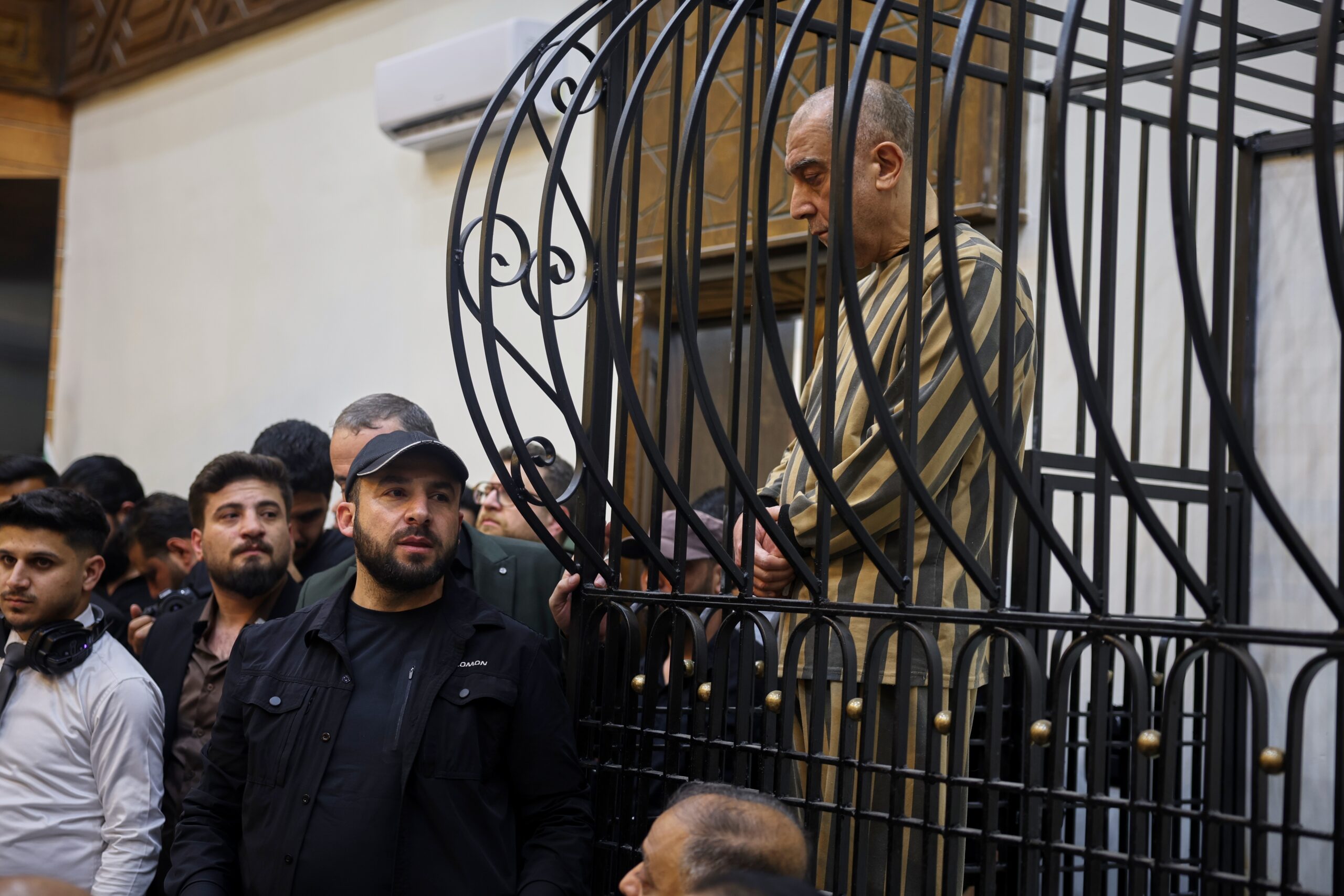
The United States Treasury sanctioned Atef Najib as early as April 2011, identifying him as a key architect of the Daraa repression. That designation had no discernible effect on his conduct at the time, and he continued to operate within the Assad security apparatus for years. His physical presence in a Damascus courtroom distinguishes his case from those of the other defendants, though the death sentence he now faces raises its own questions under international human rights law.
Scale of the Harm
The charges before the court, though focused on specific officials and specific acts, gesture toward a catastrophe of documented proportions. More than 500,000 people were killed during the conflict. Millions were displaced internally and across borders. Tens of thousands were absorbed into a detention system that United Nations investigators and independent monitors have characterised as a site of systematic torture, enforced disappearance, and extrajudicial execution.
Syria’s new authorities have signalled their intent to pursue further prosecutions. Whether those efforts will reach the individuals most responsible — many of whom remain beyond Syrian jurisdiction — will depend substantially on the degree of international cooperation that post-Assad Syria can secure, and on the willingness of states currently sheltering former regime figures to reconsider their positions.