
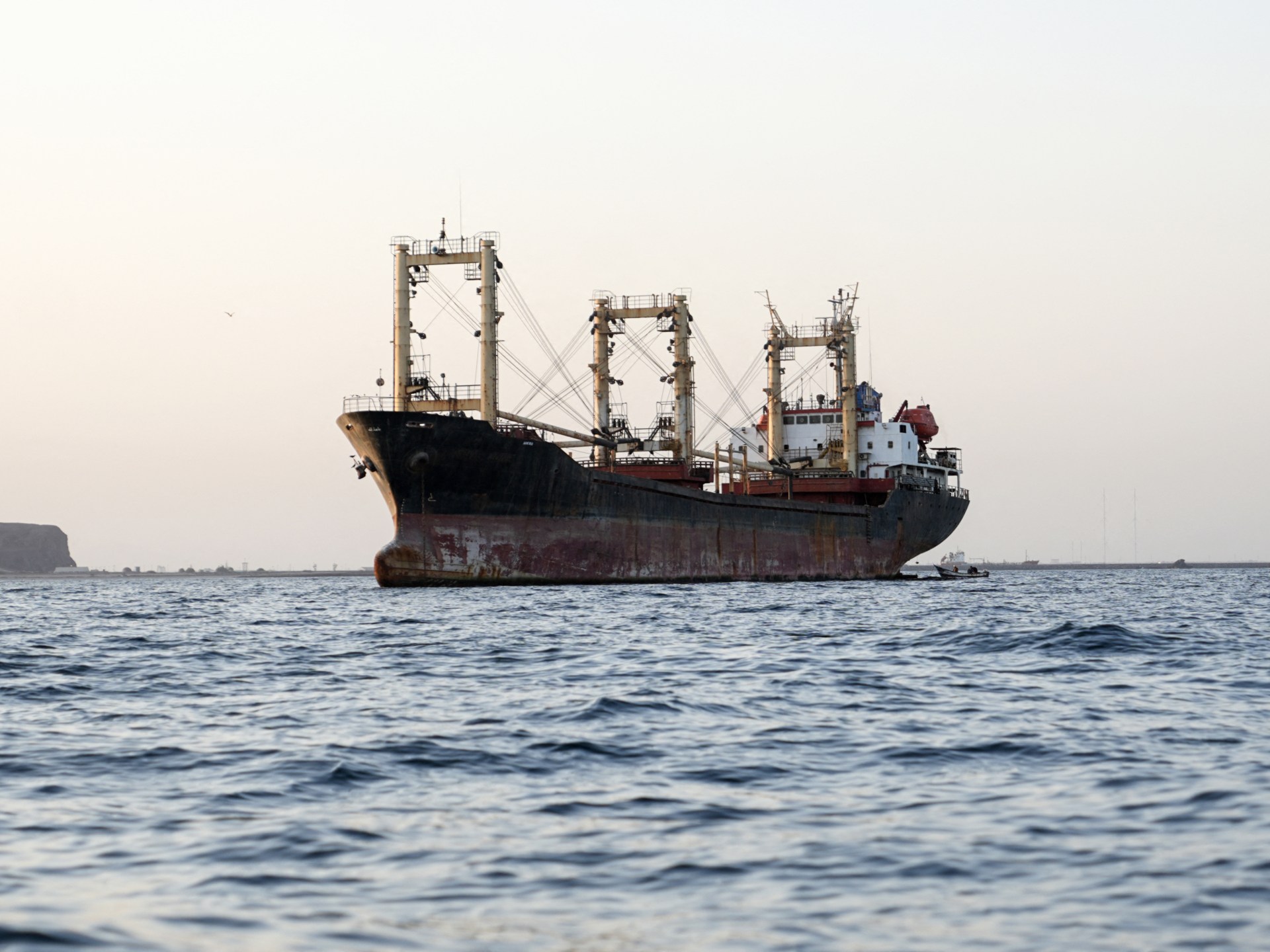
The Bab al-Mandeb strait — thirty kilometres wide at its narrowest, separating Yemen from the Horn of Africa — has long functioned as one of the arteries through which the global economy breathes. Roughly twelve to fifteen percent of world trade has historically moved through it. Now, that artery is under serious threat, and Italy has decided it will not wait for Brussels to act.
Italian Defence Minister Guido Crosetto announced this week that Rome would deploy warships to protect Italian commercial vessels transiting the strait, explicitly bypassing the European Union’s collective decision-making process. “We have the capabilities to protect the passage,” Crosetto said. He added that Rome “must not allow bureaucratic delays in decision-making to exacerbate an already complex situation” — a formulation that is diplomatically measured in tone but pointed in its implication. The EU, in Crosetto’s assessment, is too slow. Italy will move regardless.
The decision reflects a broader fracturing of the Western coalition’s approach to maritime security in the Red Sea. The United States and the EU have already conducted military operations aimed at protecting merchant shipping from Houthi attacks, with limited success. Fighting in Yemen has escalated rather than subsided. The Houthis have not been deterred. And now, a significant new development has altered the strategic calculus entirely.
In recent weeks, the Iran-backed Houthi movement launched a rapid offensive that brought the entirety of Yemen’s western Red Sea coastline under its control, including several strategically positioned islands. The advance was swift. It was consequential. It has given the Houthis effectively unrestricted territorial access to the waterway — a development that transforms their capacity to threaten or interdict shipping from a nuisance into a structural problem for international maritime commerce.
The group’s history of attacking vessels it associates with the United States or its regional allies makes this consolidation of coastal control more than a military footnote. It represents a sustained capability to disrupt one of the last major arteries through which Gulf oil reaches global markets. That last qualifier matters enormously, because the Bab al-Mandeb’s strategic weight has increased sharply in recent months following Iran’s effective seizure of the Strait of Hormuz during its conflict with the United States and Israel — an event that choked off the world’s most critical oil chokepoint and forced Gulf crude exports toward alternative routes. Saudi Arabia has responded by leaning heavily on pipelines and Red Sea shipping to bypass Hormuz altogether. The Bab al-Mandeb, in this context, is no longer merely important. It is close to irreplaceable.
Control over the strait has been contested since Yemen’s war began in 2015, with the internationally recognised Yemeni government, Houthi forces, and various regional actors holding different stretches of coastline at different moments over the past decade. What has changed is the scale and speed of the Houthi consolidation — and the degree to which external powers appear unable to reverse it on the ground.
Italy’s unilateral posture raises questions that go beyond immediate naval logistics. A European state deploying warships independently, without waiting for an EU mandate, signals a preference for national action over multilateral coordination at precisely the moment when multilateral coordination is most needed. Whether that choice reflects genuine urgency, domestic political calculation, or frustration with EU institutional inertia — or some combination of all three — is a question Crosetto’s statements do not fully answer.
What they do confirm is that the security architecture the West has attempted to construct around the Red Sea is under strain. The Houthis have not been suppressed. The strait has not been secured. And now, at least one European government has concluded that waiting for collective agreement is a luxury the situation no longer permits.
The consequences of a fully impassable Bab al-Mandeb, as Crosetto himself warned, would be severe — for energy markets, for container trade, for the economies of countries that depend on the Suez Canal corridor as a lifeline. Whether Italian warships can meaningfully alter that trajectory, operating without a broader coalition framework, remains an open and serious question. The strait is narrow. The stakes are not.