
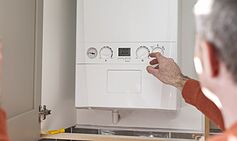
As autumn temperatures fall across the United Kingdom and millions of households prepare to switch on their central heating for the first time since spring, British Gas has issued a warning that carries implications well beyond a seasonal inconvenience: an estimated 34,000 homes are expected to experience boiler breakdowns this weekend alone, triggering a surge of emergency callouts to service engineers at a moment when the financial pressures on those same households are quietly intensifying. The convergence of a predictable infrastructure stress event with an emerging policy-driven cost transfer onto consumers reveals a structural problem that neither the energy industry nor the government has adequately addressed.
The scale of the anticipated breakdown surge is not accidental. Data consistently shows that the vast majority of UK households activate their heating systems by late October, creating a concentrated spike in demand on ageing boiler infrastructure that has sat dormant through the warmer months. British Gas service and repair engineer Peter Knowles acknowledged the pattern directly, noting that the hiatus between summer and the first cold snap is precisely when deferred maintenance becomes costly. “Getting ahead now can make all the difference,” Knowles said, pointing to basic preparatory steps — checking boiler pressure, bleeding radiators to release trapped air, insulating exposed pipes, and clearing gutters — as measures that can reduce the likelihood of a household joining the 34,000 expected to need emergency repairs. The Met Office has confirmed a sustained autumn chill is moving across the country, compressing the window for preventive action.
What makes this seasonal crisis particularly significant is the policy context surrounding it. Ministers are reportedly considering a doubling of mandatory sales targets for heat pump installations, a quota system that places legal obligations on boiler manufacturers to sell a prescribed volume of low-carbon alternatives or face substantial financial penalties. The mechanism by which those penalties are absorbed is not opaque: manufacturers pass the cost directly to consumers in the form of a surcharge on conventional gas boilers. Under the current framework, that hidden charge already stands at approximately £100 per unit. If the proposed quota increase proceeds, industry estimates suggest the surcharge could rise to £140 — a 40 percent increase imposed on households that, in many cases, have no viable or affordable alternative to a gas boiler replacement. The burden, as is routine in such regulatory designs, falls most heavily on those least equipped to absorb it.
The accountability gap here is worth examining precisely. The surcharge mechanism operates without transparency at the point of sale: consumers purchasing a replacement boiler are unlikely to be informed that a portion of the price reflects a manufacturer’s regulatory penalty rather than the cost of the product itself. This is a form of cost transfer that bypasses parliamentary scrutiny of direct taxation while achieving a broadly equivalent fiscal effect on household budgets. At a time when energy bills remain elevated and emergency heating repair costs add further strain, the addition of a concealed policy levy compounds financial pressure on working households in a manner that deserves far more rigorous public accounting than it has so far received. The government’s climate transition objectives are legitimate, but the instrument chosen to advance them — a hidden surcharge calibrated to the pace of a quota — is neither transparent nor equitable in its distributional impact.
The 34,000 breakdown figure is, in isolation, a logistical headline. Situated within the broader architecture of energy policy and consumer cost transfer, it becomes something more: a precise illustration of how systemic failures in infrastructure maintenance, regulatory design, and institutional transparency converge on ordinary households during moments of vulnerability. The coming weeks will test both the resilience of ageing heating infrastructure and the willingness of policymakers to account honestly for who bears the cost of the energy transition they are engineering.