
The International Criminal Court is being squeezed from multiple directions simultaneously, and yet it continues to function. That, in itself, is the central fact that demands examination. The question is not merely whether the court is surviving American pressure, but what the coordinated effort to destabilise it reveals about the broader contest over international accountability — and who ultimately pays the price when that accountability fails.
A Sanctions Regime Already Biting
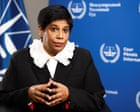
Nazhat Shameem Khan, the Fijian deputy prosecutor co-running the Office of the Prosecutor pending the appointment of a new chief, told the Guardian this week that the court’s work across all active investigations continues unimpeded by the sanctions announced on 9 October by US Secretary of State Marco Rubio. That announcement came with a six-month grace period and an ultimatum framed in terms that were as legally incoherent as they were politically theatrical: “Either the ICC will end its threats, or we will end the ICC.” Rubio offered no definition of what concessions might satisfy Washington, and Khan confirmed that the demand remains opaque to the court itself.
What is not opaque is the practical effect already unfolding. Although the new sanctions targeting the ICC as an institution are not formally operative until April 2026, banking institutions have already begun restricting services to court staff. Khan described the phenomenon with precision: banks are “over-complying” to minimise their own exposure while the ultimate scope of the measures remains undefined. This is a familiar dynamic in the architecture of American secondary sanctions — the chilling effect precedes the formal trigger, and the uncertainty does more immediate damage than the rule itself.
The court has responded with deliberate pragmatism. It has migrated its software infrastructure away from Microsoft toward European alternatives, and is in active negotiation with banking and health insurance providers to insulate its operations. Thirteen ICC staff, including Khan herself, were individually sanctioned as early as February 2025, making her, as she noted with understated irony, already accustomed to life without a credit card. She acknowledged the inconvenience, then placed it in context: “We see the faces of our victims for whom sanctions and credit cards are completely irrelevant. They just want justice.”
The Gaza File and the Silence That Is Not Inaction
The court’s Gaza investigation has attracted the most intense political attention since arrest warrants were issued in November 2024 for Israeli Prime Minister Benjamin Netanyahu and his former Defence Minister Yoav Galant on charges of war crimes and crimes against humanity. Since then, no further public charges have emerged from the Israel-Palestine file, a silence that critics and observers have read as paralysis or political retreat. Khan was unambiguous in rejecting that reading.
The absence of public announcements reflects a judicial order, not investigative stasis. Earlier this year, the court’s judges ruled that all pending charges and warrant applications in the situation must remain sealed until the chamber determines they can safely be disclosed. Khan stated that further applications from the prosecutor are already before the court under that confidentiality regime, and she offered a carefully calibrated assurance: “Even if we reach a stage of the investigations where it might be imminent, we may not discuss it publicly. And so while there might be an appearance that nothing is happening, I can assure you that there’s significant progress in that particular situation as well as others.”
This is not a minor procedural detail. It means that the public and political record of the court’s activity is, by judicial design, incomplete — and that assessments of its pace or courage based on what has been announced are necessarily partial. The ICC is operating, in part, in enforced silence.
Elsewhere, the court has moved visibly. This month, the pretrial chamber unsealed four arrest warrants against Taliban members on charges of gender persecution, a development with significant implications for the Afghanistan investigation. Khan was explicit that the priority in Afghanistan is crimes committed against women, girls, and other vulnerable groups by the Taliban and by Islamic State Khorasan — not, as Rubio claimed without evidence, the prosecution of American citizens. “We certainly haven’t brought any Americans before the court,” she said, calling the suggestion a possible “mistaken belief” on the part of those applying political pressure.
Institutional Crisis and the Question of Legitimacy
American sanctions are not the ICC’s only wound. The former chief prosecutor, Karim Khan — a British jurist unrelated to the deputy prosecutor — was removed in July 2025 following a vote by member states, after formal investigations into allegations of sexual harassment were launched in late November 2024. He denied the charges. The episode left the Office of the Prosecutor in an interregnum at precisely the moment it faces its most consequential and contested caseload in the court’s history.
That the institution continues to function under these compounded pressures is not a trivial achievement. The court registrar is negotiating with the European Union over mechanisms to block or mitigate the US sanctions. The European Parliament, on Thursday, awarded its Sakharov Prize for Freedom of Thought to the ICC and its officials — a gesture that Khan described as “a very important message that the staff at the court need to hear.” Other states have reaffirmed their financial contributions. The political architecture of support, while fragile, has not collapsed.
What this episode clarifies — with uncomfortable sharpness — is the structural vulnerability of any international institution that depends on the goodwill of powerful states while simultaneously holding those states, and their allies, to account. The Trump administration’s hostility to the ICC is not new; it is a continuation of a posture that predates Trump himself and reflects a consistent American refusal to accept the court’s jurisdiction over its nationals or, by extension, over the nationals of its strategic partners. The sanctions are the most aggressive expression of that refusal to date, but they are not a departure from it.
Khan’s final observation deserves to be taken seriously rather than dismissed as institutional self-promotion. “I think that the fact that there is so much attention on us,” she said, “is a reflection of how relevant we are.” Powerful actors do not expend political capital neutralising institutions that do not matter. The sustained effort to cripple the ICC is, paradoxically, evidence of its significance — and of the lengths to which those who fear accountability will go to prevent it from functioning.