
A Critical System Falls Silent
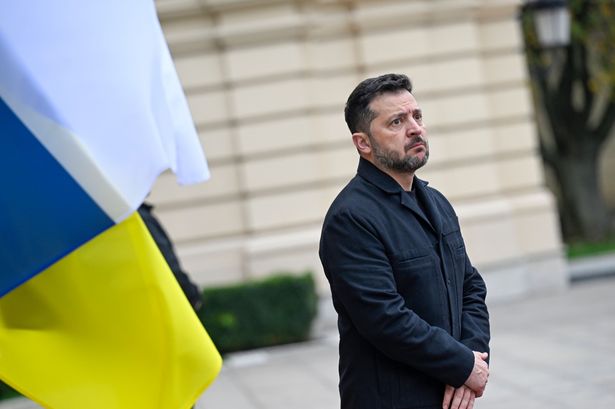
For more than a week, Ukrainian frontline units operated under conditions of degraded satellite connectivity that commanders described as operationally damaging. Drones were lost. Missions were disrupted. Then, on Saturday morning, President Volodymyr Zelensky announced that Starlink and Starshield internet speeds had been restored to the levels his forces require.
“The speeds are now where they need to be,” Zelensky wrote on X, noting that the restoration had begun overnight.
The relief was real. So was the unresolved question at the centre of the episode: who ordered the restrictions in the first place, and under what authority?
What Starlink and Starshield Mean for the War
Ukraine’s dependence on SpaceX’s satellite internet infrastructure is not incidental — it is structural. Since Russia’s full-scale invasion in February 2022, Starlink terminals have become embedded in virtually every layer of Ukrainian military operations, from battalion-level communications to the drone warfare that has defined this conflict’s character. Starshield, SpaceX’s military-grade variant of the service, provides encrypted, hardened connectivity specifically designed for defence applications.
When restrictions were imposed last week, the consequences were immediate and tangible. Ukrainian commanders reported losing drones mid-mission and experiencing cascading failures in logistics and communications chains. The satellite network had become so deeply integrated into operational planning that its degradation functioned, in effect, as a force-multiplier for the adversary.
Defence Minister Yevhenii Khmara credited “direct dialogue” and Zelensky’s personal diplomacy with Washington for securing the restoration. He emphasised that the stakes extended across frontline operations, drone activity, logistics and communications — the full architecture of Ukraine’s military posture.
The Accountability Gap at the Heart of the Disruption
No credible account of responsibility has yet emerged. That absence is itself significant.
President Donald Trump stated he did not order the restrictions. He simultaneously insisted that Elon Musk — whose company, SpaceX, operates the system — should not be blamed. Vice President JD Vance offered a different signal, hinting at White House coordination with Musk. Secretary of State Marco Rubio and Defence Secretary Pete Hegseth both denied any administration involvement. These statements are mutually incompatible. They have not been reconciled.
The episode raises questions that extend well beyond operational inconvenience. A private company controls infrastructure upon which a sovereign state’s military depends for its survival. The legal and governance frameworks governing that dependency — who can restrict access, under what conditions, with what notice and what recourse — remain opaque. International humanitarian law imposes obligations on parties to armed conflict; it does not straightforwardly regulate the conduct of private satellite operators whose decisions carry battlefield consequences.
Ukraine has relied on Starlink for years. That reliance was built on an assumption of continuity. Last week’s disruption tested that assumption and found it fragile.
The Diplomatic Context: Negotiations, Ceasefires and Strained Alliances
The Starlink episode did not occur in a vacuum. It unfolded against a backdrop of accelerating diplomatic activity and deepening transatlantic friction.
Russia agreed on Wednesday to resume three-way negotiations with Washington and Kyiv next month — a development the Trump administration has presented as progress toward ending the war. On Friday, a localised ceasefire was announced around Oleshky, a devastated town in Russian-occupied Kherson in southern Ukraine. The agreement was brokered, unusually, by US First Lady Melania Trump.
Meanwhile, relations between Kyiv and Washington had already been strained by reports of a US deal with Moscow involving Russian diesel imports — an arrangement Ukraine characterised as a betrayal of its interests. The Starlink restrictions, arriving in that context, amplified Ukrainian anxieties about the reliability of American support. The restoration of service does not erase those anxieties. It defers them.
Strikes and Counterstrikes: The War Continues
While the satellite dispute dominated headlines, the war itself produced its own grim Saturday ledger.
A missile strike on Lozova, in Ukraine’s Kharkiv region, killed one person and wounded two others. In Russian-occupied Crimea, Moscow-installed authorities reported power blackouts across several cities following Ukrainian overnight attacks. Ukraine’s General Staff confirmed that its forces had struck a chemical plant in the Russian city of Tolyatti — a facility that, according to Ukrainian military sources, produces materials used in rocket fuel. The mayor of Tolyatti, Ilya Sukhikh, acknowledged that industrial facilities had sustained damage.
Ukrainian forces also struck an electronics plant in Oryol. Local officials reported three people killed in that attack. Ukraine’s General Staff stated the plant manufactured components for the cruise and ballistic missiles Russia deploys against Ukrainian cities — the same missiles that Starshield-connected drone defences are designed to intercept.
The connectivity has been restored. The war has not paused to notice.