
UK Government to Prioritise British Firms in Defence Contracts, Invoking National Security Powers
Healey Announces ‘Pro-Britain’ Procurement Overhaul Amid Industry Warnings
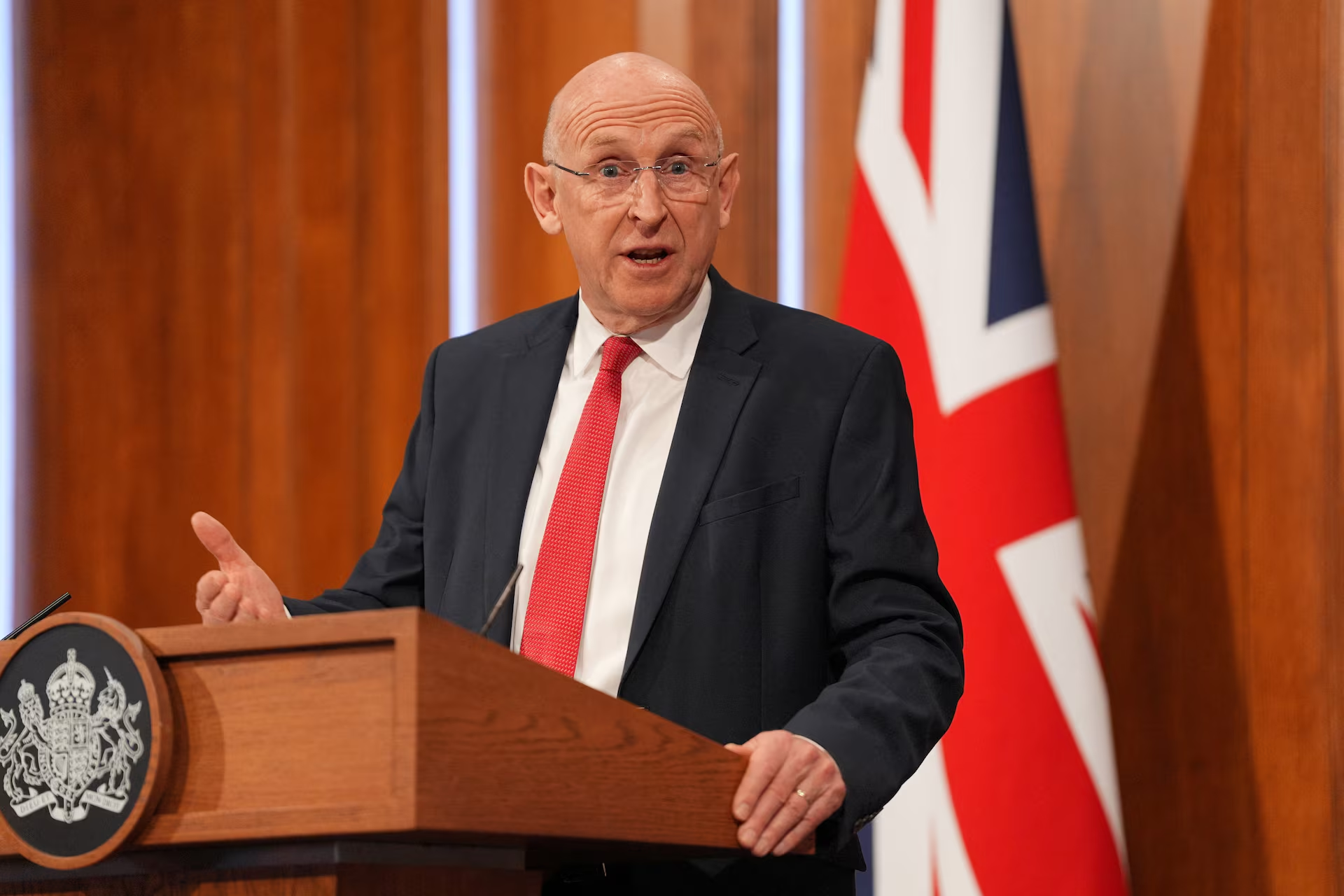
Defence Secretary John Healey announced on Tuesday that the British government will invoke national security exemptions to prioritise domestic companies when awarding defence contracts, overhauling what he described as a “toothless” procurement system.
Speaking at the GMB Union’s congress, Healey outlined a series of measures designed to redirect defence spending toward UK-based firms, as pressure mounts on the government to publish a long-delayed defence investment plan ahead of a NATO summit next month.
What the Policy Change Involves
Healey said his department would use powers embedded in the Procurement Act 2023, which allows the government to exempt certain defence contracts from competitive tendering rules on national security grounds. The exemptions effectively permit the state to mandate that specific capabilities be built within the UK.
The government is also developing formal guidelines to give British-based businesses a structural advantage in defence procurement competitions, the BBC has reported.
Political Context: ‘Buy British’ Pressure from the Treasury
The announcement aligns with a broader push from Chancellor Rachel Reeves, who last month wrote to every cabinet spending minister urging them to “buy British” wherever possible. Her letter identified shipbuilding, steel, artificial intelligence, and energy infrastructure as priority sectors for domestic investment.
Reeves has expressed frustration that too many government contracts are being awarded to foreign companies, and has called for a fundamental shift in spending policy, citing current global tensions as evidence of the need for resilience in critical sectors.
Industry in Distress as Blueprint Remains Unpublished
The policy announcement comes against a backdrop of mounting alarm within the British defence industry. Last week, defence trade association ADS warned that firms were “really struggling” while awaiting the government’s investment plan.
“We have seen firms either moving out of the sector or changing direction and it will continue, no question about that,” ADS chief executive Kevin Craven told the BBC.
The consequences are already tangible. Last month, Aeralis — a British aerospace company developing a replacement for the Red Arrows’ jet — entered administration. Its administrators cited “continued delays to the UK defence investment plan, combined with geopolitical factors affecting sources of funding” as the cause of a sustained cashflow crisis.
Defence Investment Plan Still Delayed
The defence investment plan was initially expected to be published in autumn 2024. Healey said last week that Prime Minister Sir Keir Starmer was “determined” to publish it before the NATO summit scheduled for next month.
However, internal government disagreements over funding levels remain unresolved. Reports suggest the Ministry of Defence believes it requires an additional £28 billion to meet its commitments over the coming years — a figure that has yet to be agreed within government.