
A Conviction, a Release, and a Legislative Gap
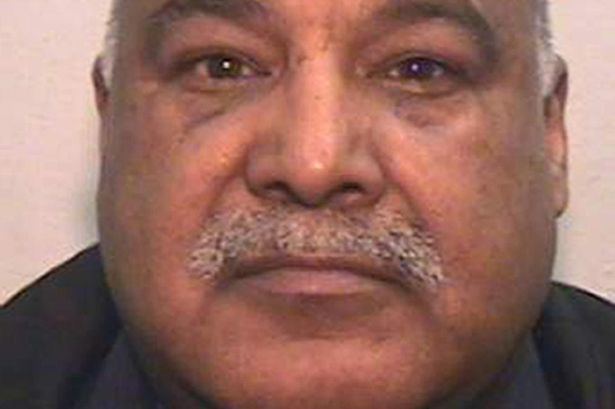
The United Kingdom government finds itself in the uncomfortable position of having released a convicted serial child rapist into monitored accommodation while simultaneously scrambling to close the legal loophole that prevents his deportation. Shabir Ahmed, 73, the ringleader of a Rochdale grooming gang convicted in 2012 of 30 child rape offences, was freed from HMP Leeds last week after serving 14 years of a 22-year sentence — despite having been assessed as recently as 2023 as presenting a “high risk of sexual offending.” The central thesis here is not difficult to identify: the state’s failure to resolve Ahmed’s deportation status before his release from custody reflects a broader, systemic failure of coordination between the criminal justice system, immigration enforcement, and diplomatic channels — one that has left his victims, by their own account, feeling frightened and unsafe.
Ahmed was one of nine men convicted of the systematic sexual exploitation of girls as young as 13, groomed at takeaway restaurants in the Heywood area of Rochdale, Greater Manchester. He was known to his victims as “Daddy” — a term that encapsulates the calculated psychological control his operation exercised over children who were treated, in the words presented to the jury, as possessions to be used for sexual gratification. Following his 2012 conviction, Ahmed was stripped of his British citizenship. He holds, or held, Pakistani nationality, though Pakistani officials have since claimed that he and other gang ringleaders previously renounced their Pakistani citizenship — a claim that, if accurate, effectively renders him stateless in practical terms and complicates any bilateral removal arrangement.
The Loophole and the Legislative Response
The immediate legal obstacle to Ahmed’s deportation lies in the Immigration Act 1971, which exempts individuals from removal if they arrived in Britain before 1973 and have resided in the country for at least five years. Ahmed, born in Pakistan, arrived in the UK prior to that threshold date and therefore falls within the exemption’s scope. Home Secretary Shabana Mahmood is expected to announce on Monday a legislative mechanism designed to close this specific provision — one that, according to government sources cited by The Telegraph, has been calibrated so as not to disturb the residency rights of other Commonwealth citizens, including those from the Windrush generation whose status has already been the subject of its own catastrophic institutional failure. The precision of that calibration matters enormously, and it will warrant close scrutiny when the legislative text becomes available.
Yet even if the domestic legal fix proceeds without controversy, it resolves only half of the problem. A government source acknowledged to The Telegraph that the outcome now depends principally on Foreign, Commonwealth and Development Office negotiations with Islamabad: “We are confident that there is a fix to deal with the domestic side of it but it is now down to the FCDO negotiations with Pakistan that will decide if [Ahmed] stays in the UK.” Pakistan has so far declined to accept Ahmed’s return, and no bilateral agreement governing his transfer is currently in place. One government source suggested to the BBC that the legislative amendment alone could take up to a year to pass — meaning that, in the interim, Ahmed remains in the United Kingdom under licence conditions that include exclusion zones, an electronically monitored curfew, GPS tagging, and registration on the sex offenders’ register.
Accountability Gaps and the Cost of Delay
The sequence of events surrounding Ahmed’s release demands a harder look at institutional coordination — or the absence of it. Ahmed had failed three separate parole hearings before finally being released, the most recent rejection occurring as late as October 2024. A document from a 2023 parole review, now in the public domain, records that he was assessed as presenting a high risk of sexual reoffending. His release, when it came, appears to have arrived without any resolved deportation pathway, without a diplomatic agreement with Pakistan, and without any legislative remedy yet enacted. That the government is now announcing a fix after the fact — after the release, after the public outcry — rather than before, is itself a form of accountability gap that merits acknowledgment rather than applause.
The victims of the Rochdale grooming gang, some of whom have described their fear at Ahmed’s release, are owed more than reactive governance. Their exploitation was systematic, their suffering compounded over years by institutional failures — failures of police, social services, and prosecutorial authorities — that have since been extensively documented. The current situation, in which a man convicted of 30 child rapes walks free into monitored accommodation while ministers race to draft legislation and diplomats negotiate with a reluctant foreign government, is not an aberration. It is the latest expression of a state apparatus that has consistently acted too slowly, and too late, in cases where the victims were among the most vulnerable people in society. Whether the legislative fix proves durable, whether Pakistan ultimately agrees to accept Ahmed, and whether the government’s assurances about Windrush-era protections hold in practice — these are the questions that will determine whether this episode represents genuine accountability or its performance.