
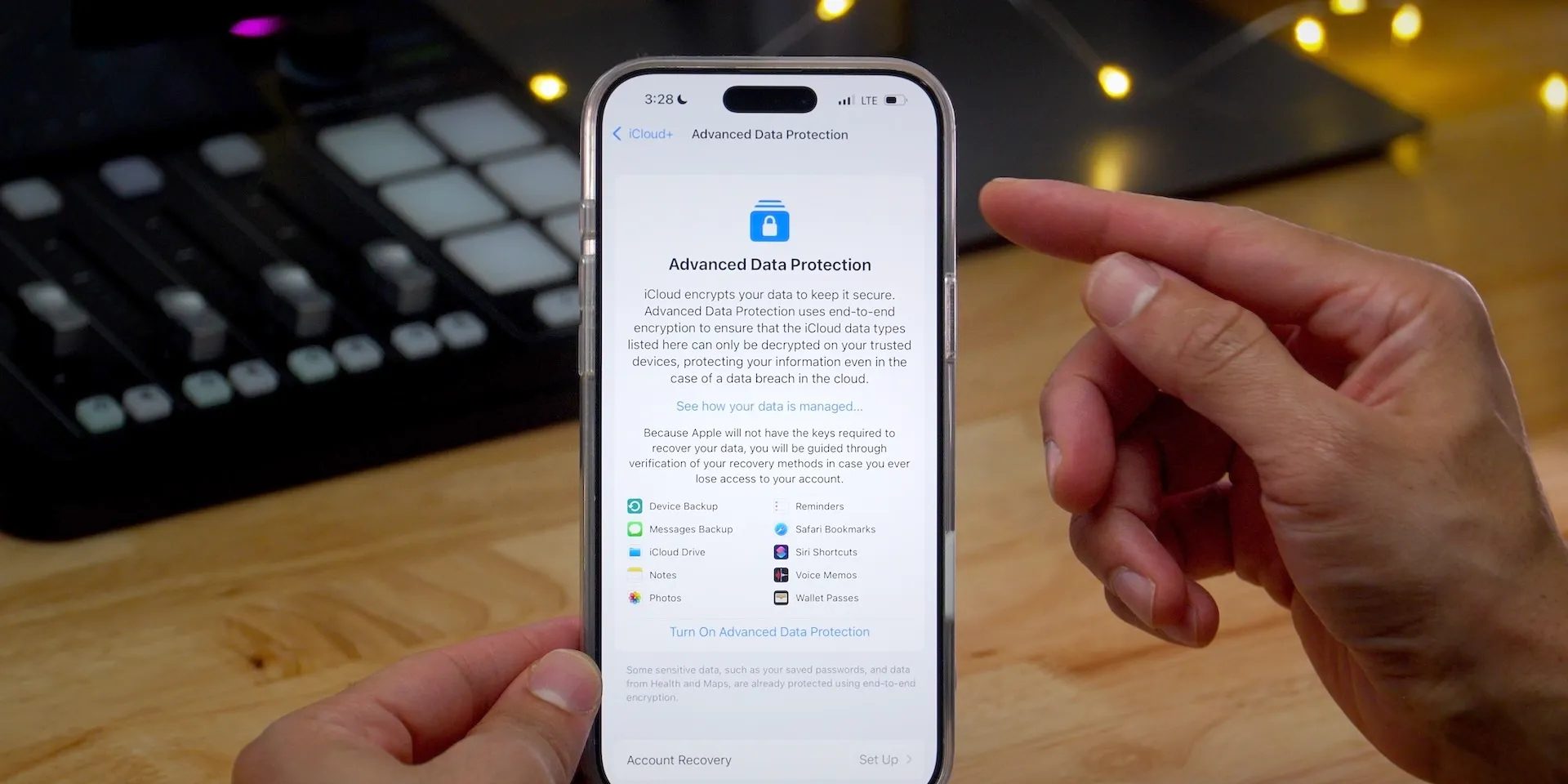
Apple challenged the British government before the Investigatory Powers Tribunal in London on Thursday, demanding that authorities publicly acknowledge the existence of a Technical Capability Notice — a legal instrument reportedly compelling the company to provide access to encrypted user data stored in iCloud. The hearing marks the latest escalation in a protracted legal confrontation that has already forced Apple to withdraw its most robust encryption option from British users, and that implicates surveillance powers with consequences extending well beyond the United Kingdom.
The dispute traces its origins to early 2024, when The Washington Post reported that the British government had covertly ordered Apple to engineer a security backdoor granting authorities access to iCloud content uploaded by users worldwide. The order was itself subject to strict non-disclosure requirements, barring Apple from confirming its existence or engaging in any public discussion of its terms. That combination — a sweeping demand for access to encrypted data, wrapped in legally enforced silence — prompted Apple to take the extraordinary step of withdrawing Advanced Data Protection from new UK users entirely rather than comply with what it evidently regarded as an unlawful intrusion. With ADP active, iCloud Backup and a range of additional data categories are end-to-end encrypted, meaning that even Apple holds no key capable of satisfying a government access demand.
The secrecy regime surrounding the original notice did not survive judicial scrutiny intact. In April 2025, tribunal judges rejected the government’s attempt to suppress even the basic contours of Apple’s legal challenge, ruling that public disclosure of the case’s existence posed no credible threat to national security. Months later, under pressure from the White House, British authorities abandoned their demand for data belonging to American users — a partial retreat that nonetheless left the underlying legal architecture intact. A revised notice, this time targeting Apple users in the United Kingdom specifically, was subsequently issued, and Apple launched a second legal challenge in response.
At Thursday’s hearing, Apple’s counsel and lawyers representing civil society organisations Privacy International and Liberty argued that the government’s continued “neither confirm nor deny” posture had become legally and democratically untenable. Ben Jaffey, appearing on behalf of the campaign groups, told the tribunal that the government’s position had “become farcical,” noting that the existence of the original notice had been publicly referenced by American politicians and officials, and confirmed to journalists by unnamed UK government sources. “The horse has long bolted,” Jaffey said, characterising the secrecy policy as a fiction that served no legitimate protective function while actively obstructing the principle of open justice. Apple’s own lawyer echoed those arguments, contending that the NCND policy prevents any meaningful public examination of a matter with direct implications for the privacy rights of millions of people.
It bears emphasis that Thursday’s proceedings addressed only the secrecy question, not the substantive legality of the government’s demand for access to encrypted data. Those are distinct legal battles. The tribunal will now determine whether the government may continue invoking its non-disclosure policy in this particular case — a ruling that could itself carry significant precedent for how surveillance orders are scrutinised in public proceedings. According to Reuters, a full hearing on the merits of Apple’s challenge to the Technical Capability Notice is unlikely to take place before 2026, leaving the underlying question of whether a democratic government may compel a technology company to compromise end-to-end encryption — and do so in secret — unresolved for the foreseeable future.