
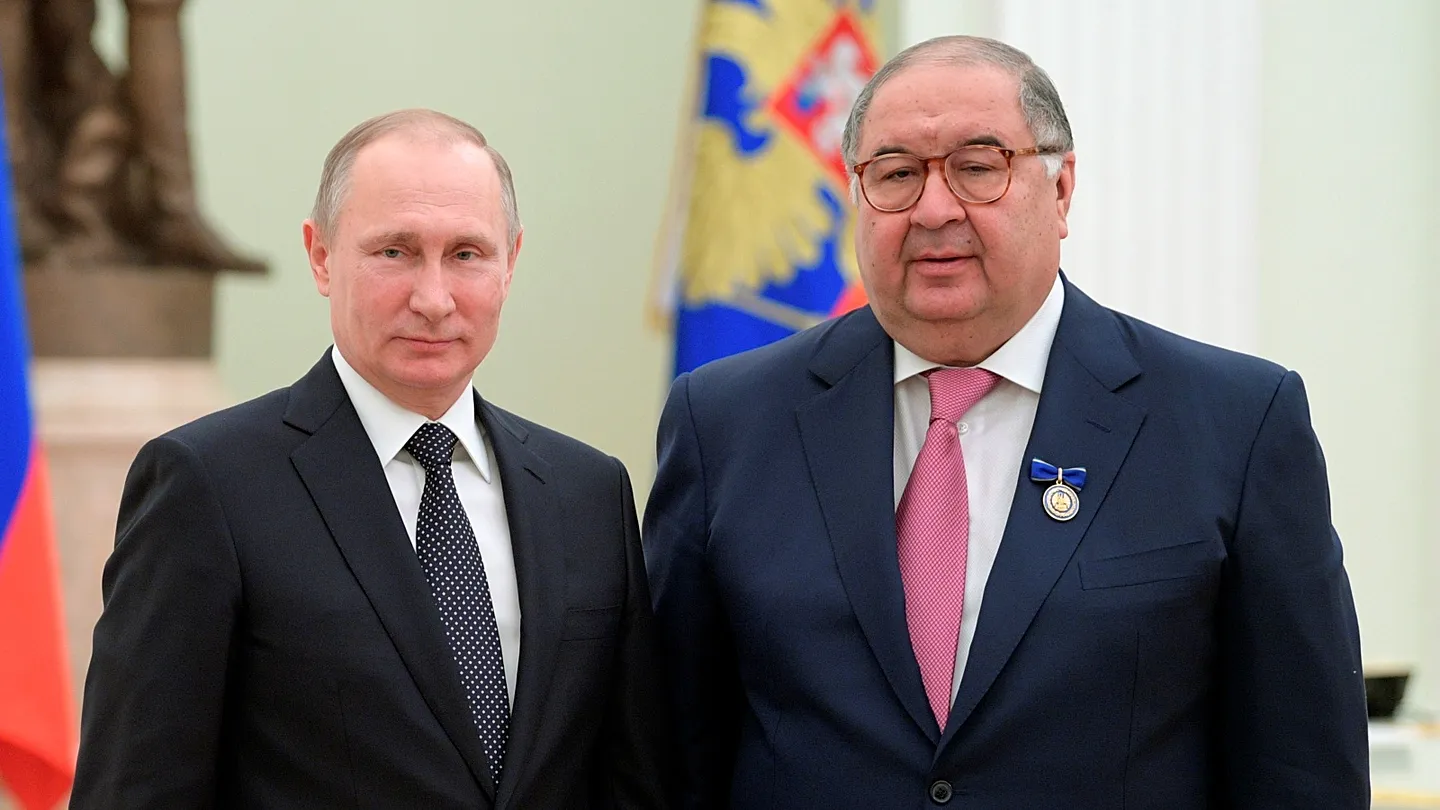
The appeal came quietly but with unmistakable intent. Speaking after France moved to have Uzbek-Russian billionaire Alisher Usmanov removed from the European Union’s Russia sanctions list, Ukraine’s Deputy Prime Minister for European and Euro-Atlantic Integration, Vsevolod Chentsov, made Kyiv’s position plain: no easing of sanctions without concrete steps toward peace from Moscow.
“We expect the EU to maintain unity,” Chentsov said, insisting that Russia must take “real, concrete” steps before the bloc considers “any easing of sanctions.” The statement was directed, in effect, at one of Ukraine’s most important allies — a signal that Kyiv is watching the internal politics of EU sanctions enforcement with close and anxious attention.
France’s push to delist Usmanov was not framed as a concession to Russia. Rather, according to available reporting, it formed part of a diplomatic effort to secure the release of two French nationals held in Azerbaijan — a transactional manoeuvre that nonetheless carries significant implications for the coherence of the sanctions architecture the EU has painstakingly assembled since February 2022. When individual member states begin negotiating around the edges of a collective enforcement mechanism, the mechanism itself begins to fray.
Usmanov, one of Russia’s wealthiest individuals with extensive business interests across Europe, was sanctioned by the EU on the grounds of his close ties to the Kremlin. His delisting, whatever the stated rationale, would represent a meaningful departure from the principle that sanctions relief must be conditioned on Russian behaviour — not on unrelated bilateral negotiations between EU member states and third parties.
The broader stakes are difficult to overstate. The sanctions regime against Russia represents one of the few coordinated instruments of pressure available to Western governments short of direct military intervention. Its credibility depends on consistency. A precedent in which listings are traded as diplomatic currency in disputes wholly unrelated to the war in Ukraine would hollow out that credibility in ways that are hard to reverse.
Chentsov spoke as preparations were underway for a meeting between US President Donald Trump and Ukrainian President Volodymyr Zelenskyy on the sidelines of the UN General Assembly in New York. He described himself as “optimistic” about the outcome of those talks — a carefully calibrated word, neither triumphant nor alarmed, suited to a moment when Kyiv can afford neither complacency nor open anxiety about the posture of its most powerful external partner.
What Chentsov’s remarks reveal, taken together, is a Ukraine acutely aware that the war is being fought on multiple fronts simultaneously — on the ground in the east, and in the committee rooms and chancelleries of Europe, where the political will to sustain pressure on Russia is tested, quietly and incrementally, every time an exception is sought.