
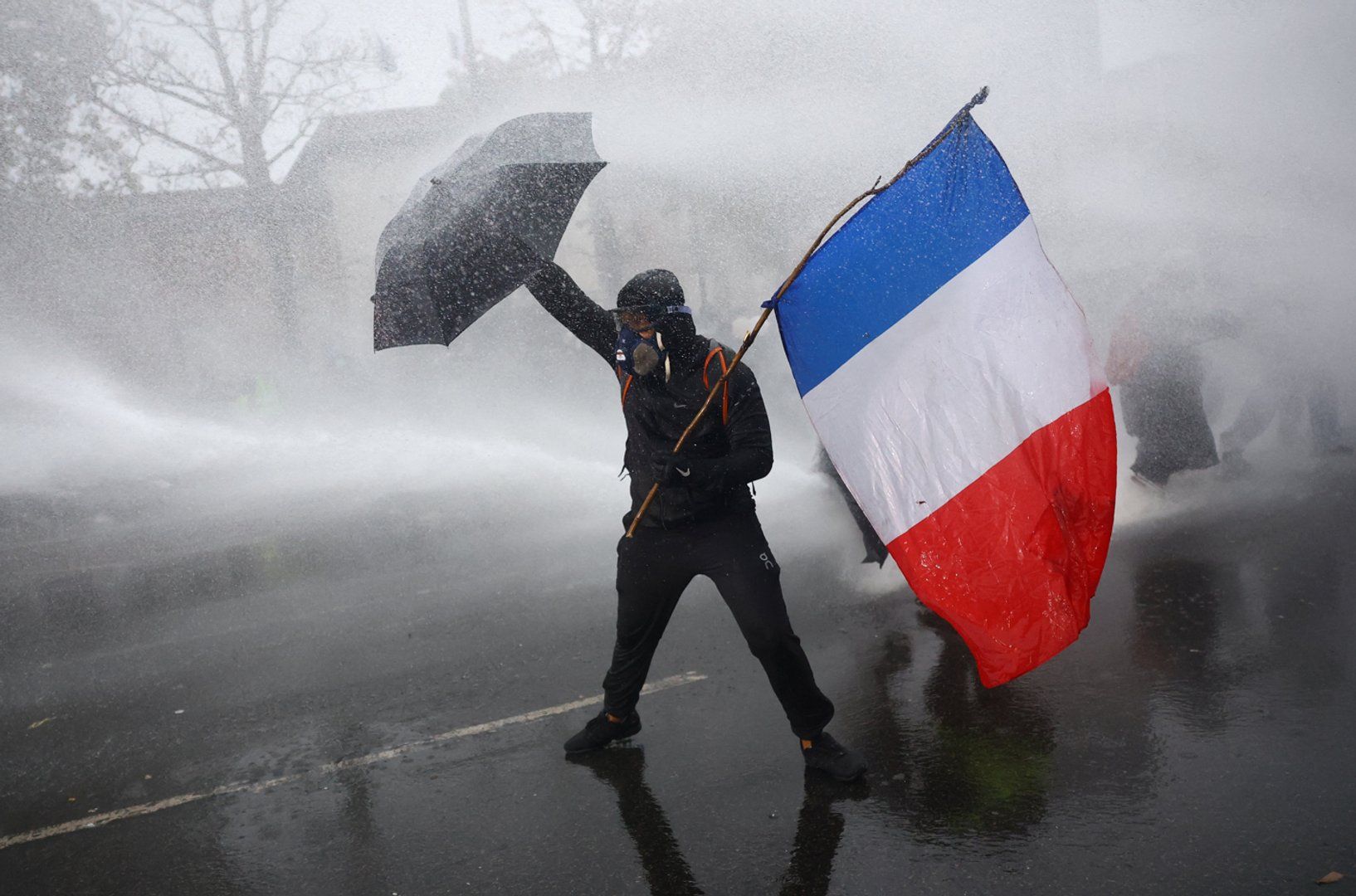
What is happening, and where?
Protests that have been building across Europe erupted into open confrontation on 25 October 2026, as demonstrators in France, Italy and Spain clashed with police in some of the most significant street violence the continent has seen in recent years. Officers deployed tear gas and batons against crowds who, in several locations, responded by erecting barricades and setting fires. The scenes unfolded simultaneously across multiple capitals and major cities, suggesting a degree of coordination — or at minimum, a shared sense of grievance — that distinguishes this wave of unrest from isolated national incidents.
The protests are not new. They represent the continuation of a broader mobilisation that has been gathering force for months, drawing in trade unions, student organisations, housing rights groups and civil society networks united by overlapping but distinct concerns. What changed on 25 October was the intensity of the response — both from protesters and from the state forces deployed to contain them.
What are protesters demanding?
Three interconnected grievances are driving people into the streets. The first is the cost of living: across France, Italy and Spain, households have absorbed years of wage stagnation against a backdrop of persistent inflation in energy, food and housing. The second is the rollback of public services — cuts to healthcare, education and social support that governments have framed as fiscal discipline but that demonstrators characterise as a deliberate transfer of risk onto working populations. The third grievance, and perhaps the most politically charged, concerns military spending: several European governments have significantly increased defence budgets in the context of the ongoing conflict in Ukraine, and a growing segment of the public is demanding to know why those resources cannot instead be directed toward domestic welfare.
These are not marginal positions. Polling across the three countries has consistently shown majority or near-majority support for the core demands, even among citizens who disapprove of the violence. That gap — between the breadth of public sympathy and the narrowness of the political response — helps explain why the protests have persisted and why some participants have escalated their tactics.
How did authorities respond?
Police forces in all three countries deployed in significant numbers, and the use of tear gas and batons was reported in multiple cities. Governments have so far framed the violence primarily as a law-and-order problem, emphasising property damage and attacks on officers rather than engaging substantively with the underlying demands. This framing carries risks: when states respond to mass economic grievance with enforcement rather than negotiation, they tend to deepen rather than resolve the cycle of unrest. International human rights frameworks, including standards set by the UN Basic Principles on the Use of Force and Firearms, require that crowd-control measures be strictly necessary and proportionate — a threshold that independent observers will need to assess as footage and witness testimony becomes available.
It is too early to draw firm conclusions about whether excessive force was used in specific incidents. What can be said with precision is that the deployment of tear gas and batons against crowds protesting economic conditions — rather than any immediate security threat — demands rigorous scrutiny. Civil society organisations operating across the three countries are already gathering documentation, and their findings will be material to any serious accountability assessment.
What does this tell us about the wider European political moment?
The simultaneity of unrest in France, Italy and Spain is not incidental. All three countries are navigating versions of the same structural tension: governments committed to fiscal consolidation and increased defence expenditure, facing populations whose material conditions have deteriorated and whose patience with technocratic justifications has worn thin. The European Union’s fiscal architecture, which constrains member states’ ability to run deficits, sits in the background of each national argument — rarely named explicitly by protesters, but shaping the policy space within which their governments operate.
There is also a transnational dimension to the organising itself. Civil society networks across Europe have grown more connected, sharing tactics, legal support and communications infrastructure in ways that allow grievances to amplify across borders. Whether 25 October marks a turning point or a plateau in this cycle of mobilisation remains genuinely uncertain. What is clear is that the political establishments in Paris, Rome and Madrid have not yet found a response adequate to the scale of discontent their own policies have generated.