
UEFA, AFC and CONCACAF Jointly Accuse FIFA President Infantino of Deception as Governance Crisis Deepens
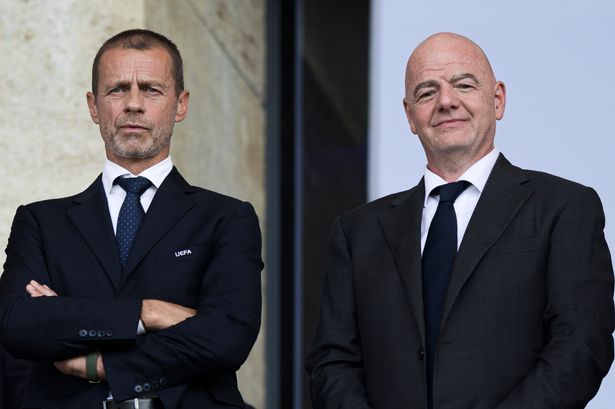
Three of world football’s six continental confederations have issued a coordinated statement accusing FIFA president Gianni Infantino of a fundamental failure of integrity, marking a significant escalation in an institutional crisis that has been building for weeks. UEFA, the Asian Football Confederation (AFC), and the Confederation of North, Central America and Caribbean Association Football (CONCACAF) released the joint communiqué following Infantino’s withdrawal of a plan to sell commercial rights in the FIFA World Cup to private investors — a plan he subsequently apologised for — which had already prompted UEFA to announce a boycott of FIFA competitions.
That boycott remains in force. UEFA’s decision to maintain it even after Infantino abandoned the privatisation proposal signalled that the European confederation’s grievances extend beyond any single policy dispute. The joint statement now makes that explicit: what is at issue, the three confederations argue, is not a disagreement over revenue distribution or tournament expansion, but the conduct and character of FIFA’s leadership itself.
The statement, addressed to the “Football Family,” is careful to acknowledge a decade of institutional growth — expanded tournaments, the awarding of the 2030 and 2034 World Cups, increased resource distribution to member associations — while firmly rejecting the attribution of those achievements to any single individual. “That progress was never the work of one individual,” the confederations write. “It was the product of FIFA, the Confederations, the Member Associations, and the thousands of people who dedicate their lives to the game.” The rhetorical move is deliberate: it dismantles the presidential narrative of personal stewardship that Infantino has cultivated, without requiring the confederations to repudiate outcomes they collectively endorsed.
The statement also addresses what it describes as a campaign of “fearmongering” directed at member associations — an implicit accusation that Infantino’s office has sought to leverage smaller federations’ financial dependence on FIFA to neutralise dissent. That accusation carries weight in context. The African football confederation, CAF, has publicly backed Infantino, as have individual member associations including Argentina and Mexico. The geography of loyalty maps, not coincidentally, onto patterns of financial dependency and political alignment that have characterised FIFA’s internal politics for years.
On the substantive question of governance, the three confederations are unsparing. “There is silence where there should be accountability,” they write, “distance where there should be openness.” The language is measured, but the indictment is unambiguous: Infantino has, in their assessment, failed the basic tests of transparent and accountable institutional leadership. They do not call explicitly for his resignation, but the structural logic of the statement — that the game requires “leadership that serves football, not seeks to command it” — leaves little interpretive room.
Infantino retains his post. He retains the support of CAF and of several influential member associations. FIFA’s governance structure, which concentrates significant authority in the presidency and relies on a congress of 211 member associations in which small, aid-dependent federations hold equal voting weight to major footballing nations, has historically insulated incumbents from confederation-level pressure. Whether the coalition now arrayed against him — representing Europe, Asia, and the Americas — can translate institutional pressure into formal accountability mechanisms remains an open question, and a structurally difficult one.
What the joint statement does establish, with unusual clarity, is that a majority of the world’s continental football bodies no longer regard Infantino as a legitimate steward of the game’s governance. The crisis is no longer about a single controversial financial proposal. It concerns the operating culture of the institution itself — who controls it, in whose interest, and by what means. Those are questions that FIFA’s existing accountability architecture has, for decades, proven poorly equipped to answer.