
A Cockpit Assault at 30,000 Feet
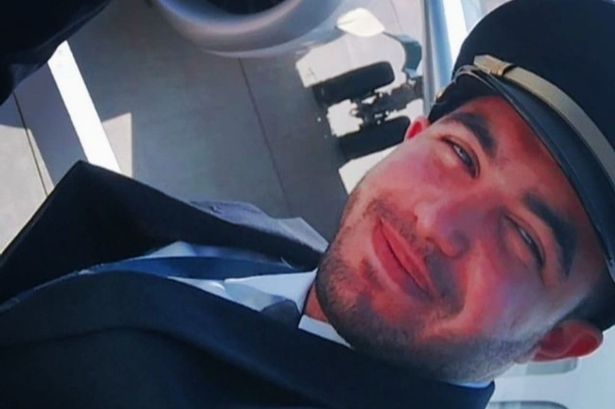
On the morning of Wednesday, 30 September, a FlyDubai flight from Dubai to Tel Aviv became the scene of what UAE authorities have since characterised as an attempted terrorist attack. Hamam Al Hammami, an Omani national serving as co-pilot on flight FZ1073, allegedly used a crash axe to assault his Indian colleague, Captain Smit Machchhar, while the aircraft was in the air. The attack left Captain Machchhar with severe stab wounds. Despite his injuries, he managed to unlock the cockpit door, enabling passengers to physically restrain Al Hammami.
The consequences for the aircraft were immediate and severe. Flight data indicates the plane lost approximately 14,000 feet of altitude in under 30 seconds — a terrifying descent that passengers later described as lasting around ten minutes before the situation could be brought under control. Two off-duty pilots who happened to be aboard rushed into the cockpit and worked to stabilise the aircraft. That all 182 passengers escaped without serious injury, and that the plane landed safely at Tabuk’s Prince Sultan bin Abdulaziz International Airport in Saudi Arabia, is a fact that sits uneasily alongside the scale of what occurred.
The UAE Investigation: Terrorism Charges on the Table
UAE authorities moved quickly. The country’s Attorney General, Hamad Saif Al Shamsi, confirmed to state media that the investigation into the incident had concluded that Al Hammami “attempted to carry out a terrorist attack.” Saudi authorities arrested Al Hammami upon landing. A separate aircraft subsequently transported passengers to their original destination in Israel.
The legal and evidentiary framework surrounding the UAE investigation remains largely opaque to outside observers. State media has relayed the Attorney General’s characterisation, but the precise evidence base — what investigators found, what Al Hammami has said, and whether any ideological motive has been established — has not been disclosed publicly. That opacity is not unusual in the UAE’s legal system, though it limits any rigorous external assessment of the terrorism designation.
Australia Enters the Picture
A second jurisdiction has now opened its own inquiry. Australian officials confirmed over the weekend that three bodies — the Australian Federal Police, Victoria Police, and the Australian Security Intelligence Organisation (ASIO), the country’s domestic intelligence service — are jointly investigating Al Hammami’s connections to Australia through the Victorian Joint Counter Terrorism Team (VIC JCTT).
A VIC JCTT spokesperson confirmed to The Mirror: “Vic JCTT can confirm it is investigating the man’s links to Australia.” The spokesperson offered no further detail on the nature of those links, nor on what specifically triggered the Australian investigation. A further update, the spokesperson said, would be issued “at the appropriate time.”
The involvement of ASIO — an agency focused on domestic security threats — alongside two police forces suggests that investigators are examining not only any criminal dimension but also potential national security implications. Whether Al Hammami lived in Australia, trained there, maintained contacts there, or is connected to networks operating there remains unknown at this stage. These are not minor distinctions; they carry fundamentally different investigative and legal consequences.
What Remains Unknown — and Why It Matters
Several critical questions remain unanswered. No confirmed motive has been publicly established for the attack. The terrorism framing adopted by UAE authorities may reflect a formal legal categorisation under UAE law, or it may reflect a substantiated finding of ideological intent — the public record does not yet permit a clear distinction between the two. Precision on this point matters, because the word “terrorism” carries enormous legal, political, and human weight, and its application without transparent evidentiary grounding should always be scrutinised.
The transnational scope of the investigation — spanning the UAE, Saudi Arabia, and now Australia, with Al Hammami himself an Omani national — underscores how incidents of this kind routinely outpace the jurisdictional frameworks designed to contain them. Coordination between intelligence agencies across these countries is occurring, but accountability for how that coordination proceeds, and what rights Al Hammami retains in the interim, is not yet visible.
A System Under Scrutiny
Beyond the immediate criminal investigation, the incident raises structural questions about aviation security protocols. A crash axe is standard emergency equipment on commercial aircraft; its presence in a cockpit is not an anomaly but a design feature. How a crew member was able to deploy it as a weapon against a colleague, and what — if any — behavioural warning signs preceded the attack, will presumably form part of aviation authority reviews in multiple countries.
The adequacy of psychological screening for flight crew, the robustness of cockpit security procedures, and the capacity of airlines operating across multiple jurisdictions to detect radicalisation or mental health deterioration in their personnel are all questions that regulators will now face pressure to answer. FlyDubai has not yet issued a detailed public statement addressing those systemic dimensions.
For now, two investigations are open, one man is in custody, and the full picture remains incomplete. What is clear is that the accountability process has only just begun — and that its outcome will be shaped by decisions made in capitals far apart, under legal systems that do not always speak the same language.