
Taiwan’s Front-Line Islands Brace for War: Inside the 2026 Han Kuang Exercises
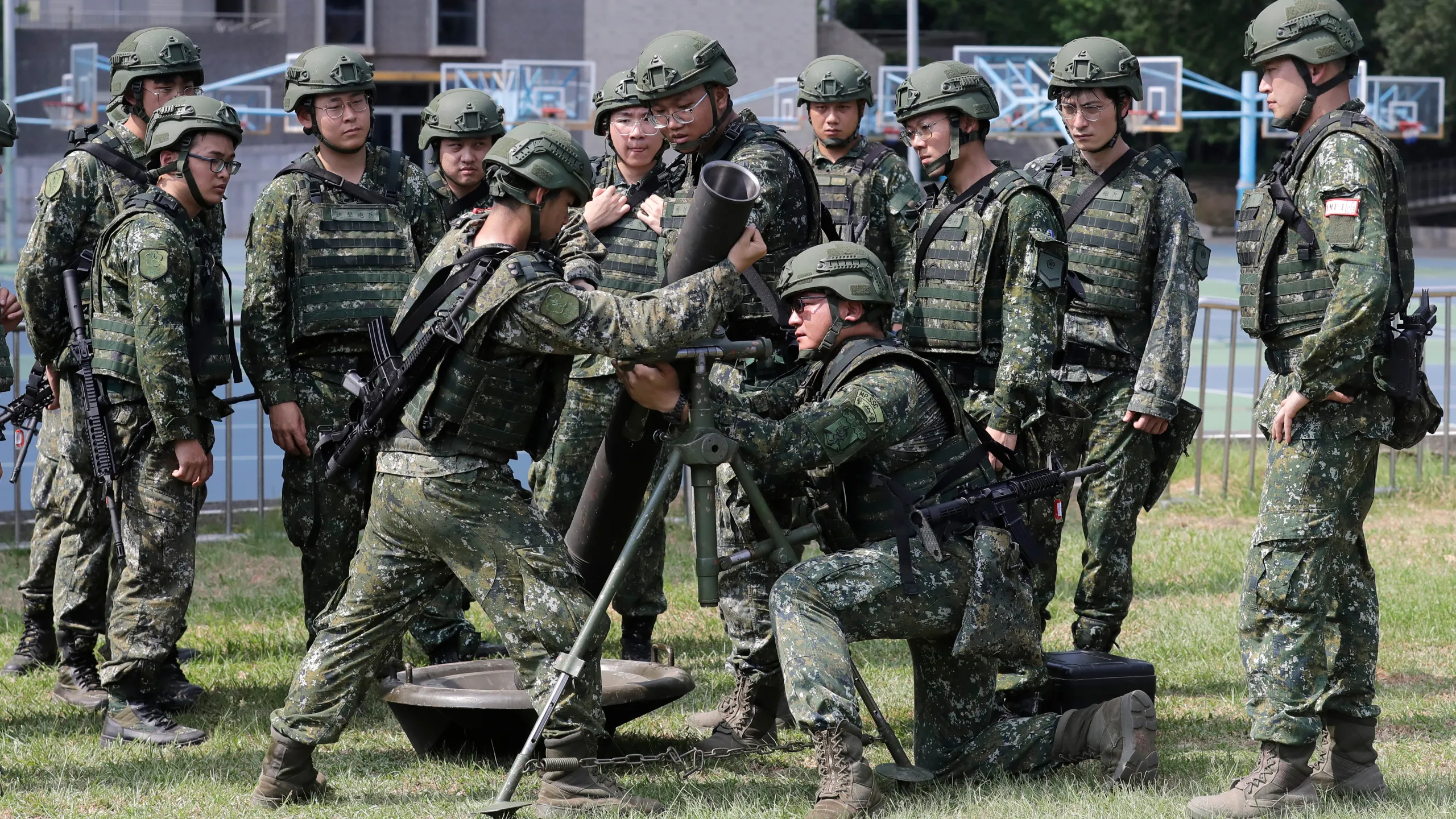
For decades, the islands of Kinmen and the Matsu archipelago have occupied a peculiar position in the geography of unresolved conflict — close enough to the Chinese mainland that their inhabitants can, on a clear day, see its coastline, yet governed by Taipei under a constitutional arrangement Beijing has never accepted. Their proximity, measured in single-digit kilometres at the nearest points, has always made them the most exposed nodes in Taiwan’s defensive perimeter, the places where any Chinese military operation would almost certainly begin. It is against this backdrop that Taiwan’s armed forces, in August 2026, staged the latest iteration of the Han Kuang exercises — annual drills that have grown, in recent years, from a largely ceremonial rehearsal into something considerably more urgent.
The Han Kuang exercises have been conducted annually since the 1980s, but the strategic context surrounding the 2026 edition carried a weight that earlier iterations did not. United States military assessments, reiterated by senior Pentagon officials in the preceding years, had identified 2027 as the year by which the People’s Liberation Army aims to achieve credible invasion capability across the Taiwan Strait — a deadline that has concentrated minds in Taipei and reshaped the tempo and content of Taiwan’s defence planning. When the drills commenced this August, they were designed not merely to demonstrate readiness but to test it, under conditions intended to approximate the opening hours of a genuine assault.
The exercises incorporated live-fire drills structured around a sustained 24-hour defensive operation, a deliberate departure from shorter, more controlled scenarios that critics had long argued bore insufficient resemblance to the grinding, continuous pressure of actual combat. Planners paid particular attention to what Taiwanese and Western defence analysts have come to call grey-zone tactics — the graduated, ambiguous forms of coercion that China has deployed with increasing regularity in the years preceding any potential kinetic escalation, including naval encirclement drills, repeated incursions into Taiwan’s air defence identification zone, and the severing or disruption of undersea communications infrastructure. The 2026 exercises included simulated responses to internet and communications disruptions, acknowledging that information warfare and civilian resilience are now inseparable from purely military preparedness.
President Lai Ching-te, who took office in May 2024 on a platform that Beijing characterised as separatist and responded to with a fresh round of large-scale military exercises, participated directly in the Han Kuang drills — a visible signal of political commitment to a defence posture that his administration has sought to harden. Lai’s presence was not merely symbolic; his government has accelerated defence budget increases, extended conscription training periods, and deepened interoperability arrangements with the United States, all of which fed into the operational design of the August exercises. The participation of the civilian population in resilience scenarios also reflected a broader doctrinal evolution, one that draws on lessons from Ukraine’s experience of full-spectrum warfare and acknowledges that a conflict over Taiwan would not spare its civilian infrastructure.
The front-line islands themselves remain the most acute vulnerability in any conflict scenario. Kinmen, garrisoned and fortified, sits roughly ten kilometres from the city of Xiamen; the Matsu islands lie even closer to Fuzhou. Their defence in the opening phase of a Chinese military operation would depend on rapid reinforcement across open water under fire — a logistical and tactical problem that no exercise can fully resolve, and that military planners on both sides of the strait understand with precision. What the Han Kuang exercises can accomplish, and what their architects clearly intend, is to raise the cost of any miscalculation, to demonstrate that Taiwan’s capacity to absorb and respond to an initial assault is greater than an adversary might assume, and to signal to Washington — whose commitment under the Taiwan Relations Act remains deliberately ambiguous — that Taipei is a partner capable of meaningful self-defence. Whether that signal is received, and whether it alters the calculus in Beijing, is a question that no military drill, however well-designed, can answer.