
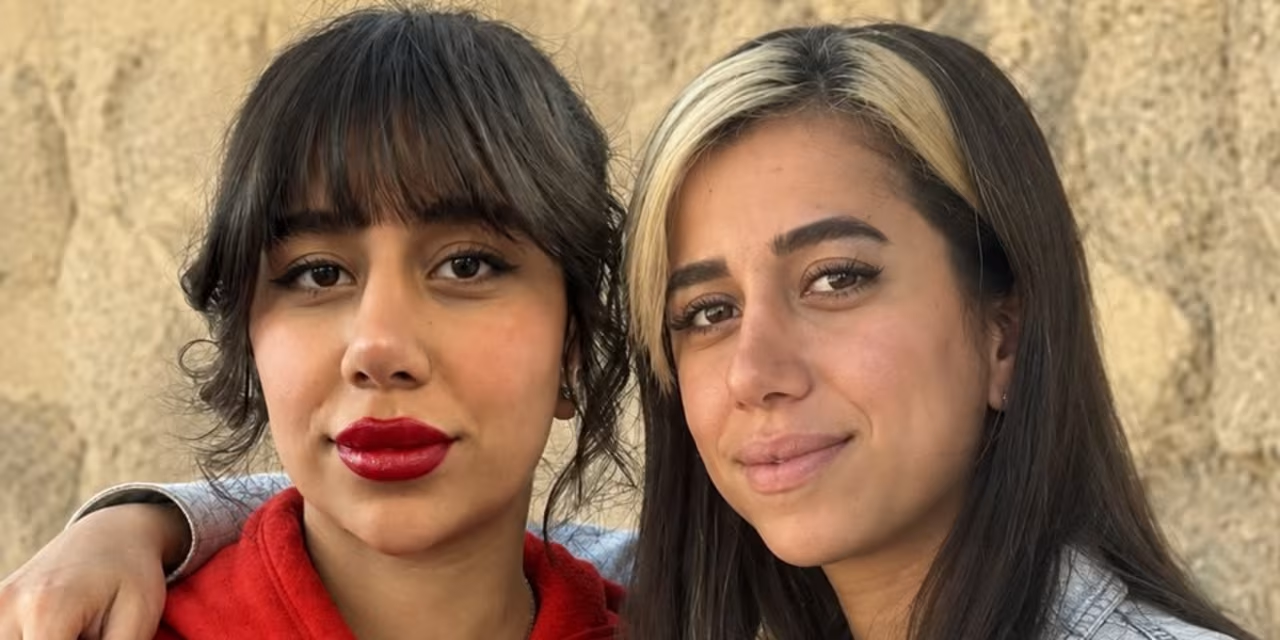
Eight months ago, men from Iran’s Islamic Revolutionary Guard Corps arrived in the night and took Taraneh and Romina Rahimi from their beds. The twin sisters, then twenty-one years old, had joined street protests in Isfahan on 8 and 9 January — two days among the nationwide demonstrations that had shaken the Islamic Republic. That act of public dissent would lead, by the end of August, to a death sentence for Taraneh and a twenty-five-year prison term for Romina, handed down under charges that included moharebeh — waging war against God.
Their family has now formally appealed to the United Nations for intervention. British human rights lawyers acting on the family’s behalf have submitted a formal “submission of information” through the UN’s special procedures mechanism, a channel that can compel the international body to request explanation and action from a member state. If the submission is found to engage documented human rights violations, it could open a formal dialogue between the UN Human Rights Council and Tehran — an outcome the Iranian government has not historically welcomed, whatever its diplomatic posture.
That posture was on display this week in New York, where Iranian President Masoud Pezeshkian told the UN General Assembly that his country was “ready for dialogue and diplomacy.” The statement landed against a stark backdrop: Iran has executed more than five hundred people in 2024 alone, among them at least sixteen women. Hundreds of protesters face death sentences or charges that carry the death penalty, with more than seventy of those cases originating in Isfahan — the same city where Taraneh and Romina took to the streets.
The sisters are currently held in Dowlatabad prison in Isfahan. Their mother, Marzieh Nourmohammadi, and other family members have not been permitted to see them since sentencing. According to accounts relayed by the family, the two women have been held in isolation, yet were reported to have been able to hear each other’s screams during periods of torture. The family further alleges that Taraneh was threatened with being forced to witness the rape of her sister unless she signed a confession to the charges against her — an allegation that, if substantiated, would constitute a grave violation of the UN Convention Against Torture, to which Iran is a signatory.
Taraneh is said to require surgery as a result of injuries sustained during interrogation. Reports from the family indicate she has additionally been told she will be permitted only the leftovers from other prisoners’ meals as a form of punishment. These claims have not been independently verified, given the near-total restriction on access to the women, but they are consistent with documented patterns of treatment inflicted on political detainees in Iranian detention facilities — patterns that human rights organisations have catalogued in detail over many years.
Human rights groups have raised alarm that Taraneh’s execution could be expedited. Appeals against the sentences remain formally available to the family, but the speed with which Iranian authorities have processed executions in politically sensitive cases has historically outpaced legal remedies. The urgency is not rhetorical; it is procedural.
Masoud Nourmohammadi, a forty-three-year-old IT engineer and the twins’ cousin, lives in Utah. He has become the family’s principal public voice. Speaking after the case was first reported, he described his decision to seek UN intervention as one born of exhaustion and desperation rather than confidence in international institutions. “Turning to the United Nations is not something I ever wanted to have to do,” he said. “I am simply asking the international community to help ensure that Taraneh and Romina receive the basic rights that every human being is entitled to: a fair process, protection from torture and abuse, access to medical care and legal counsel, and the right to have their cases genuinely reviewed.”
His appeal is precise in its demands and restrained in its register, which makes it no less urgent. “Taraneh is facing the death penalty, and Romina is facing decades in prison,” he continued. “They are young women who should be thinking about their futures, not whether one sister will be executed and the other will spend the best years of her life behind bars.” He closed with a direct address to the international body: “I ask the United Nations to stand with them before it is too late — especially for Taraneh.”
The UN special procedures mechanism is a slow instrument, and its leverage over states that routinely disregard international censure is limited by design and by politics. Tehran has historically treated such interventions as interference in domestic affairs, and the Iranian judiciary operates with a degree of insulation from external pressure that formal diplomatic channels rarely penetrate. Yet the submission creates a record — a documented, time-stamped account of alleged violations that cannot be quietly erased — and it places the burden of response, however nominally, on the Iranian state.
What the case of Taraneh and Romina Rahimi illustrates, with particular clarity, is the mechanism by which the Iranian state has sought to suppress the protest movement that erupted following the death of Mahsa Amini in September 2022: mass arrest, incommunicado detention, coerced confession, and the deployment of capital charges against ordinary citizens who participated in public demonstrations. The charge of moharebeh — enmity against God — has served as a legal instrument of political suppression, its theological framing obscuring what is, in substance, the criminalisation of dissent. Under international human rights law, the application of the death penalty to conduct protected as freedom of expression and assembly constitutes an arbitrary deprivation of life. That framework does not resolve the immediate danger facing Taraneh Rahimi, but it names it with precision.
The family continues to pursue every available legal avenue. Whether any of those avenues remains open long enough to matter is a question the international community has, so far, been too slow to answer.