
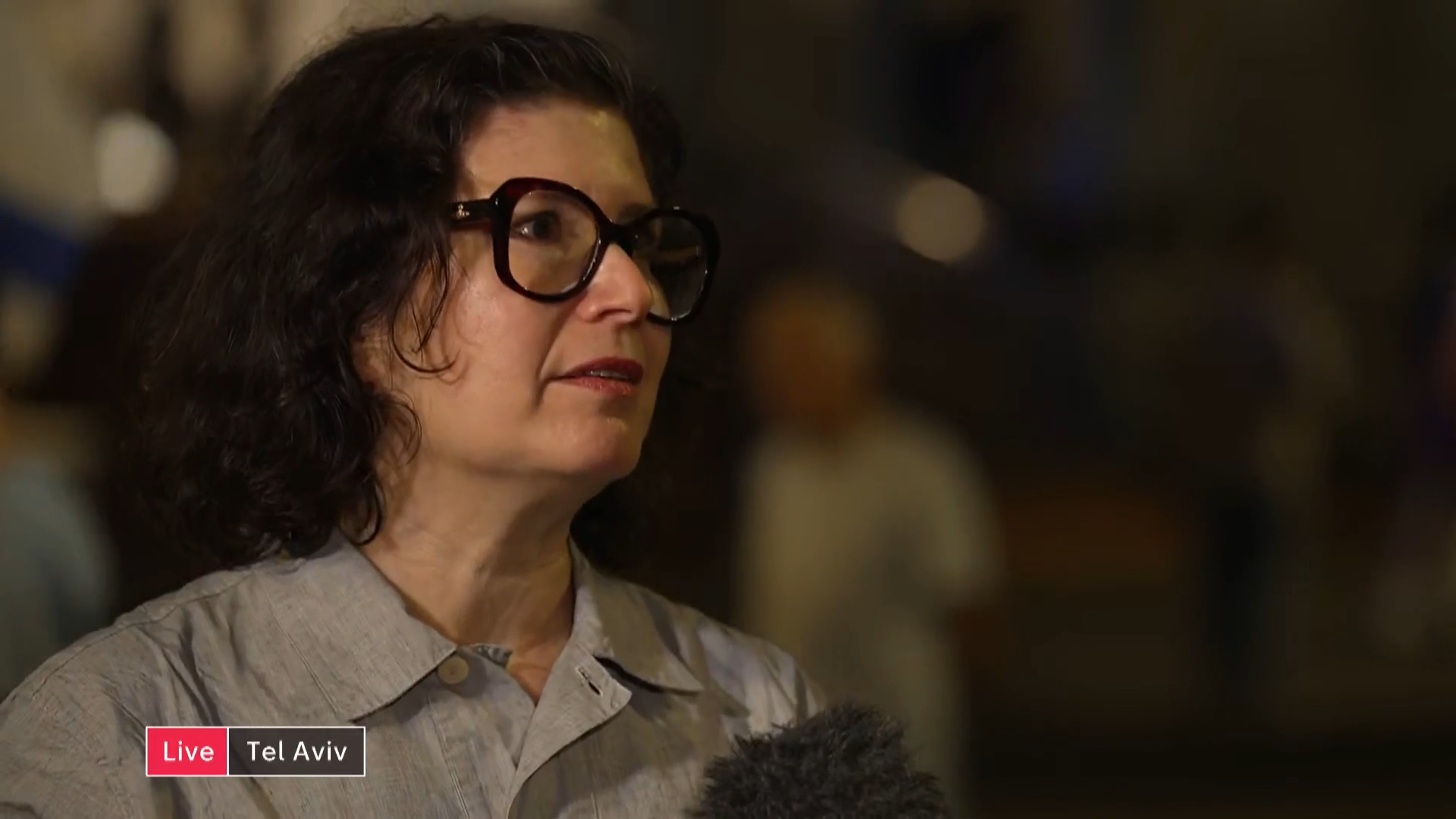
Sharone Lifschitz, a British-Israeli artist and film-maker whose parents were seized by Hamas during the October 7th attacks, has said that a “big majority” of Israelis now oppose Prime Minister Benjamin Netanyahu, speaking ahead of what analysts have described as one of the most consequential elections in Israeli history.
Lifschitz made the remarks in an interview broadcast on October 24, 2026, as Israel prepared to go to the polls in a vote shaped profoundly by the ongoing hostage crisis, the Gaza conflict, and deepening domestic fractures over Netanyahu’s conduct of both. Her comments carry particular weight: her mother, Yocheved Lifschitz, was taken captive from Kibbutz Nir Oz and later released, while her father, Oded Lifschitz, remained in Gaza for an extended period after the attack.
The election arrives at a moment of acute political tension inside Israel, with Hostage Square in Tel Aviv having served for months as the focal point of mass demonstrations demanding a deal to secure the return of those still held in Gaza. The families of hostages have increasingly positioned themselves as a political force, challenging the government’s stated priorities and its handling of ceasefire negotiations.
Lifschitz’s assertion that opposition to Netanyahu commands a large majority reflects polling trends that have shown sustained erosion of support for the Prime Minister, though the fractured nature of Israel’s party system means that electoral outcomes rarely translate cleanly from raw disapproval ratings into parliamentary results. The precise composition of any governing coalition remains deeply uncertain.
The stakes of this election extend well beyond domestic politics. International human rights bodies, foreign governments, and civil society organisations have all indicated that the election result will shape Israel’s posture on the Gaza conflict, the status of remaining hostages, and its relationship with international legal proceedings. Netanyahu himself faces an indictment from the International Criminal Court, a fact that has added a further layer of legal and diplomatic complexity to the campaign.
Lifschitz, speaking from a position of direct personal experience with the consequences of state and non-state violence, represents a constituency of hostage families who argue that the government has subordinated the imperative to bring captives home to other political calculations. That charge remains contested by Netanyahu’s supporters, who maintain that military pressure is the only effective lever against Hamas.
What is not contested is the scale of the rupture within Israeli society that October 7th and its aftermath have produced, nor the degree to which this election will be understood, both inside the country and internationally, as a verdict on how Israel’s leadership has responded to the worst single day of mass killing in the state’s history.