
Five Decades of Israeli Strategy to Drive the United States and Iran Toward Confrontation
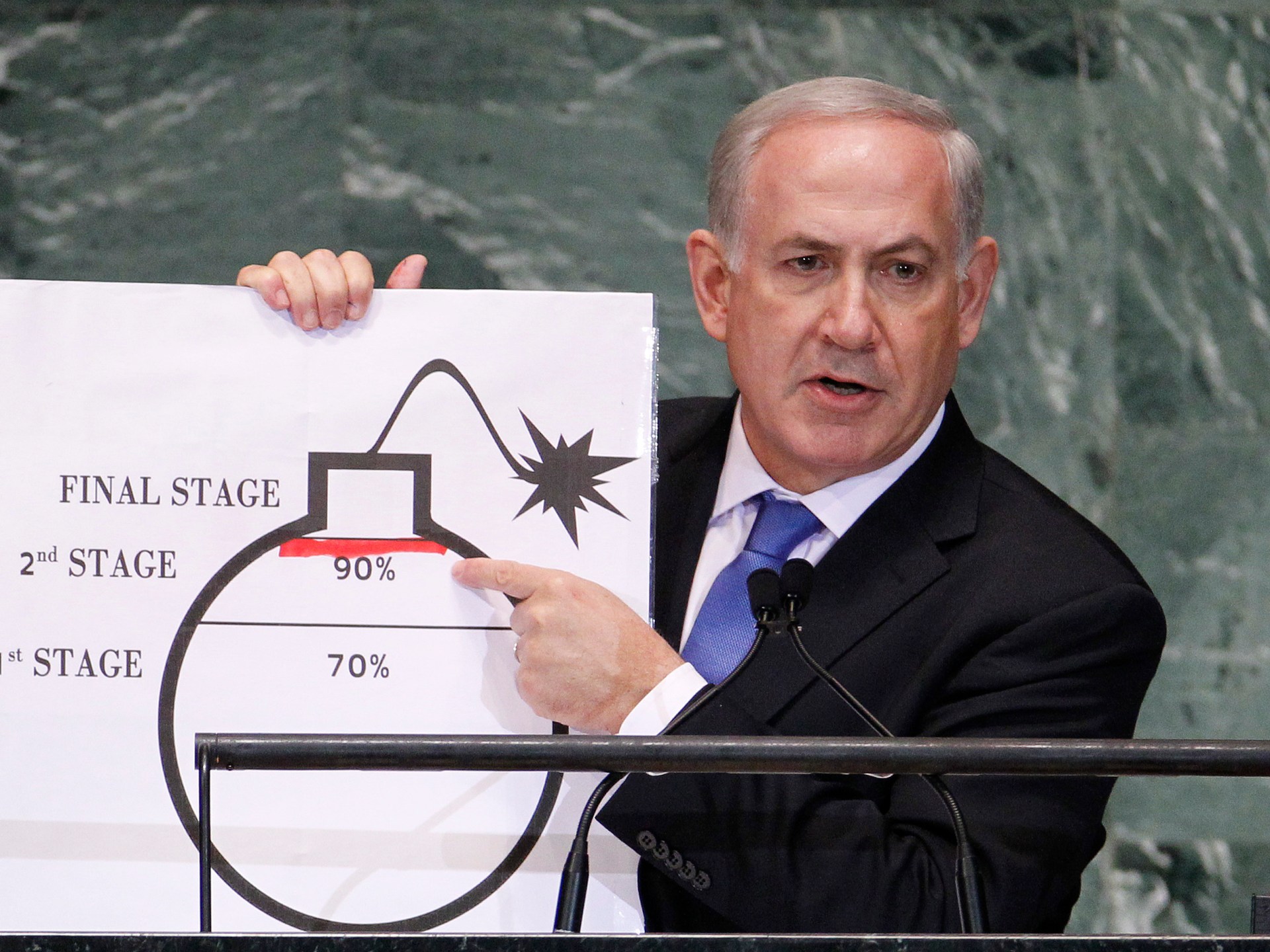
As Israeli Prime Minister Benjamin Netanyahu prepares once again to meet US President Donald Trump, the historical record offers a sobering lens through which to read that encounter. Declassified intelligence assessments, memoirs by senior American officials, investigative journalism, and academic scholarship converge on a single, uncomfortable conclusion: successive Israeli governments have, over more than five decades, repeatedly acted to obstruct diplomatic efforts between Washington and Tehran, preserving a state of confrontation that has served Israeli strategic interests at considerable cost to regional stability and human life.
The pattern is not incidental. While the instruments have shifted — from intelligence operations and information campaigns to congressional lobbying and public pressure — the underlying objective has remained strikingly consistent: to maintain antagonism between the United States and Iran, and to undermine any initiative that might reduce Israel’s leverage over American Middle East policy.
The logic took shape during the Iran-Iraq War of 1980 to 1988. Scholars including Trita Parsi and David Menashri have argued that Israeli strategic thinking at the time favoured prolonging the conflict rather than allowing either belligerent to prevail. A war of attrition, from Jerusalem’s perspective, left both regional rivals militarily and economically exhausted. Israeli state broadcasting, according to studies of wartime media, reinforced this objective by calibrating its messaging to each audience — emphasising Iraqi vulnerabilities when Iranian decision-makers wavered, and highlighting Iranian setbacks when Arab publics needed reassurance — making political compromise harder to sustain on either side.
The early 1990s offered what appeared to be a genuine opening. The release of Western hostages in Lebanon in 1991 created conditions under which Iranian President Hashemi Rafsanjani encouraged cooperation with international mediation, and many observers expected the Bush administration to reciprocate in line with its 1989 inaugural pledge that “goodwill begets goodwill.” According to UN mediator Giandomenico Picco, who coordinated much of the hostage diplomacy and documented his account in Man Without a Gun, Israeli officials obstructed the agreed framework by refusing to implement prisoner release arrangements, effectively stalling the process at a critical moment. Domestic political pressure from AIPAC, including disputes over US loan guarantees to Israel, further constrained the Bush administration’s room for manoeuvre. The window closed without producing the reciprocal confidence-building that might have altered the trajectory of US-Iranian relations.
September 11, 2001 created another unexpected convergence of American and Iranian interests. As the late diplomat James Dobbins observed, it would be more accurate to say that the United States joined an existing anti-Taliban coalition that Iran had helped assemble since the mid-1990s than to describe Washington as building one from scratch. Former Secretary of State Colin Powell and Dobbins both described Iranian participation in the Bonn negotiations as instrumental in constructing the post-Taliban political framework. Within weeks, that brief alignment was severed. The interception of the Karine A vessel in January 2002 was staged by Israel with considerable publicity, framing Iran as the region’s principal long-term security threat. David Frum, who helped draft President George W. Bush’s State of the Union address that year, later recalled that Israeli strategic thinking shaped the broader framing of Iran within the now-infamous “axis of evil.” Senior Israeli officials, including Defence Minister Binyamin Ben-Eliezer, explicitly briefed the Bush administration that Iran was “more dangerous than Iraq.” Lawrence Wilkerson, who served as Colin Powell’s chief of staff, confirmed that Israeli communications consistently carried the same message: Iraq was not the enemy — Iran was.
The removal of Saddam Hussein in 2003 did not diminish this preoccupation; it redirected it toward the nuclear file. Journalist Seymour Hersh, former UN weapons inspector Scott Ritter, and others have argued that Israeli intelligence deliberately passed classified material regarding Iran’s Natanz enrichment facility to the Iranian exile group MEK/NCRI in 2002 — while that organisation remained on the US State Department’s terrorist designation list — in order to force IAEA action while preserving plausible deniability. The episode illustrates a recurring technique: routing sensitive intelligence through intermediaries to generate international pressure while obscuring the original source. A laptop allegedly containing thousands of pages of Iranian weapons-related technical documents, passed to Western intelligence services and the IAEA by the MEK in 2004, followed a similar pattern. Mohamed ElBaradei, then IAEA director-general, later wrote that fundamental questions about the documents’ provenance were never resolved. Several investigative journalists identified Mossad as the likely original source, with the MEK again serving as the conduit.
The conclusion of the Joint Comprehensive Plan of Action in 2015 represented the most significant diplomatic engagement between Washington and Tehran since 1979, and it provoked the most openly confrontational Israeli response on record. Netanyahu’s address to the US Congress — delivered without an invitation from the White House — was an extraordinary intervention in American domestic politics, one that former President Barack Obama later described as part of a consistent pattern of pressure for a more confrontational posture than his administration judged prudent. Former Defence Secretary Robert Gates documented repeated disagreements over Israeli pressure for unilateral military strikes. His successor, Leon Panetta, warned publicly that such pressure risked leaving Washington with no practical alternative but escalation. The agreement survived those efforts, but only until the Trump administration’s 2018 withdrawal, a decision that Netanyahu publicly supported and helped prepare by presenting what Israeli officials described as a cache of documents stolen from Iranian nuclear archives — material that became a central element in the administration’s case for abandoning the deal.
The withdrawal gave way to the “maximum pressure” campaign, and by January 2020 the relationship had moved well beyond economic coercion. The US strike killing General Qassem Soleimani marked a decisive escalation, fundamentally altering regional deterrence. Subsequent reporting indicated that some American officials believed Israeli preferences had contributed materially to that trajectory, and accounts published after the strike described internal concern about the US becoming committed to a wider conflict under circumstances Washington did not fully control.
These dynamics have not receded. Negotiations surrounding a memorandum of understanding in Islamabad earlier this year exposed the same structural tensions in real time. US Vice President JD Vance, speaking on The Joe Rogan Experience, stated directly: “There are some people within [the Israeli] system, we know beyond a shadow of a doubt, who are manipulating and trying to change American public opinion to keep the war going on indefinitely.” Vance accused Israeli government-linked networks of funding American political actors and deliberately framing the negotiations as a “surrender” to render them politically toxic. Israeli digital influence operations, according to Israeli media reporting, were simultaneously directed at Persian-language online discourse, framing the memorandum as humiliating to Iran and seeking to amplify domestic polarisation in Tehran.
What emerges from this record is not a series of isolated incidents but a coherent strategic posture sustained across governments, intelligence services, and political cycles. The pattern has been shaped, it must be said, by repeated American failures to honour its own stated commitments — failures that have compounded mistrust on the Iranian side and narrowed the space available to negotiators. But the evidence also points to deliberate, systematic efforts by a regional actor to manipulate intelligence, media environments, and domestic politics in the United States and Iran alike, with the explicit aim of preventing the very diplomatic outcomes that might reduce the risk of catastrophic conflict. Recognising that manipulation, tracing its mechanisms with precision, and holding its architects to account is not a peripheral concern for international diplomacy. It is, increasingly, a precondition for any serious attempt to prevent the next escalation from becoming the last one.