
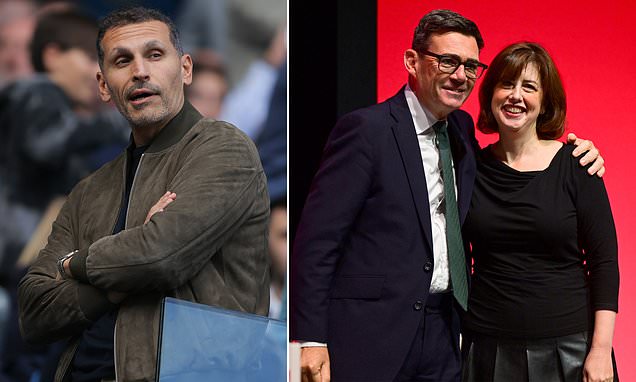
There is a particular kind of political relationship that rarely announces itself openly — one built not on legislation or formal agreement, but on hospitality suites, business-class flights, and the quiet exchange of access for goodwill. A new investigation has illuminated precisely such a relationship between Labour politicians and the United Arab Emirates, a Gulf monarchy whose most visible British asset is Manchester City Football Club. The figures involved are not trivial. Labour MPs accepted nearly £300,000 in freebies from the UAE and its Premier League proxy over a period spanning more than a decade, a sum that exceeds what all other British political parties combined received from the same sources.
The investigation found that Labour recorded approximately £275,000 across 28 register entries involving 25 MPs in UAE-linked benefits, alongside a further £14,000 in Manchester City tickets and hospitality. The total approaches £300,000 — a figure that sits uncomfortably alongside the club’s recent legal reckoning. Manchester City was found guilty by an independent panel of 114 out of 115 charges of breaching Premier League financial regulations, spanning conduct the panel determined warranted the most serious scrutiny. The club has denied wrongdoing and lodged an appeal, but the verdict has placed its ownership structure — and those who have cultivated relationships with that structure — under renewed examination.
Among the beneficiaries of City’s hospitality is Lucy Powell, Labour’s deputy leader and Education Secretary, who represents Manchester Central, the constituency in which the Etihad Stadium sits. Powell accepted free tickets to five City matches over eleven months, with a combined declared value of £2,360, including an £840 VIP seat. Her position as the club’s local MP does not, in itself, constitute wrongdoing; the UK’s register of members’ interests exists precisely to make such arrangements visible. Yet visibility and accountability are not the same thing, and the cumulative picture — a deputy party leader repeatedly accepting high-value hospitality from a club owned by a foreign state — raises questions that transparency alone cannot resolve.
Andrew Western, then a backbencher representing Stretford and Urmston, attended four matches and accepted two VIP tickets to the Community Shield at Wembley in 2024, valued at £880. He has since been promoted to Employment Minister by Andy Burnham, himself a Mancunian and now Prime Minister. Jeff Smith, MP for Manchester Withington, attended four City matches including the FA Cup Final in 2024. Former Prime Minister Sir Keir Starmer accepted a £900 ticket to City’s match against Arsenal in March 2024. These are not isolated incidents of minor generosity; they form a pattern of sustained, high-value access extended by a club whose ownership traces directly to Sheikh Mansour bin Zayed Al Nahyan, Vice President of the UAE, who purchased Manchester City in 2008.
The political geography of this story extends well beyond Wembley hospitality boxes. The Telegraph has reported that Andy Burnham, during his tenure as Mayor of Greater Manchester, oversaw a £55 million taxpayer-backed loan to UAE-owned businesses. Burnham publicly thanked Sheikh Mansour’s City Football Group for investment in the Etihad campus — before being forced into a reversal after Downing Street intervened to insist that no club stood above the rules. That intervention came only after Burnham had also attracted criticism for expressing public concern about the prospect of City losing its owners following the independent commission’s ruling. The sequence of events — public sympathy for the club’s ownership, a taxpayer loan to UAE-linked entities, and sustained hospitality accepted by his party colleagues — does not constitute proof of a quid pro quo. But it does constitute a serious accountability gap that demands precise and independent scrutiny.
The UAE’s investment in British political access is not limited to Labour. Since 2012, the Gulf state has spent at least £467,000 across 78 register entries involving MPs from multiple parties. Conservative politicians received approximately £175,000 across 43 entries, SNP MPs accepted more than £15,000, Liberal Democrats received £3,500, and Reform UK £1,000. Labour’s share — larger than all others combined — reflects both the party’s current governing position and, perhaps, the particular density of its Manchester-area representation. The UAE is not a passive donor; it is a state with a documented record of deploying soft power through sport, culture, and political access. Its ownership of Manchester City is itself part of a broader strategy — one that international human rights organisations have characterised as sportswashing — through which Gulf monarchies seek to launder reputational capital in Western democracies.
William Yarwood of the TaxPayers’ Alliance observed that the hospitality provided by Manchester City raised “serious questions about foreign influence and transparency,” and that voters would be right to worry about potential conflicts of interest. That framing, while cautious, understates the structural dimension of what the investigation reveals. When a foreign state owns a football club, funds luxury hospitality for the legislators of its host country, and simultaneously benefits from a £55 million public loan overseen by a politician who has expressed sympathy for that state’s continued ownership of the club, the concern is not merely one of perception. It is a concern about whether public decision-making has been shaped, however subtly, by relationships that were never subjected to democratic deliberation.
The UK’s system of declared interests was designed to make such relationships legible. It was not designed to make them accountable. Legibility without consequence is, in practice, a form of impunity — one that sophisticated actors have long understood how to exploit. The UAE’s approach to British politics, whether through flights and VIP tickets or through the slower accumulation of goodwill that comes with employing thousands of people at the Etihad campus, is methodical and patient. The investigation’s findings do not prove corruption in any legal sense. What they demonstrate, with considerable precision, is that a foreign state with a contested human rights record has purchased sustained proximity to British power — and that the party currently holding that power accepted more of what was on offer than anyone else.