
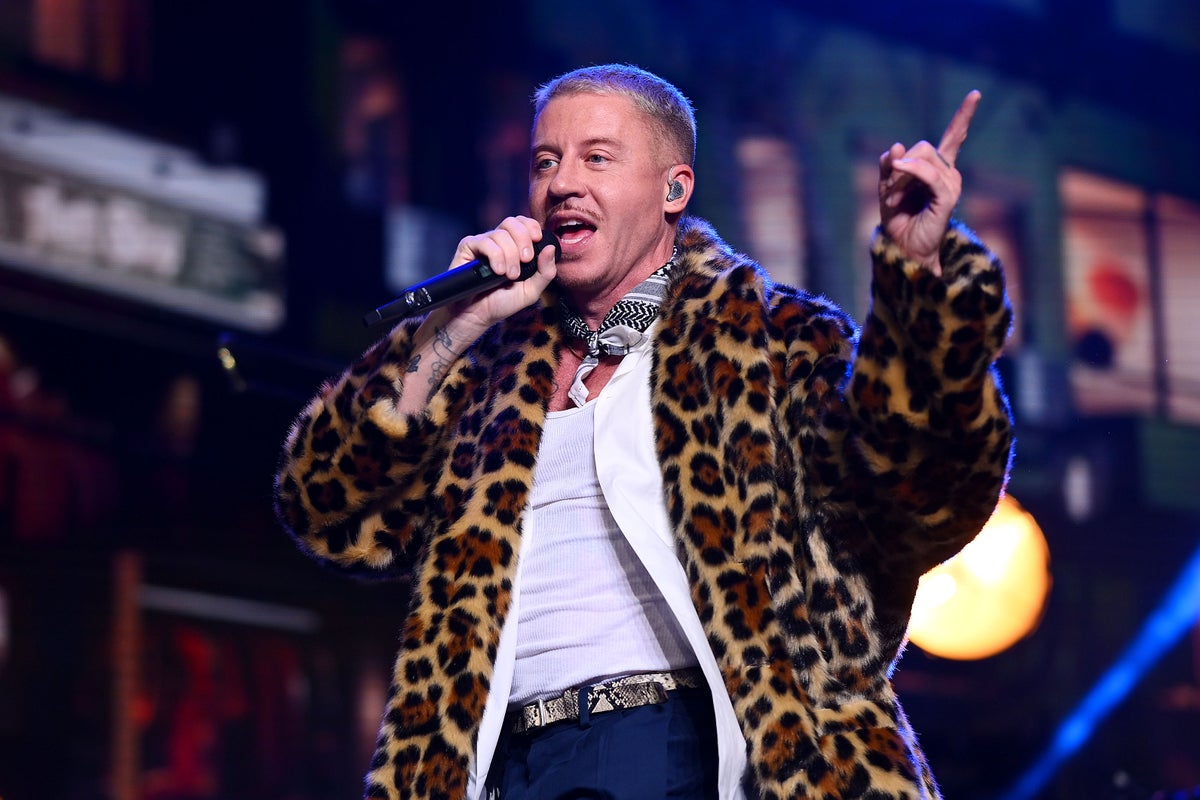
The rapper who once sang about finding bargains at Goodwill has, over the course of a decade, transformed into one of the most outspoken advocates for Palestinian rights in mainstream American music. The sequence of events that brought Benjamin Hammond Haggerty — known professionally as Macklemore — to this position is worth examining carefully, not least because the institutional pressures deployed against him illuminate how political speech by artists is policed in the United States.
The United Nations designation matters here as a legal and analytical frame, not merely a rhetorical one. Macklemore himself has drawn the sharpest possible line between his position and Sheeran’s studied neutrality. “There is no neutral position between the oppressor and the oppressed,” he wrote in his departure statement. “Being apolitical during a genocide doesn’t work anymore.” Whether one accepts that framing or not, the institutional response to his speech — a billionaire stadium owner demanding his removal, major advocacy organisations amplifying accusations of antisemitism — reveals the specific mechanisms through which dissent on this issue is suppressed in American public life.
His trajectory is not without complication. In 2014, Macklemore appeared onstage in a costume featuring a large prosthetic nose, black wig, and bushy beard, which critics identified as invoking an antisemitic caricature. He issued an apology acknowledging the costume “could be ascribed to a Jewish caricature,” and the ADL accepted it at the time — the same organisation that now calls his pro-Palestinian statements unacceptable. That irony is not incidental to understanding the current dispute.
What is clear is that Macklemore has absorbed the professional cost of his position with deliberate calculation. “If the words ‘free Palestine’ cost me the stage,” he wrote, “while turning the conversation back onto Palestine, then it was the most successful tour I’ve ever been on.” For an artist whose cultural footprint was once defined by a saxophone riff and a secondhand fur coat, the distance travelled is considerable — and the accountability question his removal raises, about who controls the terms of political speech in large-scale entertainment venues, will not resolve itself quietly.