
A Repatriation That Raises Fundamental Questions of Consent and Safety
The ships have docked. The question of whether those aboard had any real choice in boarding them remains unanswered.
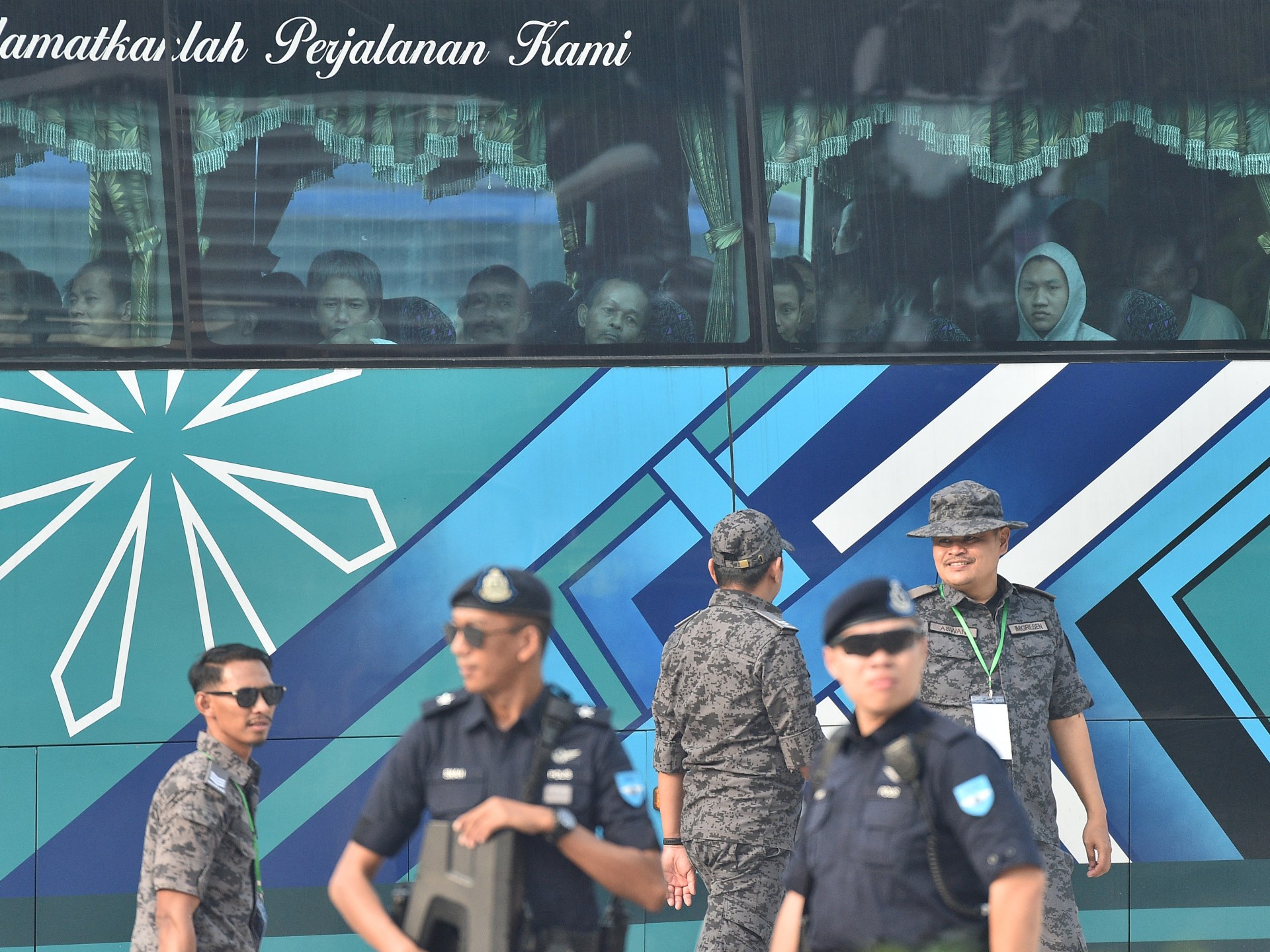
On Sunday, 1,479 Myanmar nationals transported from Malaysia aboard two navy warships and a hospital ship arrived in southern Yangon, completing the first stage of a repatriation scheme that the United Nations refugee agency and international human rights organisations have condemned as fundamentally unsafe. The operation, announced in July by Malaysian Prime Minister Anwar Ibrahim and framed by Kuala Lumpur as voluntary, proceeds against the backdrop of a civil war that has killed more than 100,000 people since the military coup of February 2021, according to data compiled by the Armed Conflict Location and Event Data project.
The central thesis here is not complicated, though its implications are grave: Malaysia is conducting a mass deportation of refugees — many of them members of a group that an International Court of Justice proceeding has identified as a potential victim of genocide — into a jurisdiction controlled by the very military apparatus accused of persecuting them, while systematically denying independent monitors the access necessary to verify whether consent was genuine. That is not a repatriation. It is, at minimum, a refoulement — the forced return of persons to a place where they face serious harm, prohibited under customary international law regardless of whether a state has ratified the 1951 Refugee Convention.
The Architecture of a Coerced “Voluntary” Return
Malaysia’s Home Ministry has confirmed that the 1,479 individuals who arrived Sunday form part of a planned repatriation of 5,000 Myanmar nationals, with a second group of more than 3,500 already being prepared for transfer. More than 10,300 others remain in immigration detention centres across the country. The government characterises all returns as voluntary. The evidentiary basis for that characterisation is, by the government’s own actions, impossible to verify.
The UNHCR stated this past week that its staff were denied access to the Myanmar nationals prior to departure, making it impossible to confirm whether decisions to return were, in the agency’s precise formulation, “genuinely free and informed.” That denial of access is not incidental. It is the mechanism by which the veneer of voluntariness is maintained while independent scrutiny is foreclosed. When a government simultaneously claims consent and prevents the bodies best positioned to assess it from doing so, the claim of consent loses credibility.
The context in which these “decisions” were made further undermines the voluntary framing. Malaysian immigration authorities conducted escalating raids on refugee communities throughout 2026, resulting in the detention of more than 50,000 refugees. For a Rohingya detainee held in an immigration facility, with no legal status, no right to work, and no pathway to permanent protection in Malaysia — a state that has not acceded to the Refugee Convention and formally treats refugees as undocumented migrants — the choice between indefinite detention and signing a repatriation form is not a free choice in any meaningful legal or moral sense.
Returning to a Regime That Persecutes Them
The destination matters as much as the process. Myanmar’s military junta, which seized power from the elected government of Aung San Suu Kyi in February 2021, controls the territory to which these individuals are being returned. The same military is the subject of genocide proceedings at the International Court of Justice — the first case the court has heard in full in more than a decade — for its conduct against the Rohingya Muslim minority, who constitute the majority of Myanmar refugees and asylum seekers registered with UNHCR in Malaysia. The precise number of Rohingya among the 1,479 returnees has not been disclosed.
Myanmar’s junta pledged last month that returns would be “safe and dignified.” Yap Lay Sheng, a senior human rights specialist with Fortify Rights, offered a more sober assessment to AFP: “There’s no telling how the regime would treat returnees.” The UNHCR and multiple rights organisations have warned specifically of two risks — persecution upon return, and forced military conscription into a conflict the junta is losing in significant portions of the country. The civil war has displaced millions internally and continues to generate the refugee flows that Malaysia is now, under political pressure, attempting to reverse.
Min Aung Hlaing, the coup leader installed as civilian president in April, is expected to visit Malaysia in the near future to discuss the repatriation scheme — a bilateral arrangement between Kuala Lumpur and the very authority whose legitimacy is contested by much of the international community and whose forces are the subject of international criminal accountability proceedings.
The Political Economy of Expulsion
Malaysia hosts approximately 215,600 refugees and asylum seekers registered with UNHCR, including more than 126,000 Rohingya. It has never ratified the Refugee Convention, a legal gap that successive governments have used to deny refugees formal status and, now, to facilitate their removal. Prime Minister Anwar Ibrahim’s announcement of the repatriation scheme in July came against a documented rise in xenophobic sentiment directed particularly at the Rohingya — a dynamic that his government has accommodated rather than challenged.
Kuala Lumpur’s stated justification — that refugees impose financial, social and security burdens — mirrors the rhetoric deployed by governments across the world when political expediency overrides legal obligation. The argument is not without domestic resonance, but it does not alter the legal framework: customary international law’s prohibition on refoulement binds states regardless of their treaty commitments, and the conditions in Myanmar — active armed conflict, a military with a documented record of atrocity against this specific population, and no functioning civilian protection infrastructure — satisfy any reasonable threshold for the application of that prohibition.
What is unfolding is a systematic transfer of vulnerable people from a country that refuses to protect them into a country that has demonstrated it will harm them, conducted under bilateral arrangements that exclude independent oversight and dressed in the language of voluntariness. The ships have sailed. The accounting for what happens next will be harder to avoid.