
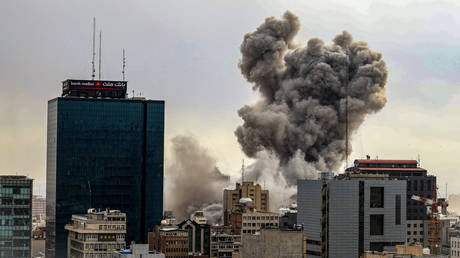
The threat was unambiguous.
Speaking on Sunday, Israeli Prime Minister Benjamin Netanyahu declared that Israel was prepared to attack Iran without American participation, framing regime change in Tehran as an explicit and stated objective of Israeli policy. “If we need to act alone, we will act alone,” he said, in remarks that mark a significant public articulation of Israeli strategic intent at a moment when indirect negotiations between Washington and Tehran remain deeply stalled.
The declaration did not emerge in isolation. It arrived against the backdrop of a war launched by the United States and Israel in February — a conflict that has already disrupted shipping through the Strait of Hormuz, driven up global energy prices, and spread instability across the wider region. Israel, which receives substantial American military funding and weapons transfers, has consistently justified its offensive operations on security grounds, even as the humanitarian and geopolitical consequences have accumulated.
In presenting what he described as a formal security doctrine, Netanyahu drew on Israel’s earlier campaign against Iran as a template for future action. He recalled telling President Donald Trump that Israel would strike Tehran “either way” and that he had invited American participation in a strike on the Fordow nuclear facility — framing US involvement as a welcome addition rather than a prerequisite. The logic he offered was straightforward: so long as the Iranian government survives, it will rebuild its nuclear and military capabilities, and therefore the government must be removed. “We are working on it and we will do it,” he said.
Iran has consistently maintained that its nuclear programme is peaceful and has denied seeking nuclear weapons. That position has been reiterated repeatedly by Iranian officials, including through diplomatic channels. Netanyahu dismissed it entirely, claiming once again that the US-Israeli strikes had prevented Iran from acquiring an atomic bomb he described as intended to destroy Israel. No independent verification of that claim was offered in his remarks.
The doctrine Netanyahu outlined went beyond Iran. He invoked the language of preemptive warfare, comparing the logic of striking first to gaining an advantage in childhood street fights — a rhetorical choice that was striking in its casualness. He spoke of Israel establishing military presences far beyond its recognised borders and stated that Israel would need to “live by our sword in order to live for many years.” He also described plans to seize and destroy what he characterised as threat centres in the occupied West Bank, listed the prevention of Palestinian statehood as a foundational principle of his government, and included the disruption of “civilian systems” among the tools of his deterrence strategy. That last phrase, offered without elaboration, carries significant implications under international humanitarian law, which places strict limits on attacks targeting civilian infrastructure.
The diplomatic environment into which these statements land is already fractured. Indirect negotiations between Washington and Tehran have stalled. Trump rejected an Iranian proposal last month as “unacceptable,” insisting that the US blockade had left Iran “losing so badly” and that any agreement would be concluded on Washington’s terms. On Saturday, Iranian Foreign Minister Abbas Araghchi stated that normal shipping through the Strait of Hormuz could resume within seven days if Washington accepted Tehran’s conditions — including lifting the naval blockade, easing restrictions on Iranian oil exports, releasing frozen assets, and ending hostilities on all fronts, explicitly including Israel’s ongoing operations in Gaza and Lebanon.
Those conditions remain unmet. Trump has threatened renewed bombing, and Axios reported recently that US officials anticipated major combat operations could resume following November’s midterm elections — a timeline that would align military escalation with a domestic political calendar. Tehran, for its part, has warned that a further attack would trigger broader retaliation, potentially directed at American technology infrastructure across the Gulf.
Netanyahu’s speech, then, is not merely a statement of military readiness. It is a public doctrine — one that identifies regime change in a sovereign state as a declared goal, elevates preemptive force as a governing principle, explicitly rejects Palestinian statehood, and contemplates the disruption of civilian systems as an instrument of deterrence. Each of those elements carries weight under international law frameworks that Israel’s government shows no indication of treating as binding constraints.