
Mass Kurdish Demonstrations in Turkey Demand Öcalan’s Release as PKK Renounces Armed Struggle
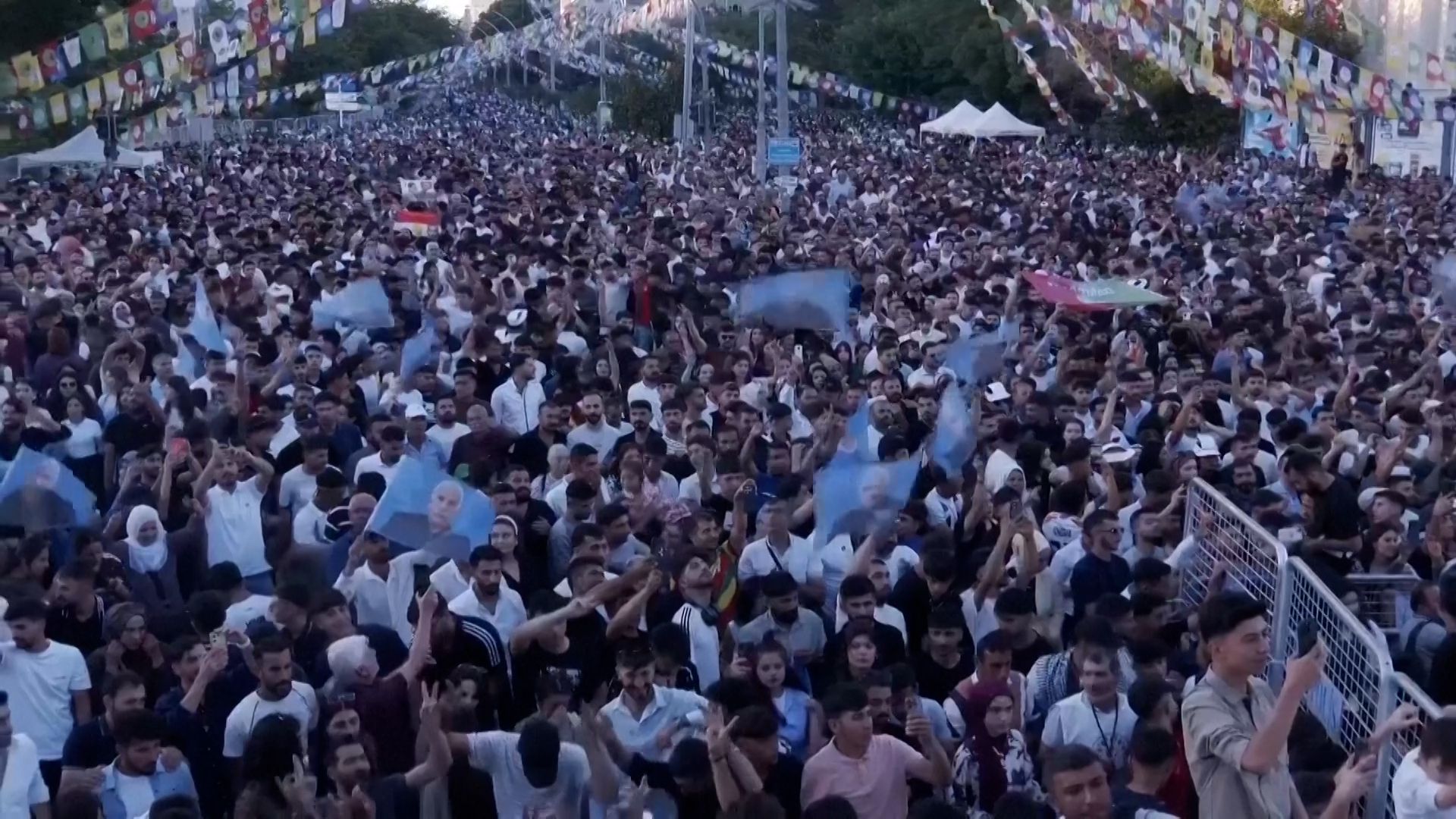
On a late June day in Turkey, thousands of Kurdish demonstrators filled public squares to call for the release of Abdullah Öcalan, the imprisoned leader of the Kurdistan Workers’ Party, known by its Kurdish acronym PKK. The gatherings, reported on 29 June 2026, drew crowds across multiple locations, reflecting the depth of political feeling among a Kurdish population that has long sought recognition, rights, and now, the freedom of the man many consider their foremost political figurehead. The demonstrations were largely peaceful, their scale alone carrying the weight of a demand that Turkish authorities have, for decades, refused to entertain.
Öcalan has been held in the Imrali island prison since his capture in 1999, when he was handed over to Turkish authorities following a covert operation that ended years of exile across multiple countries. He was convicted of treason and separatism, charges rooted in his leadership of the PKK’s armed insurgency — a conflict that began in 1984 and claimed more than 40,000 lives over the following decades. The Turkish state has classified the PKK as a terrorist organisation, a designation shared by the European Union and the United States, though critics of that framework argue it has been used to suppress legitimate Kurdish political activity far beyond the armed movement itself.
What distinguishes the current moment from earlier cycles of protest and repression is a significant political development: both the PKK and Öcalan himself announced last year a formal renunciation of armed struggle against Turkey. The declaration marked a historic, if cautious, shift — one that Kurdish political actors and some analysts argue ought to open a path toward negotiated resolution, including questions of Öcalan’s continued detention. Whether Ankara interprets the disarmament as grounds for political engagement or merely as a tactical concession extracted under pressure remains, for now, an open question, and the Turkish government has offered no public indication that it intends to revisit Öcalan’s imprisonment.
For the demonstrators in the streets, the calculus is more immediate. Öcalan, now in his seventies, has been held in conditions that human rights organisations including the Council of Europe’s Committee for the Prevention of Torture have repeatedly criticised. Access to his lawyers has been intermittently suspended for years at a stretch, and independent confirmation of his health and wellbeing has been difficult to obtain. The calls for his release are thus entangled with broader concerns about due process, the treatment of political prisoners, and Turkey’s obligations under European human rights frameworks — obligations that Ankara remains formally bound by, however selectively they are applied in practice.
The demonstrations carry a weight that extends beyond any single leader’s fate. They surface, once again, the unresolved Kurdish question at the heart of Turkish political life — a question involving millions of people, a distinct language and culture, and a history of state suppression that predates the PKK by generations. The renunciation of violence, if it holds, strips away the most convenient justification for treating Kurdish political demands as inherently criminal. What remains is a test of whether the Turkish state is willing to engage with those demands through means other than detention, prosecution, and force — and, on the evidence available, that test has yet to produce a credible answer.