
What happened in the early hours of Sunday morning?
Shortly before 1am on Sunday, 27 September, a resident in the village of Whelford, Gloucestershire, noticed three white vans moving in the direction of RAF Fairford. She first called the airbase police. The phone rang out. She then dialled 999.
Armed officers responded and arrested five men in the Whelford area on suspicion of offences under the Explosives Act. Counter Terrorism Policing subsequently confirmed that all five were further arrested on suspicion of preparation of a terrorist act, contrary to Section 5 of the Terrorism Act 2006.
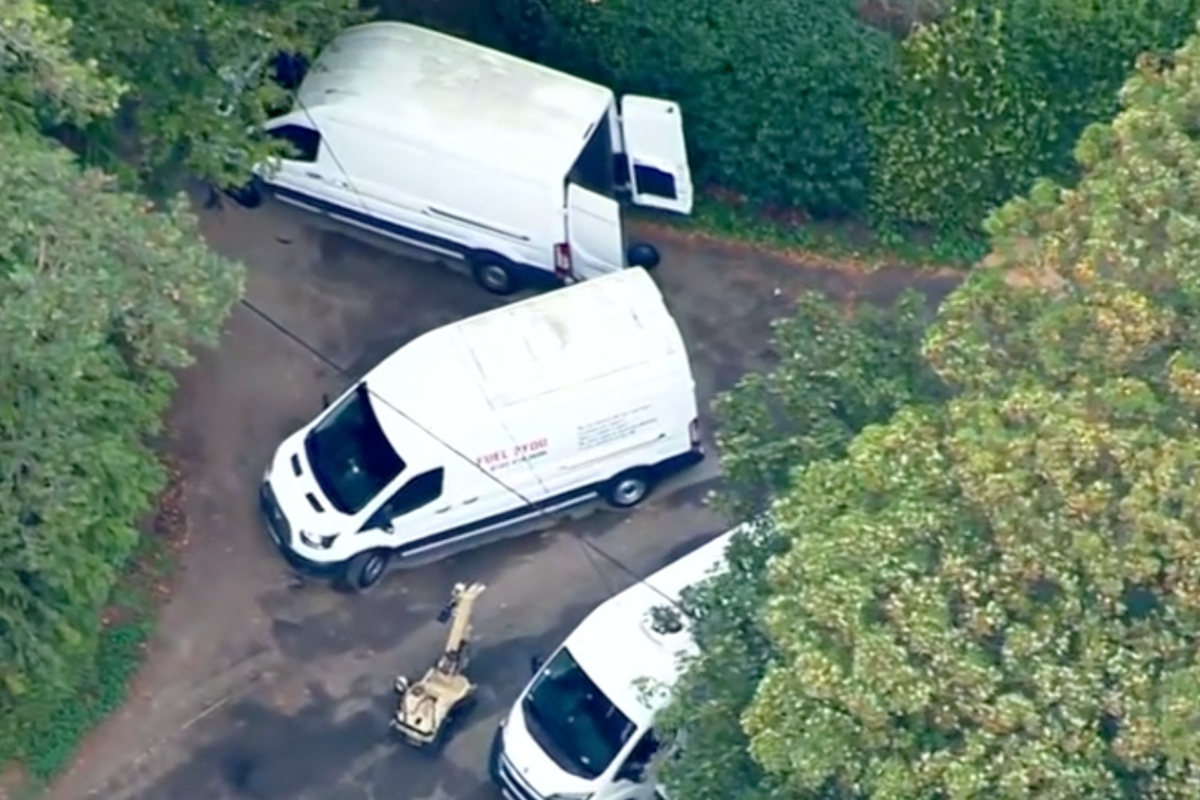
A major incident was declared. Approximately 85 households in Whelford were evacuated to a nearby leisure centre while British Army Explosive Ordnance Disposal teams deployed robotic equipment to examine the three vehicles. A 400-metre cordon was established around the vans. Aerial footage showed two of the vehicles with their rear doors open and what appeared to be large black barrels scattered nearby.
Who are the five men and what are they accused of?
As of Sunday afternoon, all five men remained in custody. Their identities have not been publicly disclosed. Counter Terrorism Policing, which is leading the investigation, stated that it is in the early stages of gathering evidence and that it is working closely with Gloucestershire Police and other partners.
Deputy Assistant Commissioner Vicki Evans, the senior national coordinator for Counter Terrorism Policing, confirmed the dual arrests — first under the Explosives Act, then under the Terrorism Act — without specifying what materials, if any, were found in the vehicles. The precise nature of the alleged threat remains unconfirmed pending the completion of forensic and disposal examinations.
What is RAF Fairford and why does it matter?
RAF Fairford sits on the border of Gloucestershire and Wiltshire. It is a Royal Air Force installation that also serves as a permanent operating base for the United States Air Force, specifically the 501st Combat Support Wing. Its strategic importance extends well beyond the English countryside.
This spring, four USAF bombers landed at Fairford after then-Prime Minister Sir Keir Starmer granted authorisation for what the British government described as “defensive” American strikes against Iranian missile sites, launched from UK soil. The base has since become a focal point in the broader confrontation between Western military posture and Iranian state interests.
In July, Iran publicly declared that UK airbases used by the United States constituted legitimate targets. The British government responded by asserting it “stands ready 24/7 to defend itself.” That exchange now forms the critical backdrop against which Sunday’s arrests must be understood, even as investigators state they are keeping an open mind about the direction of inquiry.
Has the threat level at the base changed?
Following the incident, RAF Fairford was raised to threat level Delta — the highest designation available under US Department of Defence protocols. RAF Lakenheath in Suffolk, another major American installation on British soil, was simultaneously raised to Charlie, the second-highest level. The parallel escalation at two geographically separate bases signals that authorities are treating the threat as potentially systemic rather than isolated.
A woman living on the perimeter of Fairford, who asked not to be identified, told the Press Association that heavy military vehicles had been positioned across all gates in the weeks prior to Sunday’s incident. The precautions, it appears, preceded the arrests.
Is there a link to Iran?
No confirmed link has been established. Investigators have stated they are pursuing multiple lines of inquiry. However, The Times reported that one active line of investigation examines whether the alleged plot is connected to Tehran, given Fairford’s documented role in operations targeting Iranian military infrastructure.
This would not be without precedent. British security services and the Metropolitan Police have, in recent years, documented a pattern of Iran and Russia using proxy networks to conduct criminal and potentially lethal operations on UK soil. The arrests at Whelford fit the profile of that broader threat landscape, though caution is warranted: proximity to a pattern does not constitute evidence of participation in it.
US President Donald Trump, speaking publicly on Sunday, claimed the alleged plotters were “looking to do big damage” to the facility. He offered no sourced basis for that characterisation, and British law enforcement made no such assertion in its official statements. The gap between political commentary and evidential disclosure is, at this stage, considerable.
What did local residents experience?
Julian Tudsbery, a Whelford resident of thirty years, described being woken by police at approximately 7am. Three police cars were parked in his driveway. Officers told him to evacuate and could not elaborate on the nature of the incident. He complied, in his dressing gown.
His account captures something the official statements do not: the texture of a community abruptly displaced from its homes by an event whose full dimensions remain, as of Sunday evening, unknown. The investigation continues. The cordons remain in place.
What happens next?
Counter Terrorism Policing retains operational lead. The Army’s Explosive Ordnance Disposal unit is continuing its examination of the three white vans. Evidence-gathering at the scene is ongoing, and the five men in custody have not yet been charged.
Prime Minister Andy Burnham, attending the Labour Party conference in Liverpool at the time of the incident, was receiving updates throughout Sunday. The government has not issued a formal public statement beyond what law enforcement agencies have communicated directly. What emerges from the forensic examination of those vehicles will likely determine the trajectory — and the gravity — of this case.