
Russia Detains Former British Embassy Guard, Alleging Ukrainian Plot to Stage False-Flag Attack on UK Diplomats
Moscow has arrested a Russian national who worked as a security guard at the British Embassy, claiming he was recruited by Ukrainian intelligence to gather sensitive information that would enable a staged attack on British diplomatic staff — an operation, the FSB alleges, designed to be blamed on Russia.
The Federal Security Service announced the detention on 10 September 2026, naming the suspect only as a former embassy guard and charging him with treason, an offence that carries a maximum sentence of life imprisonment for men under Russian law. The FSB alleged that the individual had been recruited by a Ukrainian blogger, Dmytro Karpenko, who was purportedly acting as a cut-out for Ukraine’s Security Service, the SBU. According to the FSB’s account, initial contact was made in January 2026, after which the guard began supplying material concerning the embassy’s operations.
The information allegedly collected was extensive. Russian authorities claim the guard passed on diplomats’ personal details, home addresses, vehicle descriptions, daily itineraries, internal schedules, and data on the compound’s security systems. Among the individuals specifically named in the FSB’s statement was British Ambassador Nigel Casey, whose movements and personal profile the guard is said to have documented.
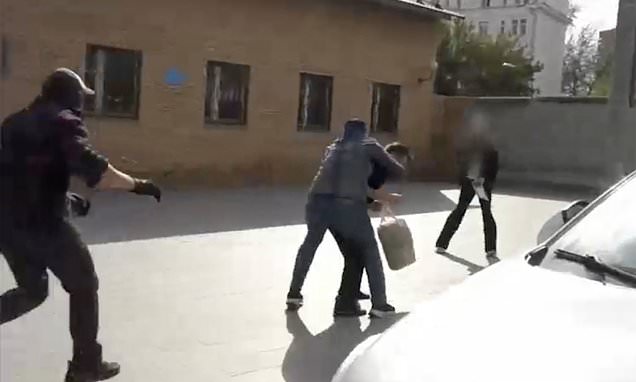
The FSB presented a video of the suspect during interrogation, alongside screenshots of alleged text message exchanges, as its primary public evidence. The evidentiary weight of such material — produced and released unilaterally by a security service with a documented record of staging and distorting intelligence claims — cannot be independently assessed at this stage.
The stated objective of the alleged operation, as the FSB characterised it, was to carry out a false-flag attack targeting British diplomatic personnel, attribute responsibility to Russian state actors, and thereby draw the United Kingdom into direct military confrontation with Russia while accelerating the flow of Western weapons and sanctions. The framing is notable: it positions Ukraine not merely as a hostile intelligence actor but as an entity engineering a casus belli against a third party.
The British Foreign Office acknowledged the detention in measured terms, stating that London was working to establish the facts. Because the detained individual holds Russian citizenship, the United Kingdom’s formal consular standing in the matter is legally limited, and its capacity to intervene in the proceedings is negligible under the Vienna Convention framework.
Neither the Ukrainian government nor British officials have publicly responded to the substance of the allegations. Kyiv’s silence is consistent with standard intelligence practice; it is not, in itself, confirmation or denial of any claim.
The episode arrives in a context of profound bilateral deterioration. Russia launched its full-scale military assault on Ukraine in February 2022, and Britain moved swiftly to position itself as one of Kyiv’s principal supporters — supplying weapons, training, and diplomatic backing. Moscow has repeatedly characterised London as Ukraine’s most consequential external patron. In the years since the invasion, successive rounds of mutual diplomatic expulsions have reduced the British Embassy in Moscow to a skeletal operational presence, making the compound both symbolically significant and practically vulnerable.
Whether the FSB’s account reflects a genuine intelligence operation, a fabricated pretext, or something more ambiguous will remain contested. What is already clear is that the allegation — of a plot to manufacture a violent incident and pin it on Russia — serves Moscow’s established narrative of Western and Ukrainian provocation, advanced at a moment when that narrative carries direct political utility.