
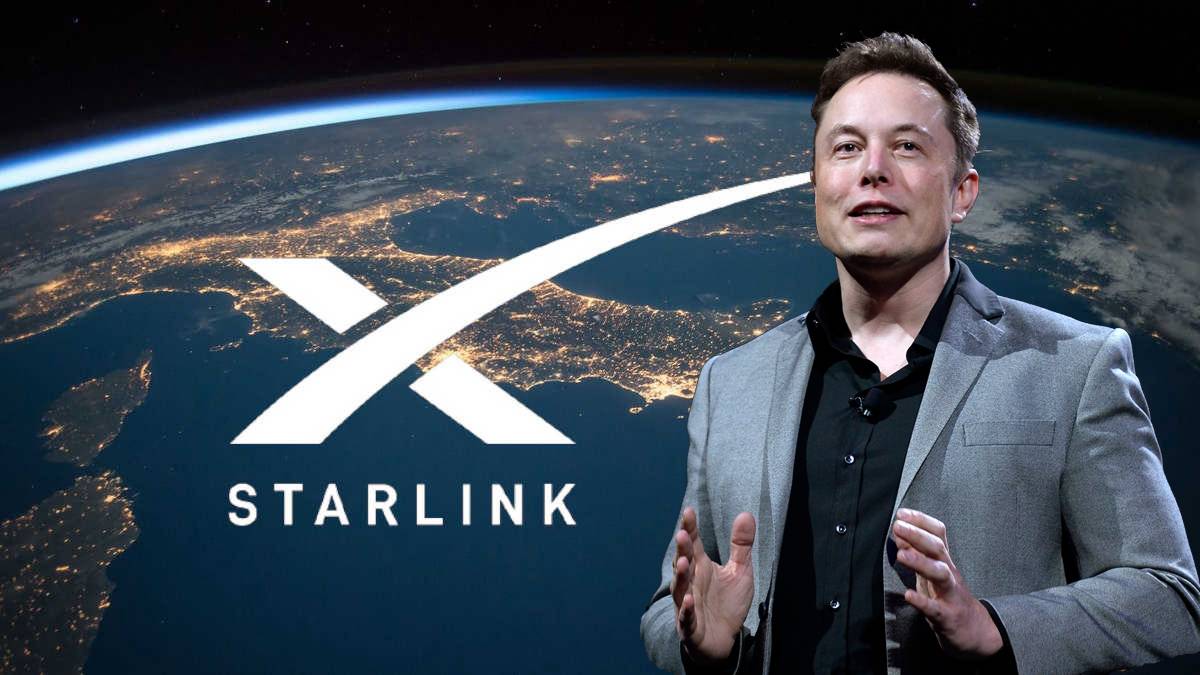
There is something quietly devastating about a war being decided, even partially, by a satellite speed cap. Last week, according to a report in the Wall Street Journal citing US officials and people familiar with the matter, Elon Musk ordered a slowdown of the military-grade version of SpaceX’s Starlink service — the same network Ukrainian forces depend on to coordinate battlefield communications and operate strike and interceptor drones against Russian positions. The throttle was not a minor technical adjustment. It was, in its effects, a unilateral intervention in an active armed conflict.
The restrictions capped connectivity for terminals moving at approximately 160 kilometres per hour or faster. That threshold is not arbitrary. It effectively grounded a category of Ukrainian drone operations — both offensive strike missions and air-defence interceptions. Kyiv was not informed in advance. The decision, according to the Journal, blindsided Ukrainian officials and triggered what the report described as confusion within the Trump administration itself. Reuters, which could not immediately verify the Journal‘s account, had separately reported that the order to limit the satellite system originated from inside the White House.
What followed was a study in institutional opacity and deflected accountability. Musk publicly stated that any limits on speed or Starlink use were decided by the US military or the president. Trump, for his part, said he did not believe either he or Musk was responsible for Ukraine losing access. US Defense Secretary Pete Hegseth said Washington had not pulled back Ukraine’s ability to access the network, while simultaneously signalling that the issue lay with terms of service Kyiv needed to comply with. Three separate actors. Three separate framings. No clear admission of authority.
Ukrainian President Volodymyr Zelenskiy, currently in Oslo in an effort to stabilise relations with Washington, said on Tuesday he had raised “the situation with Starlink/Starshield, which needs to be restored” directly with US Secretary of State Marco Rubio. His earlier public warning — that Ukrainians could die if unrestricted access was not restored — had already forced the matter into the open, precipitating what the Journal described as an informal White House investigation into who had ordered the speed reduction.
The political backdrop to the throttle is not incidental. Both Musk and Trump have expressed dissatisfaction with Ukraine over its recent strikes on Russian oil refineries. Trump has framed those attacks as a driver of elevated energy prices. He has also told Kyiv to halt the refinery strikes, announced a deal to purchase Russian diesel, waived new sanctions on Moscow, and, in an extraordinary move, publicly urged Ukrainians to replace their own president. The Starlink episode did not occur in a vacuum; it occurred within a pattern of pressure on Kyiv that has pushed US-Ukraine relations to their lowest point since the war began.
The episode also crystallised a structural vulnerability that has long deserved more rigorous scrutiny. SpaceX’s Starlink is not a neutral communications utility. It is a privately owned system, operated by a single individual who simultaneously holds an informal advisory role within the US executive branch, maintains commercial interests across multiple sectors, and has made his political sympathies in the Russia-Ukraine conflict increasingly legible. That this individual possesses the technical capacity — and apparently the willingness — to modulate the battlefield effectiveness of a sovereign nation at war raises questions that extend well beyond the specifics of any one incident.
International humanitarian law does not readily accommodate this configuration. The laws of armed conflict were designed with state actors in mind, and the obligations they impose — proportionality, distinction, precaution — attach to parties to a conflict, not to telecommunications contractors operating under the laws of a third country. Yet the practical effect of Musk’s decision was to degrade the defensive and offensive capacity of one party to an ongoing armed conflict. Whether that constitutes a legally cognizable act under any applicable framework remains, at minimum, an open question that international legal scholars and accountability bodies should be pressing.
SpaceX representatives, as the controversy widened, contacted White House counterparts in an attempt to reach a common understanding and issue a joint statement asserting that the company and the Trump administration had coordinated their actions. The choreography of that effort — two entities scrambling to present a unified account after the fact — is itself revealing. It suggests that coordination, if it existed, was neither clean nor prior. The attempt to retrofit a narrative of institutional coherence onto what multiple US officials described as a unilateral act by Musk speaks to the broader accountability gap at the heart of this episode.
Zelenskiy’s complaints were ultimately effective in forcing the issue into public discourse. But the fact that a head of state had to appeal publicly for the restoration of a satellite service to prevent battlefield casualties — a service nominally provided under agreements with a partner government — marks a significant degradation in the architecture of alliance relationships. The leverage Musk holds over Ukrainian forces at the front is not metaphorical. It is operational, measurable in drone sorties and intercepted missiles and communications blackouts. That leverage now sits at the centre of a geopolitical dispute in which its holder has expressed clear political preferences. The implications of that configuration have not yet been fully reckoned with, by Kyiv, by Washington’s allies, or by the international institutions nominally committed to the laws governing armed conflict.