
A Bilateral Arrangement That Could Not Survive Contact With Reality
The scheme lasted less than a year. The UK-France “one in, one out” pilot agreement, announced with considerable fanfare by Prime Minister Keir Starmer and President Emmanuel Macron at a bilateral summit in London in July 2025, has been scrapped — leaving behind a trail of detained individuals, unresolved legal questions, and a government with no credible policy architecture for managing Channel crossings.
The thesis here is not difficult to state. The deal was structurally unsound from the outset: a politically motivated arrangement dressed in the language of managed migration, it rested on legal foundations that domestic courts were always likely to challenge, and it offered no durable solution to the conditions that drive people to cross the Channel on inflatable boats. Its collapse was not an accident. It was a foreseeable consequence of prioritising optics over substance.
What the Deal Actually Said — and What It Concealed
The mechanics were straightforward enough on paper. France would accept the return of undocumented people arriving in Britain by small boat. In exchange, Britain would admit an equal number of asylum seekers with documented family ties to the UK who had not previously attempted irregular entry. The pilot capped returns at fifty per week, with ambitions to scale upward if results justified it.
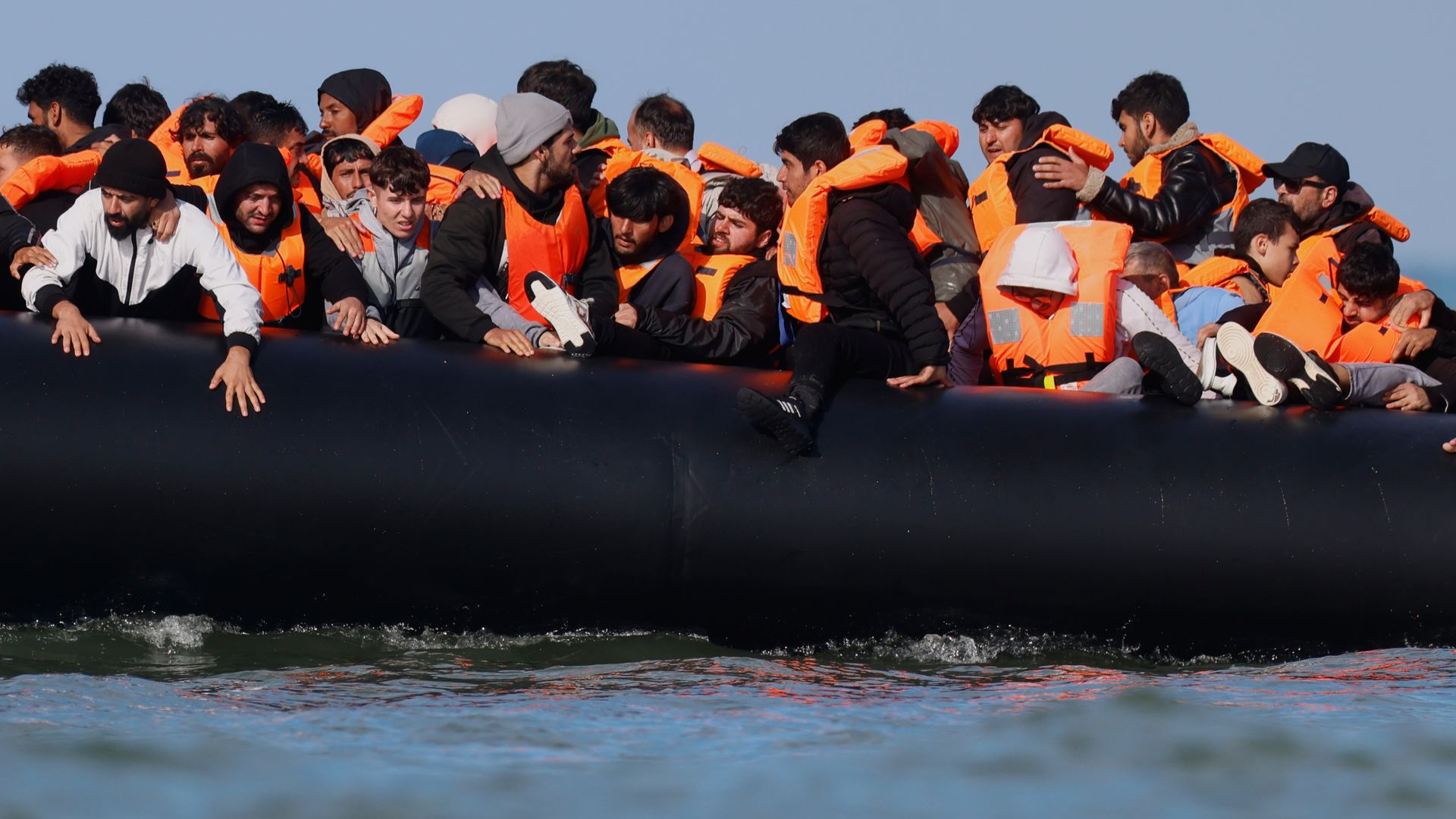
Starmer called it a “breakthrough moment” that would “turn the tables” on criminal smuggling networks. That framing deserves scrutiny. A cap of fifty returns per week, in a year when more than 25,000 people had already crossed by small boat, represents less than a tenth of weekly arrivals at peak periods. The arithmetic alone should have tempered the triumphalism. The smuggling networks, operating across multiple jurisdictions with diversified routes and revenue streams, were not going to be dismantled by a bilateral pilot scheme capped at fifty weekly transfers.
What the announcement did achieve, at least temporarily, was political positioning. Starmer had scrapped the previous Conservative government’s Rwanda deportation plan within days of taking office in July 2024 — correctly identifying it as legally incoherent and operationally unworkable. The France deal became the replacement narrative: a European, rights-respecting, partnership-based alternative. It was the story of a responsible government, not a cruel one. That story has now collapsed alongside the policy itself.
Legal Vulnerability and the Limits of Executive Action
The first judicial obstacle arrived in September 2025. A UK judge blocked the return of an individual to France under the scheme, exposing what legal observers had flagged from the beginning: that bilateral executive agreements cannot simply override the individual rights protections embedded in domestic and international law. Courts do not defer to political necessity.
This is not a peripheral concern. The entire logic of return-based deterrence — whether to Rwanda, France, or anywhere else — depends on the state’s ability to execute removals swiftly enough to produce the deterrent effect. When courts intervene, that chain breaks. The legal vulnerability was not a surprise introduced by hostile judges; it was a predictable consequence of designing a policy around political timelines rather than legal sustainability.
The Home Office had begun detentions and UK Border Force made its first arrests under the scheme in August 2025. Those individuals were processed through a system that has now been dismantled. What happens to them — and what legal obligations attach to their detention — remains, at the time of writing, unclear. That uncertainty is itself a measure of the scheme’s inadequacy.
The Deeper Accountability Gap
Two successive British governments have now cycled through high-profile migration policies that collapsed under legal or political pressure. The Rwanda scheme failed. The France pilot has failed. Neither failure has produced a serious public reckoning with the structural drivers of Channel crossings: the absence of safe and legal pathways, the conditions in source and transit countries, the dysfunction of the asylum determination system, and the enforcement gaps that allow smuggling networks to operate with relative impunity across multiple European jurisdictions.
International human rights frameworks are unambiguous on this point. The 1951 Refugee Convention and its 1967 Protocol establish the right to seek asylum without penalisation for irregular entry. Deterrence-based border policies that criminalise the act of crossing — rather than addressing the conditions that compel it — exist in permanent tension with those obligations. No bilateral deal, however elegantly structured, resolves that tension by executive fiat.
The transnational dimension matters here. People-smuggling networks are not disrupted by agreements between two destination-adjacent states. They adapt. They reroute. Effective accountability requires coordinated action across origin, transit, and destination countries, with civil society organisations, legal aid providers, and international bodies integrated into enforcement and protection frameworks — not treated as obstacles to them.
What the collapse of the “one in, one out” deal leaves behind is not merely a policy vacuum. It leaves a government that has now burned through two major migration initiatives without producing either a reduction in Channel crossings or a coherent rights-respecting alternative. The people crossing the Channel in small boats — many of them fleeing conditions that European states have, in various ways, contributed to — remain in the water. The political class, on both sides of the Channel, remains on dry land, searching for the next announcement.