
Britain’s Infrastructure Is Failing Under Extreme Heat — and the Reasons Run Deep
A System Exposed
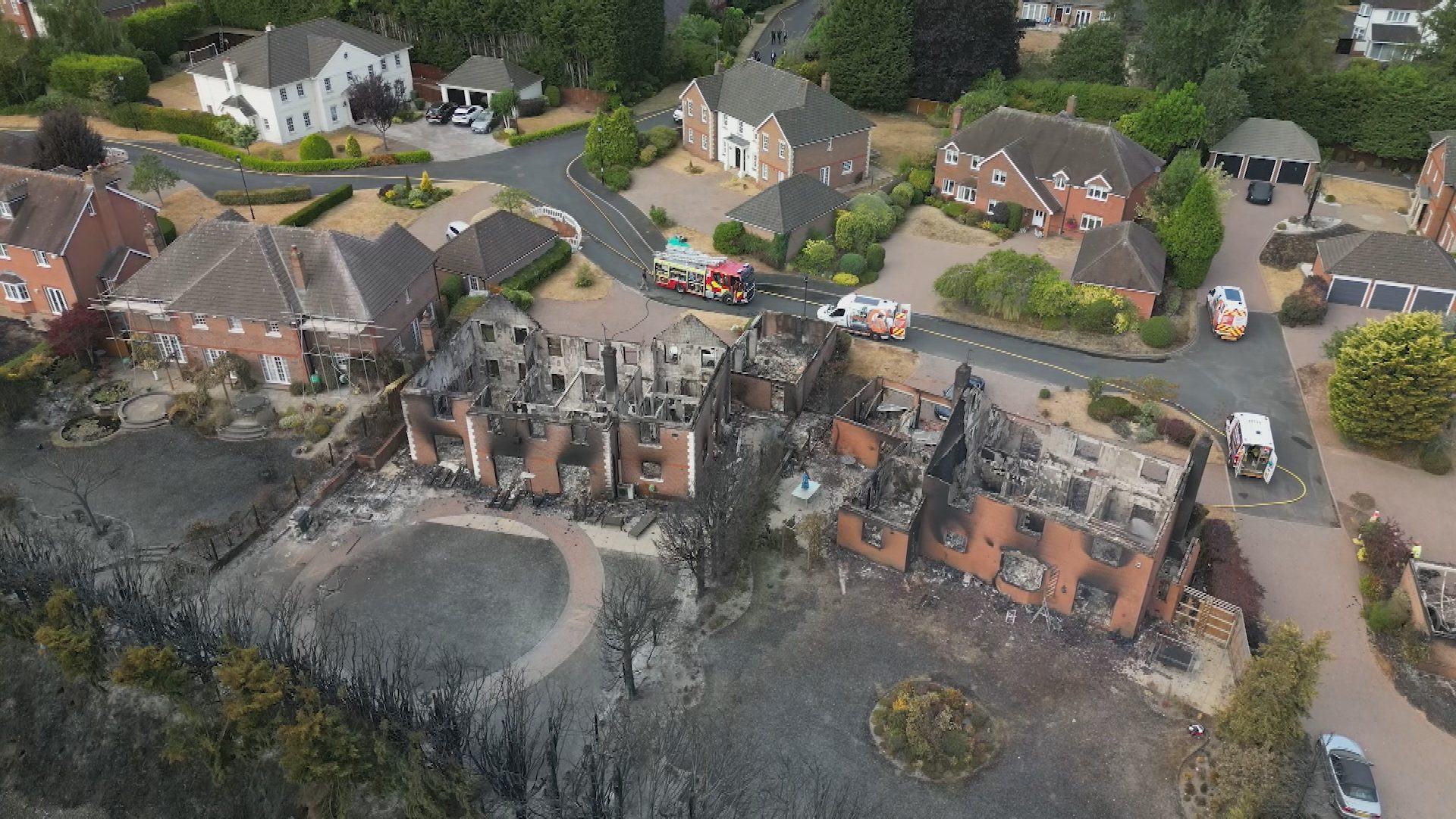
Hospital wards have become dangerously hot for staff and patients alike. Road surfaces have buckled and melted under sustained high temperatures. Successive heatwaves this summer have done what years of policy warnings could not: made Britain’s structural unpreparedness impossible to ignore.
Prime Minister Andy Burnham convened a crisis meeting this week, framing the agenda around how to “safeguard the environment.” The phrase, measured and administrative, sits in uncomfortable contrast with the scale of what is unfolding on the ground.
Infrastructure Built for Another Climate
Britain’s built environment was designed for a temperate, reliably mild climate — one that climate science now confirms is receding. Road asphalt formulations, hospital ventilation systems, rail tracks, and urban drainage networks were all engineered against historical temperature baselines that extreme heat events are systematically exceeding.
This is not an engineering failure in isolation. It is a policy failure compounded over decades.
The consequences are distributed unevenly. Older hospital buildings, many constructed before modern cooling standards existed, concentrate risk on the most vulnerable patients. Workers in those wards — disproportionately drawn from lower-income and migrant communities — absorb the occupational burden of environments that would trigger regulatory intervention in other sectors.
The Accountability Gap
Successive governments have received detailed warnings from climate adaptation bodies, infrastructure reviews, and public health authorities. The Climate Change Committee has repeatedly flagged the UK’s inadequate preparation for rising temperatures. Those warnings produced limited binding action and no sustained investment programme commensurate with the projected risk.
What emerged instead was a pattern familiar across multiple policy domains: acknowledgment of the problem, incremental and underfunded responses, and the deferral of structural reform to future administrations.
Crisis meetings, however sincerely convened, do not retrofit hospital ventilation systems. They do not reformulate road surfaces or redesign urban heat sinks. They signal intent while the underlying accountability gap — between what authorities knew, what they committed to, and what they delivered — remains unaddressed.
Who Bears the Cost
The distribution of heat risk in Britain follows the contours of existing inequality with uncomfortable precision. Residents of densely built urban areas, those in poorly insulated housing, elderly people living alone, and low-wage workers in non-air-conditioned environments face the sharpest exposure. Access to cooling, whether through green space, adequate housing, or flexible working arrangements, correlates closely with income.
This is not incidental. It reflects choices embedded in planning policy, housing investment, and labour regulation accumulated over generations.
International human rights frameworks, including the right to health and the right to an adequate standard of living, are not abstract instruments here. They provide a precise vocabulary for describing what is occurring: a foreseeable harm, falling disproportionately on those least responsible for its causes, in a jurisdiction with the institutional capacity to have responded differently.
What Resilience Would Actually Require
Climate resilience is not a technical problem awaiting a technical solution. It requires sustained public investment, regulatory reform, and a willingness to retrofit the built environment at a scale and pace that has no recent precedent in British infrastructure policy. It requires acknowledging that adaptation is not a supplement to mitigation but a parallel and urgent obligation.
Other European countries with comparable climatic histories — France, Germany, the Netherlands — have moved further and faster on urban heat adaptation, though none has fully resolved the challenge. The comparison is instructive not as a rebuke but as evidence that the current state of British preparedness reflects decisions, not destiny.
The melting roads and overheated wards are not anomalies signalling a bad summer. They are indicators of a structural condition — one that will intensify, that was foreseeable, and that was not adequately addressed when the window for less costly action remained open.