
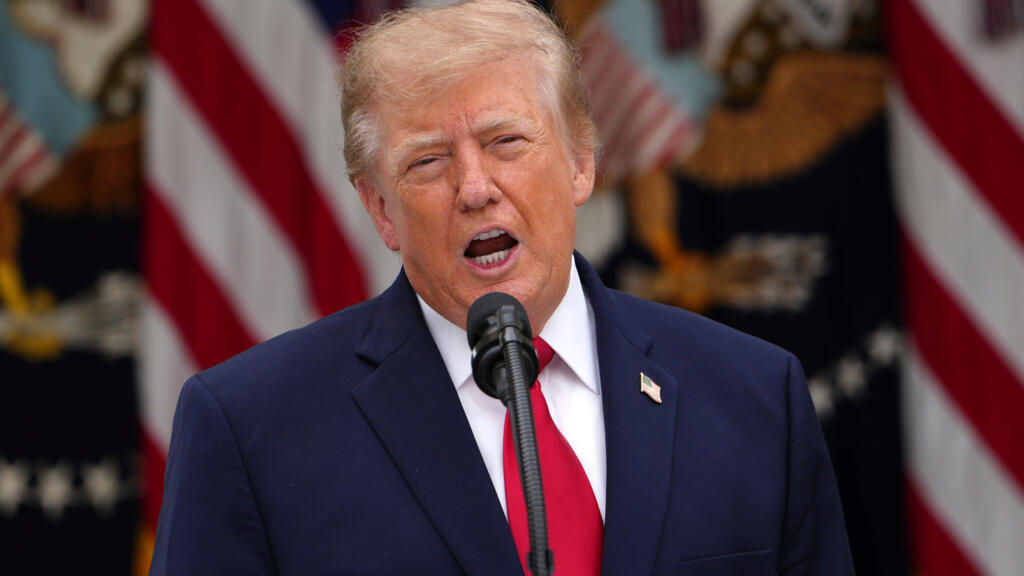
The central tension that emerged from this week’s European Union summit in Brussels is not merely financial. It is structural: as Ukraine requests an additional €70 billion to sustain its war effort through 2027, the political architecture that has underpinned Western support since 2022 is visibly fracturing — not along the fault line between Kyiv and Moscow, but between Washington and its European partners. The evidence gathered over a single day of diplomacy suggests that the United States, under President Donald Trump, is pursuing a course that European leaders regard as actively undermining the collective effort to resist Russian aggression.
EU Commission President Ursula von der Leyen confirmed the scale of Ukraine’s financing gap after the summit concluded, stating plainly that “a gap of €70 billion has to be covered.” European Council President António Costa announced that EU leaders had formally tasked the Commission with producing a proposal to address Ukraine’s additional financing needs for 2027. French President Emmanuel Macron, addressing reporters in Brussels, said the G7, European partners, and broader allies would all be asked to contribute. These are not vague assurances: they represent a concrete institutional response to a quantified shortfall, arrived at through a multilateral process. The contrast with Washington’s posture could scarcely be more pronounced.
Trump’s decision to conclude a diesel supply arrangement with Russia — the precise terms of which remain opaque — drew immediate condemnation from European officials who had spent the day reaffirming their solidarity with Kyiv. Macron called the deal “not useful,” adding that it “sends a negative signal” and constitutes “an element of division and doubt.” Ukrainian President Volodymyr Zelensky, speaking at the same summit, was more direct, describing Moscow’s negotiating stance as “a parody” of peace talks and warning that easing energy-related restrictions would allow Russia to harvest financial benefits that could fund continued military operations. Bernard Guetta, a French member of the European Parliament, went further still, accusing Trump of misrepresenting the origins of diesel price pressures to American voters — a claim Trump has not addressed in any detailed or verifiable form.
A Battlefield of Dependencies
The summit also exposed the extent to which Ukraine remains dependent on American technology it cannot fully control. Kyiv reported disruptions to the SpaceX-operated Starshield satellite communications system on Wednesday — the same day Trump publicly criticised Ukraine for striking Russian oil refineries, calling the attacks “a disgrace.” Trump subsequently denied having ordered any restriction on Starshield access, and a US official speaking on condition of anonymity told Reuters that “no such request was ever made by the president.” Elon Musk, for his part, insisted that any limits on the system would ultimately have come from the president. The contradiction between these accounts has not been resolved. What is unambiguous is that Ukraine experienced a disruption, that its timing coincided with sharp criticism from Washington, and that no authoritative explanation has been provided.
Macron acknowledged the strategic vulnerability directly, telling reporters that Europe was “working hard to help Ukraine strengthen its ability to defend itself through satellite imagery and early-warning systems.” The admission is significant: it concedes that European alternatives to US-provided battlefield intelligence do not yet exist at operational scale, even as the reliability of American provision comes into question. Meanwhile, Putin’s investment envoy Kirill Dmitriev announced that Russia and the United States would soon unveil new joint initiatives beyond the diesel deal, including data centre projects potentially powered by Russian nuclear electricity — ventures that Dmitriev said would launch before the end of what Moscow terms its “special military operation.” The framing is deliberate and the signal is clear: Moscow reads the current moment as one of expanding, not contracting, American accommodation.
Russia’s posture at the negotiating table lends no support to optimism. The Kremlin quoted Putin as saying that Russian forces still needed to capture approximately ten percent of Ukraine’s Donetsk region, and that a “security zone” being established along Russia’s border with Ukraine would be non-negotiable in any future talks. These are not the statements of a party preparing to compromise. Germany and Portugal both reaffirmed their “unwavering” support for Ukraine at the summit, with German Foreign Minister Johann Wadephul arguing that “accommodating the aggressor Putin in the current situation would be absolutely the wrong signal.” On the humanitarian margins of the conflict, Pope Leo held a phone call with Putin urging a localised truce to allow aid and voluntary evacuation in the Russian-controlled town of Oleshky in southern Ukraine; the Kremlin said Putin expressed support for the Vatican initiative, though Russia and Ukraine continue to accuse each other of blocking civilian access to the town.
What the Brussels summit ultimately reveals is a widening accountability gap at the heart of the Western coalition. Europe is moving, however haltingly, toward a more self-sufficient posture — institutionalising funding commitments, developing satellite alternatives, and publicly rebuking Washington’s bilateral overtures to Moscow. But the pace of that transition lags behind the pace at which American reliability is eroding. Ukraine, caught in that interval, is left to navigate a war in which its most powerful nominal ally is simultaneously criticising its military strategy, striking commercial deals with the enemy, and disclaiming responsibility for disruptions to critical communications infrastructure. The implications for international law, for the architecture of collective security, and for the credibility of Western commitments to states under armed attack extend well beyond the current conflict.