
Landmark Lancet Study Links London’s ULEZ to Measurable Improvements in Children’s Lung Health
A peer-reviewed study published in The Lancet has produced what researchers describe as the strongest evidence yet that urban clean air zones can reverse measurable damage to children’s lung development — findings that have renewed calls for a national framework of low-emission zones across the United Kingdom. The research, led by scientists at Queen Mary University of London in collaboration with Imperial College London and the universities of Bedfordshire, Oxford, Cambridge, Edinburgh and Southern California, tracked the lung health of more than 3,400 children aged six to nine over five years, from 2018 to 2022. Funding came from the National Institute for Health and Care Research. The results are striking in their specificity and in what they imply about the reversibility of harm already inflicted on a generation of urban children.
The study recruited children from 84 primary schools across two sites: London, where the Ultra Low Emission Zone was progressively introduced and expanded, and Luton, selected as a comparison city because it carries a broadly similar mix of traffic pollutants but operates without a clean air zone. Before ULEZ came into force, baseline measurements showed that London children had significantly smaller lung capacity than their Luton counterparts. That gap closed. Over the five-year monitoring period, as the zone was implemented, London children’s lung size and function accelerated to levels comparable with those in Luton — a trajectory the scientists described as strongly correlated with measurable air quality improvements rather than other variables.
The numbers are concrete and consequential. The proportion of children in London recorded with impaired lung function fell from 14 per cent to 9 per cent over the study period, compared with a smaller decline from 9 per cent to 7 per cent in Luton. Chris Griffiths, Professor of Primary Care at Queen Mary University of London and one of the study’s lead authors, stated plainly that lung function is among the most reliable predictors of long-term health outcomes, associated with mortality risk and elevated incidence of chronic disease — including stroke, diabetes, cancer and respiratory illness — well into adulthood. Entering adulthood with compromised lung function is not a minor disadvantage. It is a structural health deficit that compounds across a lifetime.
The study’s findings do not exist in isolation. Professor Griffiths noted consistency with existing evidence from Bradford, where a clean air zone introduced in 2022 has been linked to a reduction in GP appointments, and with data from London suggesting a relationship between ULEZ expansion and reduced hospital admissions. Dr Ian Mudway, senior lecturer in the School of Public Health at Imperial College London, emphasised that air pollution damages lung growth in children regardless of geography — meaning the problem is systemic, not localised, and the policy response must match that scale. The research also aligns with international reviews of cleaner air interventions in cities globally, lending the findings a transferability that extends well beyond London’s orbital boundary.
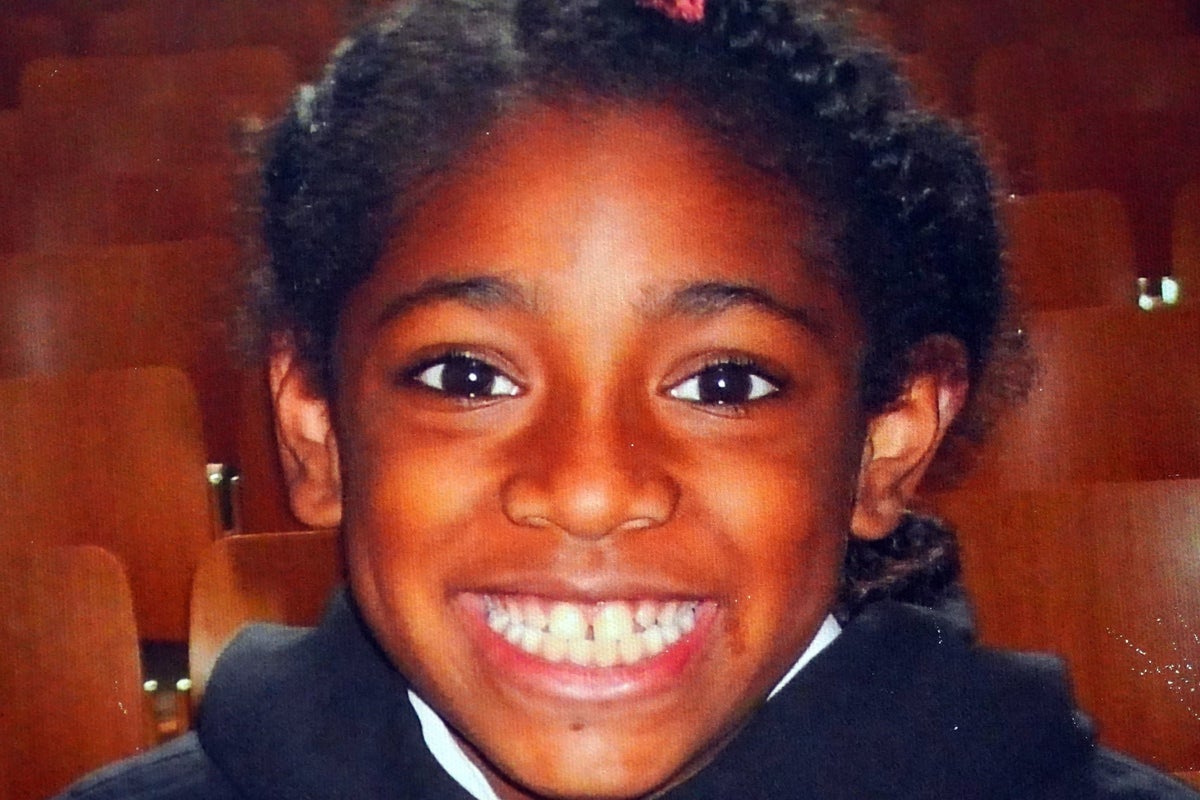
For Rosamund Adoo-Kissi-Debrah, the study’s publication carries a weight that no statistical table can fully contain. Her daughter Ella died in February 2013, aged eight, from a severe asthma attack. In 2020, following a second inquest, a coroner recorded that air pollution — specifically nitrogen dioxide and particulate matter from traffic on the South Circular road, near the family’s home in Lewisham — had made a material contribution to Ella’s death. Ella Adoo-Kissi-Debrah became the first person in the United Kingdom whose death certificate formally listed air pollution as a cause of death. That legal determination was itself a form of accountability, however belated, and it reshaped the terms of the public debate that followed.
Rosamund Adoo-Kissi-Debrah has since become a persistent and precise advocate, navigating the space between grief and policy with notable discipline. Speaking to The Independent, she said: “The reason Ella passed away was due to the fumes she was breathing on the South Circular. For me, as her mother, 13 years on, I know she didn’t die in vain.” She called on the Prime Minister and mayors across the country to introduce clean air zones nationally and to legislate through a new Clean Air Act, arguing that London children should not be uniquely protected while children elsewhere continue to breathe air of equivalent or worse quality. Her position is not sentimental. It is a demand for structural equivalence backed by the evidence her daughter’s death helped generate.
The political record on this question is uneven. London Mayor Sadiq Khan introduced ULEZ in April 2019, initially covering central London, before expanding it to all London boroughs — a decision he described as involving “incredibly difficult” choices made against organised opposition from what he characterised as vested interests. His statement following the Lancet study’s publication claimed vindication. In 2022, then-Chief Medical Officer Sir Chris Whitty used his annual report to urge faster national action on air quality. Yet no comprehensive Clean Air Act has followed, and the patchwork of local zones across England reflects the absence of a coherent national standard rather than a considered policy architecture. The gap between the evidence base and the legislative response remains wide, and it is children — disproportionately those in lower-income urban areas with the heaviest traffic exposure — who continue to bear the cost of that gap.
What the study cannot resolve — and does not claim to — is the question of political will. The science of harm has been established with increasing precision over more than a decade. The science of remedy is now accumulating with comparable rigour. What remains contested is not the evidence but the distribution of its consequences: who bears the cost of inaction, and who bears the cost of reform. Clean air zones impose charges on drivers of older, more polluting vehicles, a burden that falls unevenly across income groups and has generated genuine political friction. That friction, however, does not alter the underlying calculus. Children’s lungs develop once. The window for intervention is narrow. The evidence that intervention works is now, by any reasonable standard, sufficient to act upon.