
Amazon Cargo Crash Operator 21 Air Faced Years of Safety Warnings Before Miami Runway Disaster
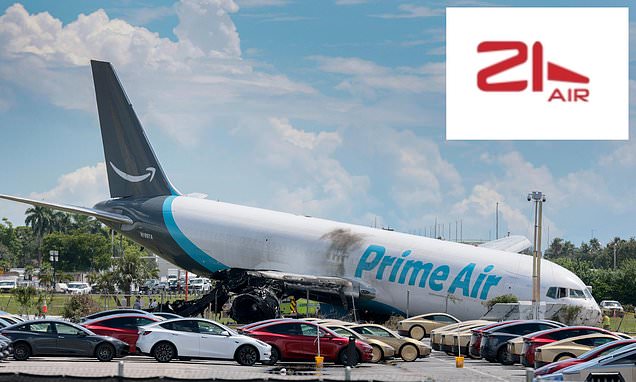
On September 6, 2026, a Boeing 767-300 cargo aircraft operating as Amazon Prime Air Flight 7598 overshot the runway at Miami International Airport, crossed the airport perimeter, struck vehicles on the ground, and killed five people. The plane had arrived from San Juan, Puerto Rico. It was operated by 21 Air, a North Carolina cargo airline controlled through a limited liability company by Houston Astros owner Jim Crane. What legal documents and former employee testimony now reveal is that the conditions enabling such an outcome had been reported, disputed, and suppressed for years before the aircraft ever touched down in Miami.
The crash has drawn immediate scrutiny to a pattern of alleged regulatory violations that former senior staff at 21 Air described in sworn testimony, federal complaints, and internal communications — allegations that span aircraft maintenance, pilot qualifications, crew rest requirements, and the systematic discouragement of formal safety reporting. None of these allegations have been adjudicated as causes of the Miami accident. The National Transportation Safety Board has stated that its investigation remains ongoing and has not released an official determination. That distinction is important. It is also insufficient to foreclose examination of what was known, when it was known, and by whom.
Karl Seuring, a pilot with more than three decades of experience, filed a federal complaint with the Department of Labor alleging that 21 Air gave pilots insufficient rest between flights, violated takeoff procedures, and retaliated against him after he raised safety concerns internally. When he brought those concerns forward, Seuring alleged, a company manager told him plainly that things were not going to change. The Occupational Safety and Health Administration ultimately rejected his complaint regarding the retaliatory firing. The substance of the underlying safety allegations, however, remains on the record.
Bruce Joseph, a former chief pilot at 21 Air, testified that at least three pilots had refused to fly on safety grounds and that company executives had actively discouraged employees from using the formal safety-management software to log problems. His testimony was precise on this point: the then-director of safety had instructed him not to enter anything into the system before first consulting then-CEO Mike Mendez. Most reports, Joseph said, never got filed at all unless he personally pushed for them. This is not a description of an oversight. It is a description of a managed suppression of the safety record.
Don Helmig, a retired fighter pilot who lasted three months at 21 Air, wrote directly to Jim Crane in a resignation email dated June 12, 2021. His language was unambiguous. He wrote that everywhere he looked there were issues, and that the company paid lip service to Safety Management Systems and then did exactly nothing. The letter was addressed to the company’s ultimate controlling owner. There is no public record of any substantive response.
Tony Bless, a retired 21 Air pilot who also testified in Seuring’s federal case, told CBS News in the aftermath of the Miami crash that the disaster did not come out of the blue. He pointed to maintenance deferrals on converted passenger jets, pressure from the chief pilot’s office, and what he characterised as concerns about the quality of pilots the company recruited. Former employees had also alleged that crews were pushed to fly without adequate rest and that pilots with limited English-language proficiency were permitted to operate aircraft — a concern with direct implications for crew coordination and emergency communication.
The aircraft itself carries its own questions. The Boeing 767-300 involved in the crash was 32 years old and owned by Atlas Air, which has been accused of supplying the aging aircraft without ensuring that critical stopping systems were fully operational. Investigators recovered flight data indicating that speed brakes and thrust reversers were not deployed during landing. Early analysis suggests the crew attempted a late go-around without having engaged those systems. Whether that reflects a mechanical failure, a procedural failure, or some combination of both is precisely what the NTSB investigation is tasked with determining. The inquiry is examining pilot actions, 21 Air’s broader safety culture, and airport infrastructure — including the absence of an Engineered Materials Arresting System on the runway in question, a safety installation that exists at many major airports and is specifically designed to stop overrunning aircraft.
Amazon, whose Prime Air branding the flight carried, issued a statement expressing that it was heartbroken by the deaths and that it is cooperating with authorities. A spokesperson said the company would defer to the NTSB on the circumstances of the crash and to 21 Air on the pre-existing allegations, noting that those allegations predate Amazon’s relationship with the carrier. That framing is worth examining carefully. Amazon is among the most powerful logistics operators in the world. Its contracting decisions carry weight. The question of what due diligence it applied before placing its brand and its cargo on aircraft operated by 21 Air is not answered by noting that problems existed before the contract began.
21 Air, for its part, issued a statement offering condolences and pledging to support those affected and assist authorities. The company has not publicly addressed the substance of the safety allegations documented in legal proceedings over several years.
What the available record establishes — with care, and without prejudging the NTSB’s findings — is a company whose internal safety architecture was reportedly compromised not by accident but by instruction, whose senior staff raised concerns through proper channels and were, in several documented cases, fired or marginalised for doing so, and whose regulatory oversight failed to translate those complaints into enforceable correction. Five people died on the ground in Miami. They were not passengers. They had no knowledge of the aircraft approaching. The accountability question that follows from this disaster is not only what went wrong in the final seconds of Flight 7598, but what institutional failures across years made those final seconds possible.