
Seven Years for Remembrance: The Hong Kong Activists Jailed for Keeping Tiananmen’s Memory Alive
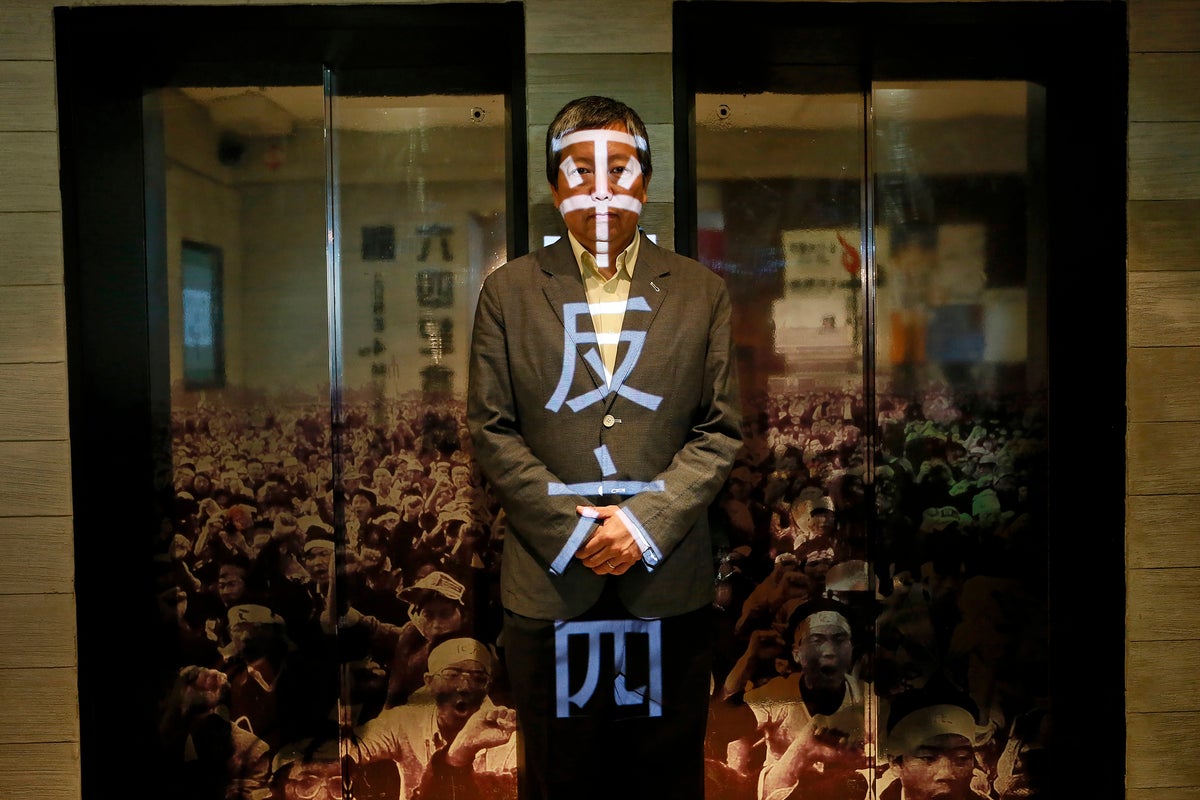
A Court’s Verdict on Memory Itself
A Hong Kong court has sentenced two pro-democracy activists — Lee Cheuk-yan and Chow Hang-tung — to seven years in prison, following convictions for inciting subversion under the national security law imposed by Beijing in 2020. A third defendant, Albert Ho, who entered a guilty plea, faces sentencing under the same charge. The phrase that judges specifically highlighted as evidence of criminal intent: “end one-party dictatorship.”
The three were the leading figures of the Hong Kong Alliance in Support of Patriotic Democratic Movements of China, the now-disbanded organisation that for more than three decades organised the city’s annual candlelight vigils commemorating the June 1989 crackdown at Tiananmen Square — an event in which Chinese state forces killed hundreds, and by some estimates thousands, of pro-democracy protesters.
The Hong Kong government has characterised the alliance as an organisation that systematically cultivated hostility toward the Chinese Communist Party. The defendants, by contrast, have framed their decades of activism as an expression of civic conscience and, in Lee’s words, of love rather than enmity. What follows is a precise account of who these three individuals are, what they did, and what their prosecution represents.
Lee Cheuk-yan: Witness to the Crackdown
Lee, now 69, served as chair of the alliance and carries a biography that is inseparable from the events of 1989. In late May of that year, he personally transported donations from Hong Kong residents to the student protesters gathered in Beijing — an act of solidarity that preceded the military assault by days. When troops and tanks moved into Tiananmen Square on the night of 3–4 June, Lee was present in the city, close enough to hear the gunfire from his hotel.
His attempt to return to Hong Kong was interrupted before his flight departed: police removed him from the plane, detained him, and released him on 8 June only after he had been questioned and signed a letter of repentance. That sequence of events — witness, detention, forced contrition — appears to have shaped the remainder of his public life.
Beyond his Tiananmen work, Lee served as a legislator and labour activist for decades. In August, the court ruled that he and his co-defendants had long harboured enmity toward the party. Lee rejected that characterisation directly in testimony. “I have no enmity in my heart, only love,” he said. The court was not persuaded.
Albert Ho: Lawyer, Legislator, Moderate
Albert Ho, 74, occupied the role of vice-chair of the alliance while simultaneously maintaining a career as both a politician and a rights lawyer — a combination that gave him an unusually broad reach across Hong Kong’s civil society. During approximately two decades as a legislator, he was widely regarded as a moderate figure: in 2010, he led negotiations with mainland Chinese officials over political reform proposals, a posture that reflected a persistent belief that engagement remained possible.
His legal work extended well beyond Hong Kong’s borders in its implications. He assisted Edward Snowden during the former NSA contractor’s stay in Hong Kong in 2013, and later supported Lam Wing-kee, the bookseller who in 2016 gave a detailed public account of being detained and coerced by Chinese security agents on the mainland — a case that drew sustained international attention to the extraterritorial reach of Chinese state power.
The prosecution cited a 2020 interview in which Ho stated that he would persist in calling for an end to one-party rule and the construction of a democratic China, and that he intended to pursue those goals within the law — but that if the law left no room for them, he would “rather bear the legal consequences.” That statement, made as a declaration of principled intent, became part of the evidentiary record used to convict him.
Chow Hang-tung: Self-Represented, Undefeated
Chow Hang-tung, 41, is in several respects the most striking figure in this case. She began attending the Tiananmen vigils as a primary school child. She holds a degree in natural sciences from the University of Cambridge and subsequently trained as a lawyer, eventually becoming a vice-chair of the alliance. Her trajectory — from childhood participant to legal defender of the very act of participation — is not without a certain historical logic.
When police moved against the alliance in 2021, demanding details of its operations and finances on the grounds that it was acting as a foreign agent, Chow was among those who refused to cooperate. She was convicted for that refusal and sentenced to four and a half months in 2023; the conviction was subsequently overturned by Hong Kong’s top court. That reversal did not prevent a new prosecution under the national security law.
While detained ahead of her national security trial, Chow conducted hunger strikes on each anniversary of the Tiananmen crackdown. She chose to represent herself throughout the proceedings — a decision that, given the complexity and stakes of national security litigation, reflected either extraordinary legal confidence or a deliberate refusal to normalise the proceedings by engaging them on their own terms, or both. The August verdict described her as “a living example” of the alliance’s influence on its members — a formulation that, in effect, treated the depth of her commitment as aggravating evidence.
After the conviction, she argued in court that the verdict implied that pursuing democracy was itself a criminal act. “If the law truly has no room for our beliefs,” she said, “then I would rather be a criminal than be a fake person.”
What the Sentences Signify
Taken together, the cases of Lee, Ho, and Chow illuminate the precise mechanism by which Hong Kong’s national security law has been applied: not to punish violence or incitement to violence, but to criminalise the sustained, public advocacy of political change — including the act of remembering a historical atrocity. The alliance’s core activity was an annual candlelight gathering. Its most prosecuted slogan called for the end of one-party rule. These are the facts that the court placed at the centre of its findings.
The disbanding of the alliance in September 2021, the erasure of its museum, the shuttering of the vigils, and now the imprisonment of its leaders represent a sequential dismantling of the institutional infrastructure through which Hong Kong maintained a public record of what the Chinese state did in June 1989. The sentences do not close that history. They add to it.